conservation
44 stories filed under conservation on World Data Ocean. The newest of them: “Underwater acoustics paired with artificial reefs offer a validated restoration pathway”, “Workplace Culture Under Review: Allegations Surface at Ocean Research Organization”, and “New data clarifies Wuthuga dugong population status in Gathaagudu”. A coral larva can't read a map, but it can hear a healthy reef. Allegations of a hostile, abusive workplace have surfaced at One Ocean, the research organization led by Ocean Ramsey. A Global Hub for Ocean Intelligence 4 World Data Ocean is a centralized digital platform where researchers, scientists, and ocean enthusiasts converge to… The list below is every conservation story on World Data Ocean, newest first.

Underwater acoustics paired with artificial reefs offer a validated restoration pathway
A coral larva can't read a map, but it can hear a healthy reef. In Kāneʻohe Bay, researchers placed artificial structures with bacterial coatings near underwater speakers playing recordings of snapping shrimp and fish. The result: more coral settlement within 20 meters of the sound source. The evidence for acoustic attraction remains preliminary, yet the integration of engineered habitats, living materials, and ocean intelligence points toward a validated restoration pathway worth scaling. For deeper context on data-driven ocean careers, see *From analytics to ocean intelligence*.
Workplace Culture Under Review: Allegations Surface at Ocean Research Organization
Allegations of a hostile, abusive workplace have surfaced at One Ocean, the research organization led by Ocean Ramsey. Former employees are speaking out, and the accounts demand scrutiny. Scientific integrity and human dignity must be inseparable in ocean stewardship. A healthy workplace is as critical as a healthy ocean. For those exploring paths in this field, our related article on navigating graduate research in marine biology offers context on the professional landscape.

New data clarifies Wuthuga dugong population status in Gathaagudu
A new, validated dataset offers the clearest picture yet of Wuthuga dugong populations in Gathaagudu. These empirical findings are essential for calibrating conservation strategies in a region where ocean intelligence is still emerging. Understanding drives protection. For readers tracking how marine species respond to shifting ecosystems, our coverage of prey fish nutrition shaping health risks for Indo-Pacific humpback dolphins provides a complementary lens on the interconnected challenges beneath the surface.
Prey fish nutrition shapes health risks for Indo-Pacific humpback dolphins
The nutritional quality of prey fish directly shapes health risks for Indo-Pacific humpback dolphins, a finding grounded in empirical, peer-reviewed data. This is not merely a food web observation, it is a calibrated, measurable link between diet and disease in a sentinel species. Understanding drives protection. For deeper context on how observation and biodiversity science inform marine health, see our related coverage of "Biodiversity and human pressure reshape marine ecosystem science."

Citizen observation confirms manatee presence in Panama's San San Pond Sak
A single verified sighting of a manatee in Panama's San San Pond Sak is more than a traveler's anecdote, it's a validated data point for ocean intelligence. The murky water may lack postcard clarity, but it holds empirical value. Citizen observations like this strengthen our integrated data ecosystem, turning local encounters into measurable climate indicators. For deeper context on how community reports fill research gaps, see our related coverage of a validated beach find in Costa Rica.
Biodiversity and human pressure reshape marine ecosystem science
Marine ecosystem ecology now stands at a crossroads where biodiversity data and human pressures converge. Understanding how marine life supports ecosystem functioning remains central, but the urgency of climate-driven transformations demands we anticipate change, not just document it. Resilience, the capacity to persist through disturbance, has become a scientific priority under intensifying cumulative pressures. Major challenges include ecological non-stationarity and expanding data volumes. Our related piece, "Validated data and selective gear drive sustainable crab harvesting," demonstrates how empirical approaches already guide sustainable practice.
A decade of empirical data illuminates the ocean's hidden reef ecosystems
A decade of empirical data now reveals the hidden architecture of our ocean's reef ecosystems, measured, validated, and mapped in real-time. These are not speculative models; they are calibrated observations from orbit to ocean floor. Understanding drives protection. For deeper context on the systemic challenges facing marine environments, see our related coverage on validated data gaps in Europe's marine policy demanding integrated solutions. The science is clear; the call to act is measurable.
From orbit to ocean floor, data refines ocean stewardship
A small ocean drone returned validated data from inside a Category 5 hurricane, proving that even the most extreme conditions can yield empirical ocean intelligence. From orbit to ocean floor, integrated data systems refine our understanding of marine ecosystems. This is how we transform stewardship from reactive concern into measurable action. For deeper coverage on peer-reviewed findings from extreme environments, see "Small ocean drone returns validated data from inside Category 5 hurricane."
Africa's first permanent ocean observatory closes a critical data gap for science and policy
Twenty-two million measurements. That is the scale of what the Bazaruto Center for Scientific Studies and Kisawa Sanctuary have built off Mozambique's coast. Africa's first permanent ocean observatory is not a small pilot project; it is a multi-ecosystem platform covering 6,850 square kilometers, generating high-frequency data across coral, seagrass, and open-ocean habitats. The numbers are impressive, but the real achievement is showing how a Resort-to-Research model can sustain serious science.
From Neurobiophysics to the Sea: Charting a Path to US Marine PhDs
A BSc in Neurobiophysics is not a barrier to a US marine biology PhD; it is a different kind of asset, one that brings a quantitative rigor many labs actively seek. Your background in electroporation and microfluidic systems is a strong signal of technical maturity, and programs increasingly value that over a standard biology checklist. For a direct path, target interdisciplinary labs where bioengineering meets ocean observation, as your skillset will be seen as an integration tool, not a shortfall.
Citizen Science Meets Machine Learning: Inside MBARI's Fathomverse
Understanding drives protection. MBARI's Fathomverse turns ocean exploration into a shared mission, letting anyone classify marine life from rover-captured imagery. The AI doesn't replace researchers; it accelerates their work, flagging species patterns that would take humans months to catalog. Your clicks calibrate algorithms, not displace jobs, they refine models that already guide conservation. It's measurable, peer-reviewed progress, not a threat. For those questioning the ethics, this is transparent, collaborative science.
eDNA maps Nile tilapia invasion across West Bengal freshwater habitats
A single water sample can reveal an entire invasion. Across West Bengal's freshwater habitats, empirical eDNA analysis has now mapped the spread of Nile tilapia with measurable precision. This is not merely a species survey; it is a calibrated early-warning system for ecosystem disruption. The data is validated, peer-reviewed, and actionable. For context on how such environmental intelligence intersects with regional development, see our coverage of the Brahmaputra River cruises. Understanding drives protection.
Navigating a Marine Studies BA: Pathways to a Marine Biology Career
A marine studies BA does not have to close the door on a career in fish identification, though it does require strategic planning. The degree's interdisciplinary focus, blending policy and humanities with ocean science, can support your goal, especially if you pair it with targeted coursework and your six-year observational hobby. Population monitoring is a viable entry point, as it demands the very taxonomic skills you already practice.

Unidentified Specimen Found in Oahu Waters Sparks Ocean Data Inquiry
A single unidentified specimen recovered from Oahu waters has prompted a new round of data collection, a reminder that our ocean intelligence still holds gaps. The find is a useful nudge toward empirical rigor: when a species defies easy classification, the response should be calibrated observation, not speculation. We track climate indicators and integrated systems, yet the shoreline still surprises us.

First West Coast Sea Turtle Nest Documented on Southern California Beach
A lone sea turtle has made history on a Southern California beach, with the first documented nest of its kind on the West Coast. This is not a distant anomaly; it is a measurable signal of shifting ocean conditions. The event underscores the value of validated, real-time observation in tracking climate indicators. For those following the science, this pairs well with our recent piece, "Validated Protein Analysis Improves Caretta Caretta Health Assessments," offering a fuller picture of how we track these resilient species.
Bridging Disciplines: A Veteran's Pathway to Marine Biology Studies
A veteran of Army special operations is trading one form of service for another, aiming for a PhD in marine biology after a BA in history and government. The pivot is bold, but the foundation is solid, even if it feels otherwise. The GI Bill provides the runway, and Rosenstiel's shark research program offers a clear target. This is not a casual interest; it is a calculated transition.
Leveraging Computer Science Skills for Ocean Conservation Pathways
You don't need to choose between a desk and the deck. A CS background, paired with a GIS certificate, opens a credible pathway into ocean conservation without abandoning Seattle's tech ecosystem. The market values calibrated, integrated data skills, and roles in marine spatial planning or fisheries analytics are growing. Friday Harbor's post-bach option offers tangible field exposure. It's a practical, measurable first step, not a detour. Understanding drives protection, and your skills are already part of that equation.
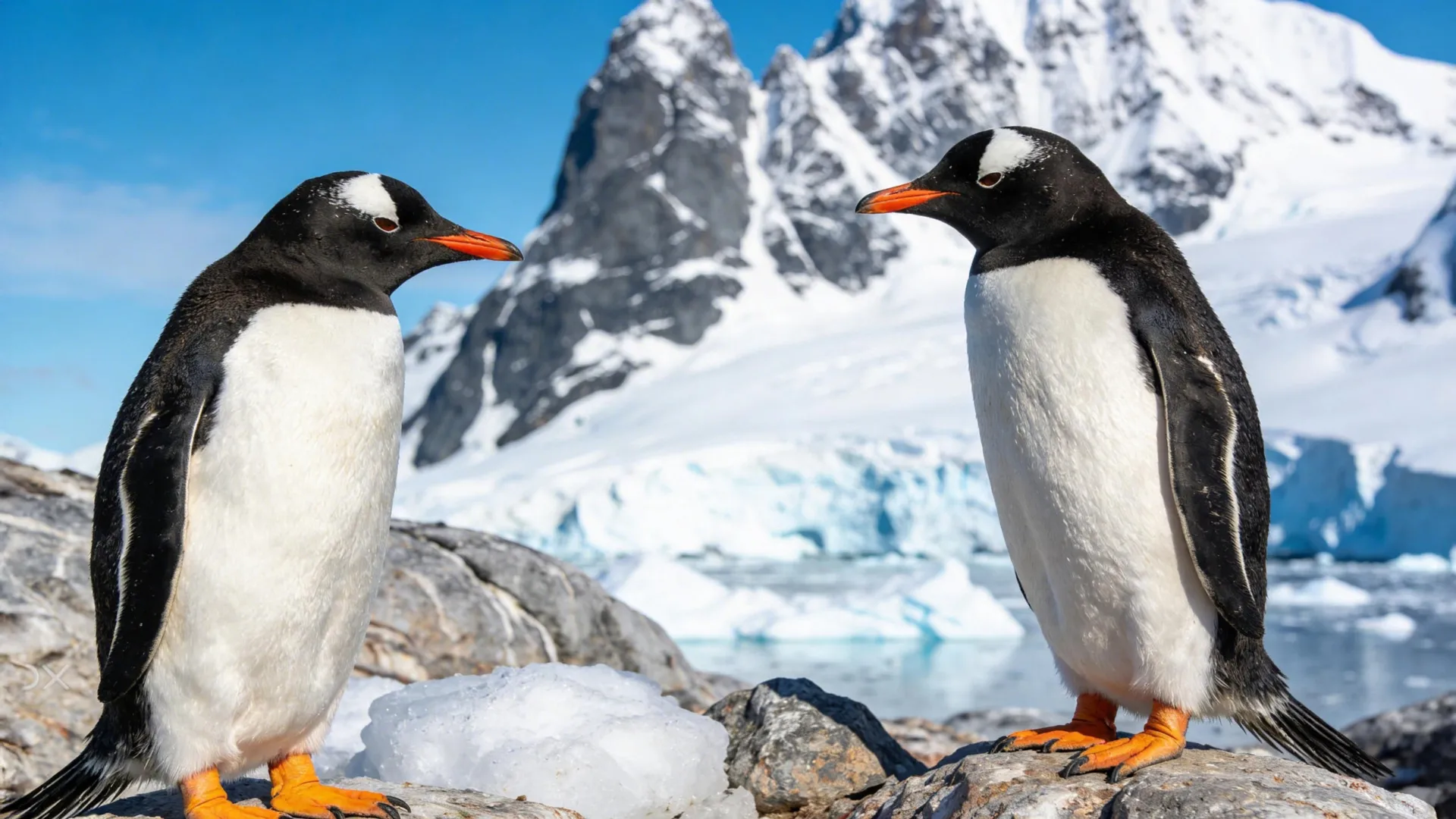
Genetic Data Reveals Four Gentoo Penguin Species, Highlighting Climate Threat
Genetic evidence has revealed that gentoo penguins are not one species but four, with a previously unknown population identified on the remote Kerguelen Islands. It is a reminder that biodiversity often hides in plain sight, even among well-studied animals. Yet the discovery carries an urgent warning: warming oceans could strip several island habitats by 2050. Understanding these distinctions is the first step toward protecting them.
MPA Networks: Bridging Governance Gaps for Effective Ocean Conservation
A decree alone does not make a network. For over a decade, São Paulo's MIAMP has existed as legislation, yet our study found it functions as a paper network, stalled by chronic underfunding and understaffing rather than design. What is striking is what emerged in its place: managers across 26 MPAs have self-organized into an informal learning network, connected by shared demands and practical necessity. South and Central clusters now hinge on Marine Environmental Protection Areas, performing the coordination the formal structure never did.
Rising Porpoise Sounds Signal Baltic Sea Population Shift
Acoustic monitoring has detected a measurable rise in porpoise vocalizations across the Baltic, signaling a population shift we cannot ignore. These calibrated, real-time data points offer empirical evidence of changing marine behavior, a clear climate indicator demanding our attention. Understanding drives protection. For deeper context on how such ocean intelligence informs career pathways in marine science, see our related piece, "Navigating a Marine Studies BA: Pathways to a Marine Biology Career."

Revealing Scientific Insights Hidden Within Historical Artworks
A 17th-century seascape hanging in a Dutch museum holds more than artistic mastery, it contains a hidden record of ocean conditions. Scientists and art historians are now collaborating to extract empirical data from historic paintings, treating each canvas as a calibrated observation of past climate indicators. This innovative integration of art and ocean intelligence transforms cultural artifacts into measurable scientific tools. Understanding drives protection. For deeper context on marine research pathways, see our related coverage on navigating a marine studies degree.
Ocean Ecosystems Face Extreme Stress: A Call for Global Action.
The ocean's living systems are under measurable, intensifying stress. This is not a distant forecast, it is an empirical reality demanding coordinated global response. Our new analysis documents the accelerating pressures on marine ecosystems, from warming waters to acidification. We believe the evidence is clear: integrated, real-time ocean intelligence is essential for informed action. For deeper context on how these forces reshape coastlines, see our related study on storm surge costs in coastal China. Understanding drives protection.
Ocean Stewardship: Validated Data for a Sustainable Future.
The ocean holds more data than we have yet learned to trust. Ocean Stewardship: Validated Data for a Sustainable Future centers on that gap, turning raw observation into peer-reviewed action. We are not asking for blind faith in technology; we are asking for calibrated, measurable responses to climate indicators. This is how we save oceans, not through alarm, but through integrated data ecosystems that guide policy and practice.
Beyond Dolphins: The Realities of a Career in Marine Biology
The public's image of marine biology often skips straight past the lab work, the data analysis, and the permit applications. It is a field defined by rigorous methodology, not casual swims. The misconception that professionals take time off to play with dolphins dismisses the scientific discipline at the core of this work. As this conversation notes, regional challenges, like those in Brazil, add further layers of complexity.