A flashing light on a lifebelt is a small thing, and it is the reason a woman is alive tonight. After roughly twenty hours in the Mediterranean Sea, a 44-year-old woman from El Salvador was spotted by a cargo ship searching alongside Greek authorities, her position marked by that beacon, not by a distress call or a visible swimmer. This was not a dramatic helicopter rescue or a last-second grab; it was a sustained, coordinated search that worked because a simple piece of equipment did its job in the dark. That is the story worth holding onto, because it tells us something practical about how ocean safety actually functions.
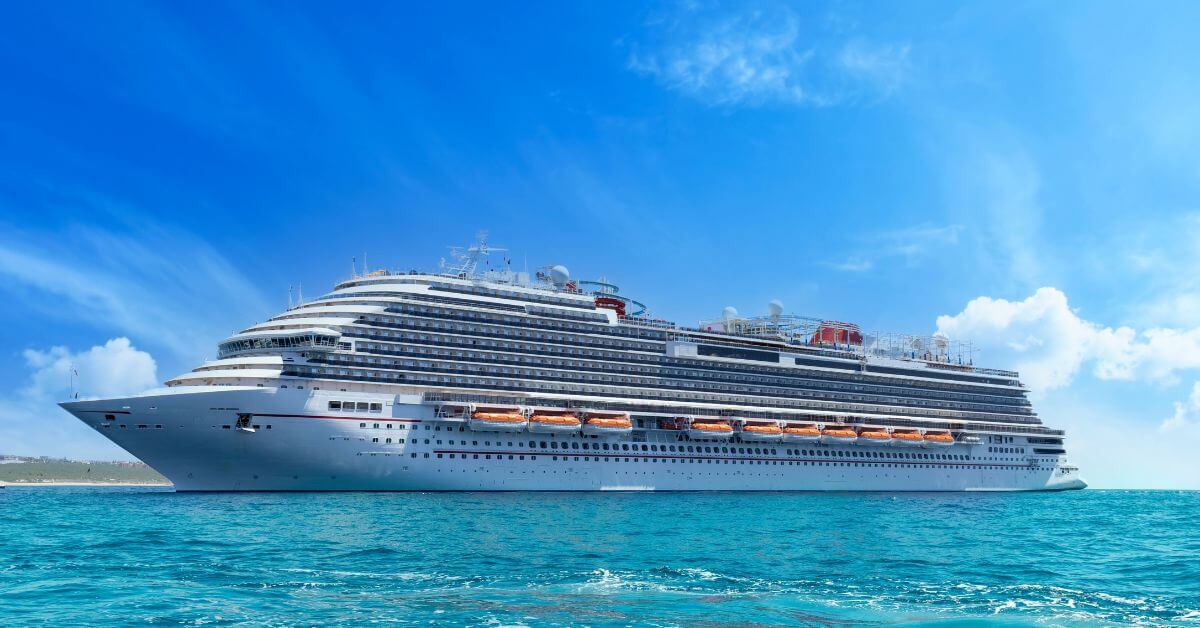
The rescue off Zakynthos, about 70 nautical miles from the island, followed a protocol that deserves attention. The Greek Coast Guard was alerted early on Friday, October 9, and by the time the woman was recovered at around 2:30 a.m. on Saturday, two Coast Guard vessels, an Air Force helicopter, merchant ships, and Royal Caribbean's Odyssey of the Seas herself had all joined the effort. The cruise ship, which had been sailing from Mykonos to Naples on the final leg of a seven-night Greek Isles itinerary, turned around and spent hours assisting before cancelling its scheduled stop in Naples and heading toward Civitavecchia. Passengers reported the captain informed them of the situation at around 10 a.m. on Friday, and the ship remained involved for roughly 14 hours before resuming course. The woman was conscious when recovered, treated for hypothermia aboard a rescue vessel, taken to Katakolo, and then transferred to a hospital in Pyrgos. She was able to walk after reaching shore, according to passenger accounts. We do not yet know how she entered the water or how she came to have the lifebelt, and those questions matter, but they should not obscure the more immediate lesson.
What this incident demonstrates is that visibility is the cheapest form of rescue. The lifebelt's flashing light turned a nearly impossible search into a locatable target, and the coordination between commercial shipping and state agencies made the difference. This echoes what we have seen in other contexts, such as the human tragedy in Djibouti waters underscores urgent need for integrated ocean safety, where the absence of such coordination contributed to a far worse outcome. It also reinforces the value of rehearsed, multi-agency response, the kind being tested in Europe's validating coordinated ocean response through Europe's COASTEX 2026 trial. The woman in the Ionian Sea was not saved by a single heroic act; she was saved by a system that included a cargo ship crew looking in the right direction, a cruise line that paused its itinerary, and a coast guard that managed the operation. That system is not automatic. It requires equipment that works, crews that are trained to spot it, and a willingness to stop normal operations when a life is at stake.
The takeaway is specific: personal locator devices and illuminated lifebelts should be standard issue for every person on a passenger vessel, not an afterthought. We do not know if this woman's lifebelt was provided by the ship or obtained another way, but we do know that without its light, the outcome could have been very different. The cruise industry should look at this rescue and ask why such a basic tool is not universally worn or tracked. The open question is whether Royal Caribbean and others will treat this as a validation of existing practice or as a prompt to make these devices mandatory. Watch whether the company updates its safety protocols in the coming months, because that will tell us if the lesson of a flashing light in the dark has been learned.