Mediterranean Sea
21 stories filed under Mediterranean Sea on World Data Ocean. The newest of them: “A 4,700-Year-Old Shipwreck Extends Mediterranean Voyage Records”, “Microbial communities may drive invasive seagrass growth in mixed meadows”, and “Stratification in the Tyrrhenian Sea signals shifting ocean stability”. A 4,700-year-old shipwreck has been discovered off the Turkish coast, pushing back the known timeline of Mediterranean voyaging. Microbial communities may hold the key to why the invasive seagrass *Halophila stipulacea* thrives alongside native Mediterranean species like *Cymodocea nodosa*, while the native suffers. A Global Hub for Ocean Intelligence 4 World Data Ocean is a centralized digital platform where researchers, scientists, and ocean enthusiasts converge to… The list below is every Mediterranean Sea story on World Data Ocean, newest first.
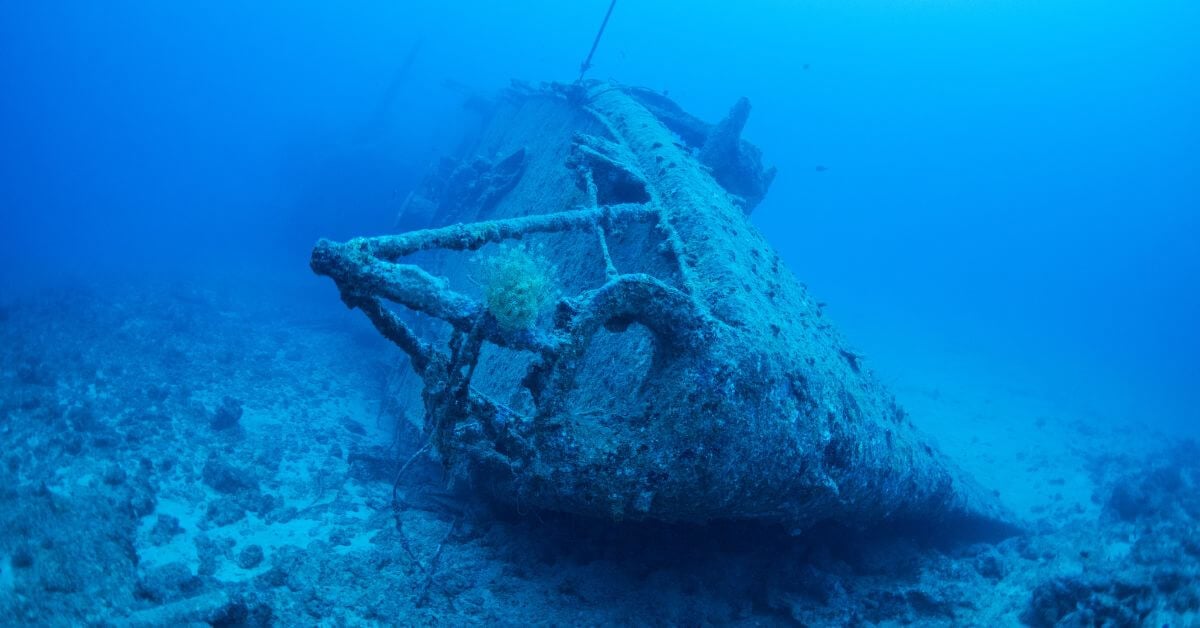
A 4,700-Year-Old Shipwreck Extends Mediterranean Voyage Records
A 4,700-year-old shipwreck has been discovered off the Turkish coast, pushing back the known timeline of Mediterranean voyaging. This vessel, dating to around 2700 BCE, sailed during the Early Bronze Age, long before classical antiquity. Such empirical evidence reshapes our understanding of ancient maritime networks. For context on modern maritime risks, our coverage of the Black Sea cargo vessel attack offers a sobering contrast. Understanding drives protection, whether we are studying millennia-old trade routes or today's seafarers.
Microbial communities may drive invasive seagrass growth in mixed meadows
Microbial communities may hold the key to why the invasive seagrass *Halophila stipulacea* thrives alongside native Mediterranean species like *Cymodocea nodosa*, while the native suffers. Our analysis of 16S rRNA genes reveals distinct bacterial assemblages: the native's microbiome shifts under stress, but the invader's bacterial diversity flourishes precisely in mixed environments, where its growth accelerates. This is not passive colonization; it suggests a competitive edge shaped by unseen allies. Understanding these microbial drivers is essential for predicting invasion dynamics.

Stratification in the Tyrrhenian Sea signals shifting ocean stability
Ten years of bimonthly CTD profiles along the Cilento coast now confirm what reanalysis fields have long suggested: the southern Tyrrhenian Sea is warming, lightening, and stratifying at an accelerating pace. Mixed layer shoaling, especially in winter, points to reduced wind-driven ventilation. These aren't isolated local dynamics; they align with a broader Mediterranean transition toward warmer, more stratified conditions. Understanding drives protection. For related coverage on ocean governance, see our piece on Blue Shark Data.

Persistent Lifebelt Signal Guides Cargo Ship to Rescue After 20 Hours at Sea
A flashing light on a lifebelt guided a cargo ship to a stranded woman after 20 hours at sea. This rescue is a calibrated, real-time validation of why integrated ocean safety systems matter. For a deeper look at what happens when those systems fail, see our related coverage, "Human tragedy in Djibouti waters underscores urgent need for integrated ocean safety."

Forward-deployed destroyer marks first Spanish dry dock for maintenance
A 9,700-ton US Navy destroyer, the USS *Arleigh Burke*, has entered a dry dock in Spain for maintenance this week, the first time a forward-deployed ship of its kind has undergone such work in a Spanish facility. This move signals deeper operational integration across allied naval infrastructure. For readers tracking broader global shifts, our piece on divergent population trajectories reshaping climate indicators offers a complementary look at how measurable trends are redefining international strategy.
Monitoring Mediterranean pH Variability Reveals Algal Reef Resilience
From orbit to ocean floor, the Mediterranean's pH story is more complex than a simple decline. Our monitoring at Capo Carbonara reveals algal reefs displaying surprising resilience amid natural pH swings of 0.2 units annually. Coralligenous taxa remained stable through seasonal extremes shaped by Saharan dust and water circulation, yet rising temperatures and acidification threaten this balance. Understanding such local variability is measurable, empirical ocean intelligence, essential for predicting ecosystem futures.

Shallow-water coral sighting near Naxos raises climate questions
A single frame of pale tissue on a sunlit stone, twenty meters from a Naxos beach, is the kind of sighting that turns a casual swim into a data point. The observer's uncertainty is valid, distinguishing a stressed coral from an encrusting algae or sponge requires calibrated eyes. Yet the location, depth, and timing align with shifting climate indicators. Whether this is a range expansion or a misidentification, the observation itself is measurable.
Microplastics in Egyptian seafood markets: A measurable signal for consumer risk
Every sampled market along Egypt's Mediterranean and Red Sea coasts contained microplastics in edible invertebrates, with the highest concentrations found in Suez. That is a measurable signal for consumer risk, not a distant abstraction. The study's strength lies in its empirical grounding: 108 samples, 263 confirmed synthetic polymers, and clear polymer profiles varying by sea. Species-specific feeding habits drive accumulation, meaning risk is not uniform. This is the kind of calibrated, peer-reviewed evidence that turns concern into action.
Validated Protein Analysis Improves Caretta Caretta Health Assessments
Fibrinogen's contribution to β-globulin 2 in lithium-heparin plasma may skew protein fraction readings in juvenile loggerhead sea turtles. That distinction, drawn from paired samples at Sicily's C.Re.Ta.M. center, matters for clinicians tracking inflammation or hepatic strain in a vulnerable Mediterranean species. The study's Bland-Altman analysis confirms serum and plasma are broadly interchangeable, yet the juvenile-specific bias warns against blanket assumptions. For those monitoring strandings, this is a calibrated step toward more precise rehabilitation diagnostics.

Unidentified Marine Organism Discovered Near Corfu Shoreline
A firm, unfamiliar organism bobbing in the shallows near Ipsos is a reminder that the nearshore still holds questions. This observer did the right thing: noting size, consistency, and the presence of additional specimens under a rock. That kind of observational detail is the bedrock of marine discovery. While identification remains open, the report underscores how citizen observations can flag anomalies worth a second look.
Mediterranean Phytoplankton Diversity Shifts Observed Over 25 Years
In the Mediterranean, the balance of phytoplankton is shifting, and the implications reach far beyond the water's surface. Over 25 years, our analysis of satellite-derived chlorophyll data reveals a basin-wide decline in bulk chlorophyll, paired with a consistent move from larger to smaller organism classes. Diatoms and Green Algae are retreating in relative abundance while Prokaryotes rise, suggesting a potential weakening of the biological carbon pump and the silica cycle. These changes are subtle but measurable, and they underscore why long-term, validated ocean intelligence matters.

Drones Strike Cargo Ship Linked to Russia Amidst Mediterranean Tensions
A drone strike has hit the cargo ship *Lady Mariia*, formerly *Stella-Maria*, after it departed Algeria's Oran port, injecting new volatility into Mediterranean shipping routes linked to Russian interests. This is not an isolated incident; it reflects growing maritime friction amid geopolitical realignments. For deeper context on Arctic energy pressures driving such tensions, see our coverage of the *Vostok Project's* oil exports. Understanding these interconnected threats is essential for assessing ocean security in a shifting global order.
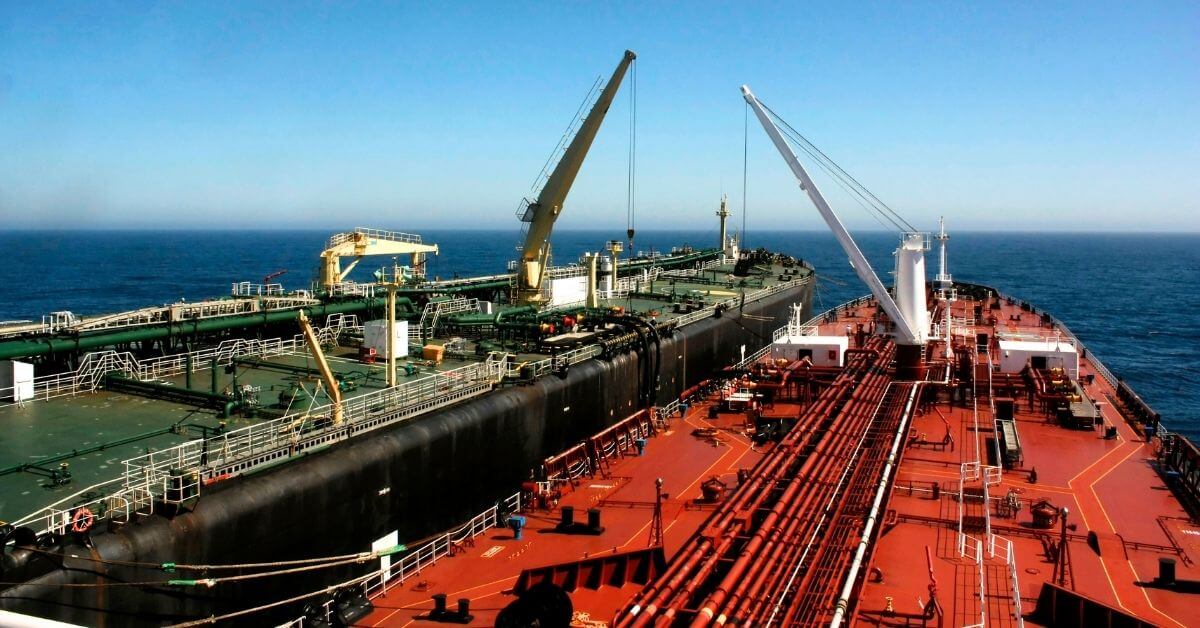
Yemen Oil Spill: Integrated Data Reveals Impact on Marine Ecosystems
The validated data emerging from the Yemen oil spill paints a precise picture of ecological disruption, one that reaches beyond the immediate slick to the coastal economies and fisheries that depend on these waters. Integrated monitoring confirms the pollution's reach, yet the focus remains on measurable recovery pathways. For those tracking regional maritime risk, our related coverage on the Gulf of Oman STS transfers offers useful context on the pressures shaping these waters. Understanding these impacts is the first step toward calibrating an effective response.

Safer Red Sea Route Calibrates Oil Exports Amid Geopolitical Shifts
Shipowners are rerouting Saudi crude through the safer northern Red Sea corridor, a calibrated response to persistent Houthi threats that recalibrates export flows without disrupting global supply. The move reflects pragmatic maritime adaptation, not alarm. It is a measured shift, one that keeps oil moving while reducing risk to tankers and crews. For context on how regional pressures are reshaping tanker operations, our related piece on Gulf of Oman STS transfers maxing out offers a useful counterpoint.
Small Estuaries, Big Impact: Exploring a Hidden Coastal Ecosystem.
Small estuaries are easy to overlook. A new study identifies 243 micro-estuaries across the Mediterranean, and roughly half remain undocumented and unmanaged. These systems, though small at one to seven kilometers long, exhibit stratification strong enough to control oxygenation and denitrification. Sandbars and freshwater inflow dictate their function, with residence times ranging from days to months. This research validates that size does not determine ecological significance.

Mediterranean Vessel Interception Raises Geopolitical Tensions and Maritime Concerns
The Mediterranean has become a flashpoint where a single vessel interception escalates into a geopolitical statement, and Russia's dismissal of such actions as "piracy" sharpens the divide. President Vladimir Putin's characterization frames maritime law enforcement as provocation, yet the practical risks to shipping lanes remain underexplored. This incident is not isolated; it echoes broader patterns of naval tension, much like the recent strikes on port infrastructure in confirmed military action.
Predicting Plankton Diversity: Machine Learning and Uneven Data Insights
Machine learning promises scalability in predicting plankton diversity, but this study reveals a hard truth: models trained on imbalanced data falter where it matters most. Using XGBoost on 18S rRNA samples from Mediterranean stations, the team found strong in-sample performance (R² = 0.44) that collapsed under leave-one-dataset-out validation (R² = 0.09). That gap underscores a critical lesson: environmental coverage and protocol standardization are not optional. For those exploring similar challenges, our piece on accelerating ocean model development with AI offers a complementary perspective.

Mediterranean Sea Sees First Russian Warship Absence Since 2013.
For the first time since 2013, the Mediterranean Sea holds no Russian naval presence, a quiet but telling absence. This is not a headline built on alarm; it is a measurable shift in regional posture, one that invites scrutiny of logistics, priorities, and pressure points. The signal is clear: operational reach has limits, and those limits are now visible. For deeper context on how Russia is recalibrating its maritime strategy, our piece on the Northern Sea Route icebreaker fleet offers a useful counterpoint.
Citizen Science Sharpens Understanding of Mediterranean Marine Species.
Four hundred forty-one expert-validated records. That is what the Spot the Alien campaign captured across Maltese waters between 2022 and 2025, and the numbers tell a clear story: sustained public effort sharpens our read of marine change. The campaign logged 30 non-indigenous, range-expanding, and cryptogenic species, including the second Mediterranean sighting of the Indo-Pacific grouper. This study proves that rigorous validation turns volunteer observations into reliable ocean intelligence. Long-term engagement works.
Mediterranean Sea Temperature and Salinity Trends: A Longitudinal Data Assessment
The Mediterranean Sea is warming, not uniformly, but measurably. This longitudinal assessment of temperature and salinity trends from 2012 to 2025, based on Argo float profiles and reanalysis products, reveals surface warming of 0.8 to 0.9 °C per decade in the Western Mediterranean and Ionian basins. The signal is consistent, yet it is not singular. Freshening in the upper 100 meters contrasts with salinification in Levantine Intermediate Water, underscoring a complex thermohaline shift that demands continued, spatially dense monitoring.
Microplastic Pollution Assessed Across Key International Shipping Routes
Aboard the research vessel *Jaywun*, 100 surface-water samples now trace a microplastic story across the Atlantic, Mediterranean, Red Sea, and Arabian Gulf. Concentrations swung from 4 to 290 particles per liter, with polyester and PET dominating the mix. The Arabian Sea carried the heaviest load, while the Strait of Gibraltar surprised with a localized peak.