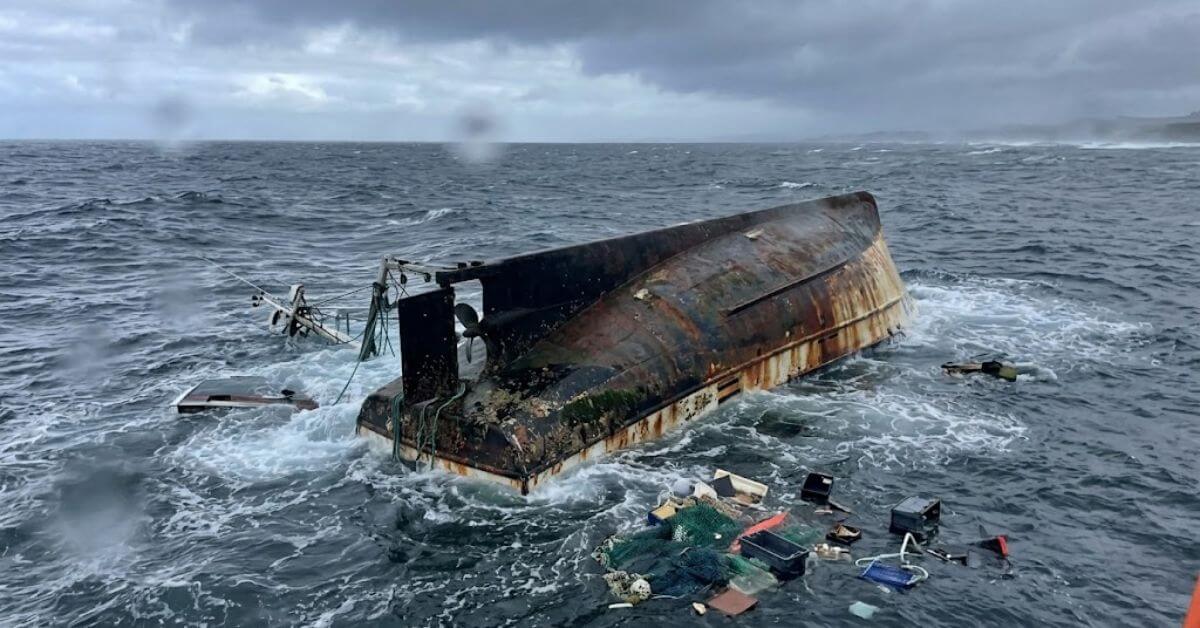
The ocean does not discriminate between a migrant vessel and a research buoy, yet our systems of safety and intelligence often do. The capsizing of a boat off Djibouti on the night of October 8, killing at least 139 people, including 15 children, with 84 still missing, is a human tragedy that demands more than grief. It demands an integrated approach to ocean safety that connects maritime response, climate indicators, and migration data into a single operational reality. The International Organization for Migration has confirmed that overcrowding was the primary cause, and survivors are receiving medical and psychological care at the IOM's Migrant Response Centre in Obock. But the question we must ask is whether our ocean intelligence infrastructure is calibrated to prevent such events, or merely to count them afterward. Our related coverage of Validating coordinated ocean response through Europe's COASTEX 2026 trial shows what multi-agency maritime coordination can achieve when systems are designed to work together. The gap between that capability and the waters off Djibouti is not technological, it is political and operational.
The Eastern Route through Djibouti has seen heavy migrant traffic for years, according to IOM officials. This is not a surprise. It is a measurable, longitudinal pattern that intersects with climate-driven displacement, regional instability, and economic desperation. Our analysis of Divergent population trajectories reshape global climate indicators makes clear that population movements and climate pressures are not separate datasets, they are integrated variables in the same equation. When a boat leaves the coast of Djibouti carrying 305 people toward Yemen, it is not an isolated event. It is a data point in a real-time system that, if properly integrated, could trigger earlier warnings, better routing, and coordinated search-and-rescue protocols. The IOM's Director General, Amy Pope, has called on governments and donors to provide safer ways for people to migrate. That call is urgent, but it must be paired with empirical ocean intelligence that maps risk corridors, vessel traffic, and weather conditions in a way that is accessible to responders before the next boat sinks.
What happened in Djibouti is not a failure of compassion. It is a failure of integration. The IOM, Djiboutian authorities, and survivors are doing what they can in the aftermath. But the gap between a coordinated trial like COASTEX 2026 and the reality of a capsized migrant vessel is measured in lives. The specific consequence to watch is whether the international community uses this tragedy to build a shared, peer-reviewed framework for ocean safety that treats migrant routes as part of the same integrated data ecosystem as commercial shipping lanes and climate monitoring stations. If we do not, the next boat will sink, and we will again count the dead instead of preventing the loss.