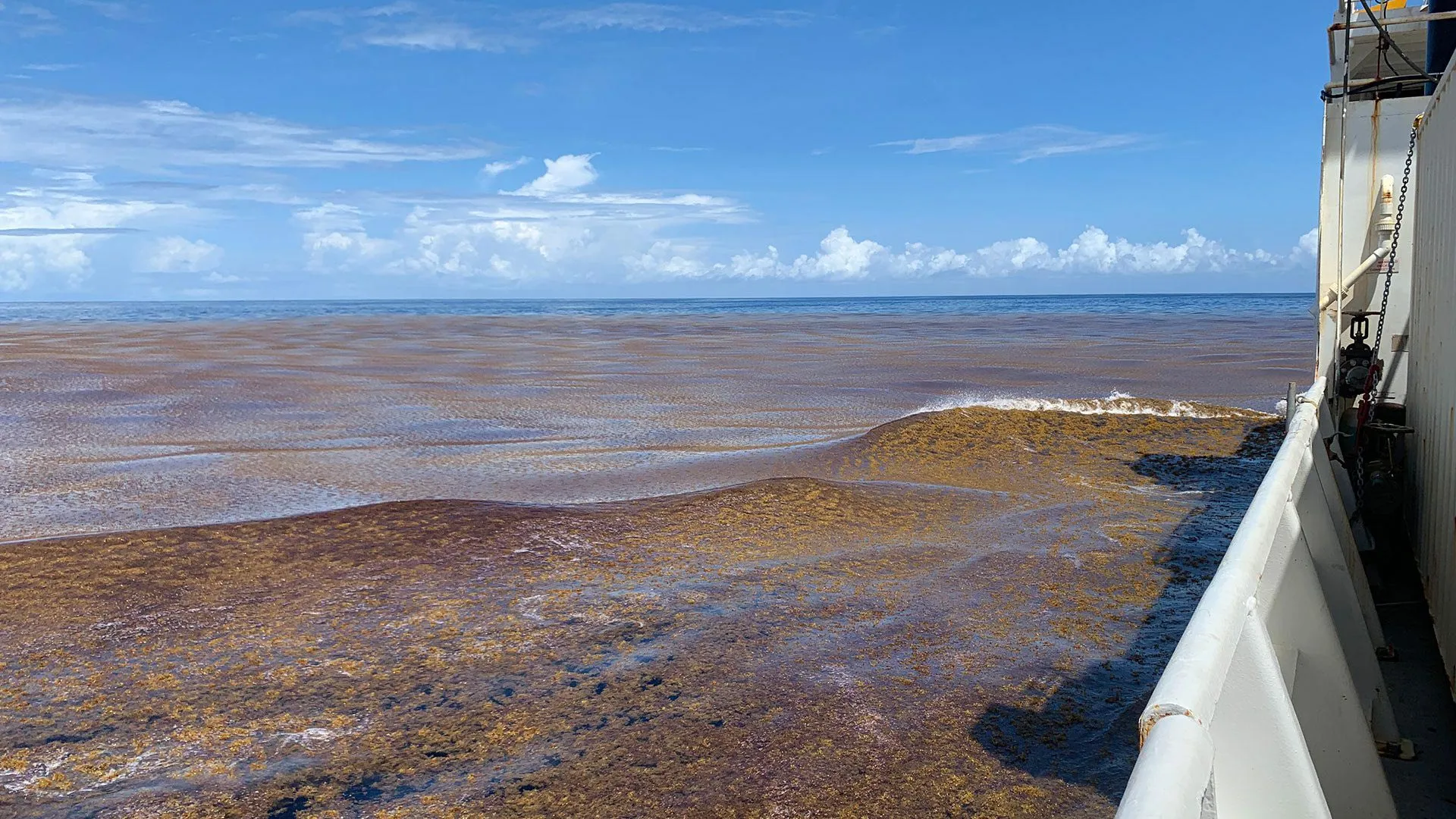
The ocean's surface is no longer just a mirror of the sky; it is becoming a shifting mosaic of green and gold. The AI analysis of 1.2 million satellite images delivers a clear, empirical signal: floating algae blooms are expanding across the global ocean. This is not a distant anomaly but a measurable change in the planet's most vital ecosystem. The rapid growth of massive seaweed mats carries a dual reality: they can absorb carbon and shelter marine life, yet their decay strips oxygen and smothers coastlines with foul-smelling detritus. For coastal communities, the economic toll is immediate, from lost tourism to damaged fisheries.
This story connects directly to the broader patterns we have been tracking in the marine environment. The weakening of the Atlantic Circulation is already reshuffling heat and nutrients across ocean basins, and the expansion of algae blooms may be one of the more visible symptoms of that systemic shift. Meanwhile, the rising costs of storm surge disasters in coastal China remind us that the ocean's changing behavior is not just an ecological concern but a financial one. The same waters that now produce these massive blooms are the ones we rely on for transport, energy, and food. And as we expand our observational capabilities, the data pipeline itself becomes part of the story: the integrated subsea cables across the Indian Ocean are precisely the kind of infrastructure that will carry the ocean intelligence needed to monitor these changes in real time.
Our take is straightforward: this is a wake-up call wrapped in a satellite image. The technology that revealed this expansion is the same tool we must use to manage it. We cannot treat algae blooms as a simple nuisance or a natural cycle to be endured. The scale of the change demands integrated data ecosystems that link ocean color, temperature, and current data with coastal economic indicators. For researchers, this means moving from observation to prediction, using these 1.2 million images as a baseline for what comes next. For policymakers, it means preparing for coastlines that will look and smell different, and planning for the economic disruption that follows.
The specific detail to watch is the seasonal timing of these blooms. If they are arriving earlier and persisting longer, the ecological and economic windows for intervention shrink. The question is not whether we can see the change, but whether we will act on the intelligence we already have.