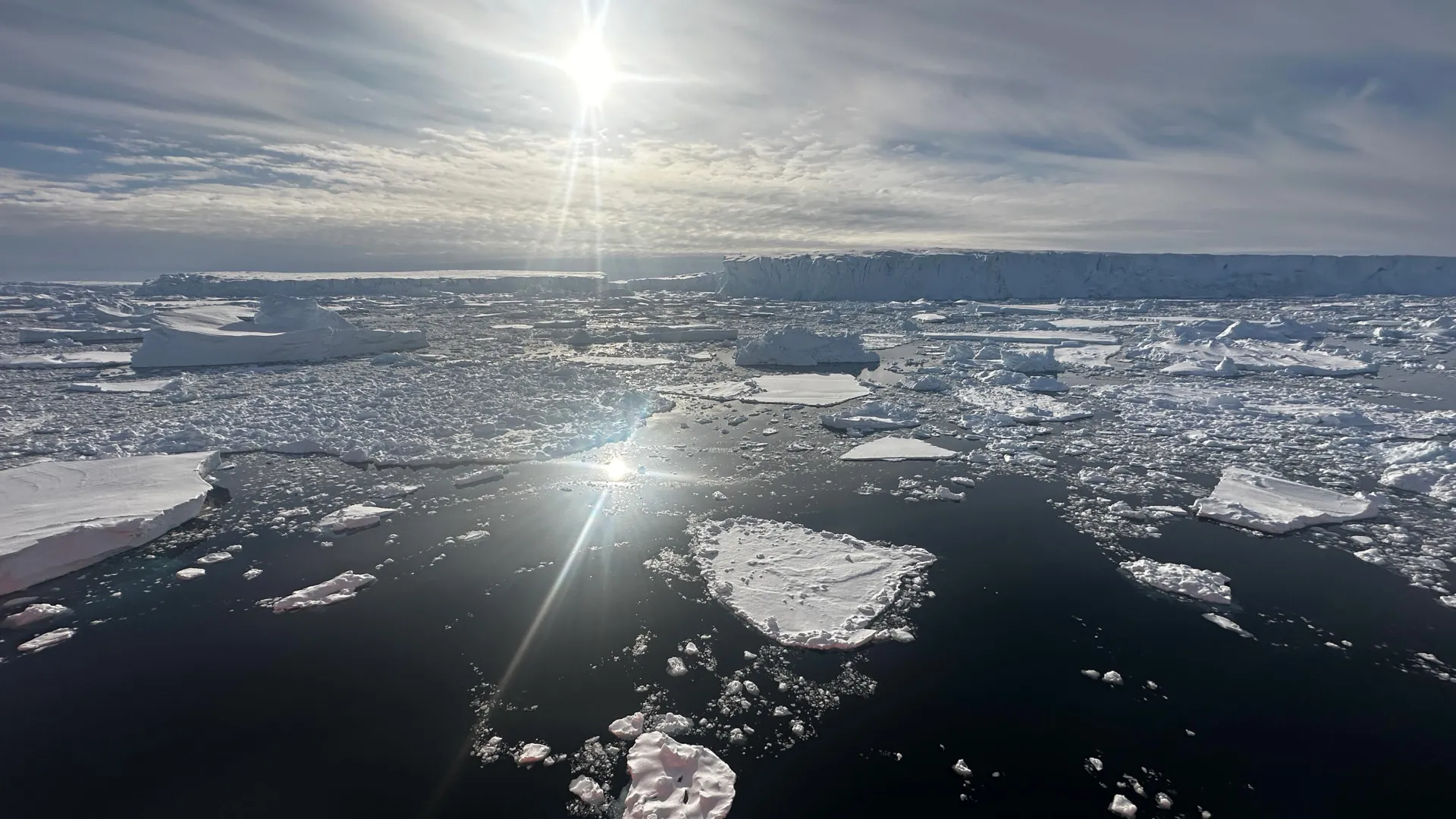
Understanding drives protection. The new model of Thwaites Glacier, showing that warm ocean water is now penetrating miles beneath the ice and doubling previous sea-level rise projections, is not just another data point, it is a recalibration of our timeline. This is not a hypothetical future scenario; it is a measured, validated signal that the system is responding faster than our earlier models anticipated. For anyone tracking climate indicators, this is the kind of empirical finding that demands immediate attention.
The study reveals that even without additional global warming, Thwaites could contribute up to 30 millimeters to global sea levels by 2100, with a 60% probability that a critical stabilizing ridge will be lost. That ridge is the glacier's last line of defense against a full-scale collapse. When we consider this alongside the accelerating loss of Switzerland's glaciers, which have Switzerland's glacier loss accelerates to nearly 20% in five years, a pattern emerges: ice systems worldwide are not merely retreating, they are reorganizing in ways that challenge our existing predictive frameworks. The Atlantic Meridional Overturning Circulation, as New Atlantic Current Data Signals Weakening and Imminent Tipping Point shows, is also weakening faster than expected. These are not isolated phenomena; they are interconnected components of an integrated ocean-climate system, and Thwaites is now the clearest indicator yet that our models must be continuously calibrated against real-world observations.
For researchers and policymakers, the practical takeaway is this: the assumption that future warming drives future risk is no longer sufficient. The warm water undercutting Thwaites is already there, already doing the work. This shifts the conversation from mitigation timelines to adaptation timelines. Coastal communities, infrastructure planners, and insurance markets must now operate on a higher baseline of risk, not a delayed one. The ocean intelligence we gather from submersibles and autonomous platforms, like those used to Exploring Antarctica's Benthic Realm from a Compact Submersible, is no longer a scientific curiosity, it is operational data for decisions being made today.
The specific consequence to watch is the behavior of that stabilizing ridge. If it fails, the model's 30-millimeter contribution becomes a floor, not a ceiling. The open question is whether our integrated data ecosystems are calibrated to detect that failure in real time, or whether we will only confirm it after the fact. That is the difference between being informed and being reactive. Understanding drives protection, but only if we act on what we now know.