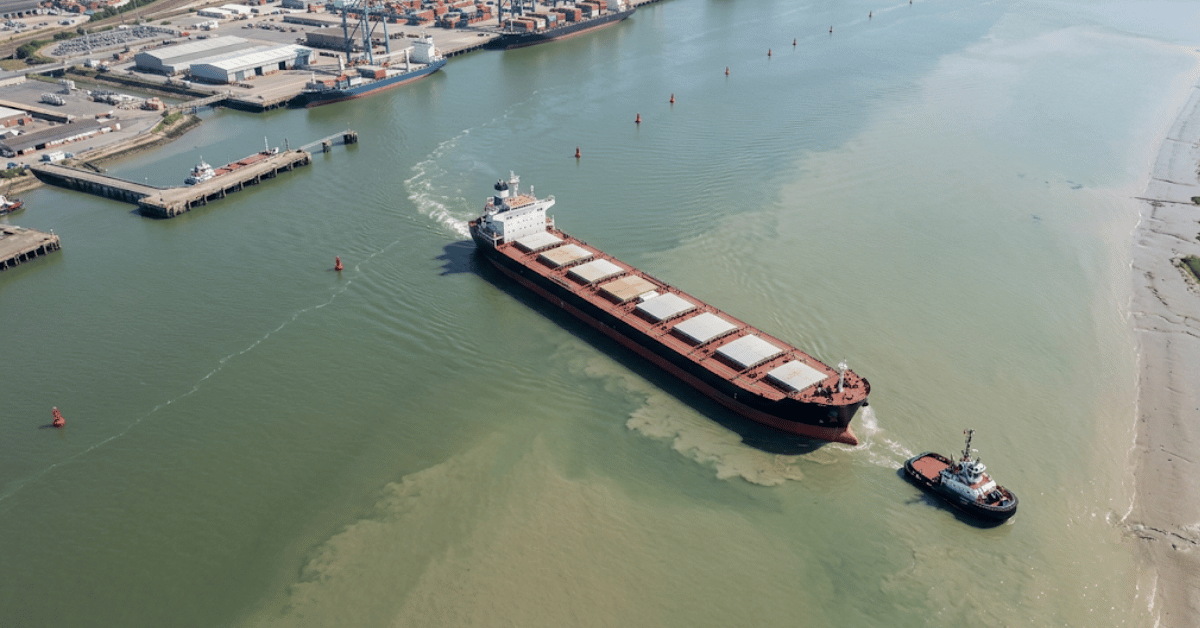
A fully laden bulk carrier ran aground twice in a tidal river because the pilot steered it outside the dredged channel, despite favourable conditions and a tug escort. The report points to expectation bias: the pilot expected the channel to be where it was not, and that assumption overrode the data in front of them. This is not a story about a rogue wave or equipment failure. It is a story about how our own mental models can be the most dangerous hazard in navigation.
We have seen similar patterns elsewhere in our coverage. The recent Bulk Carrier Freed After Prolonged Grounding Near Gladstone, Australia involved days of salvage operations, and while the specifics differ, the underlying theme is consistent: when operations proceed on assumptions rather than verification, the margin for error shrinks. Likewise, discussions about Ukraine Supports India’s Initiative for Black Sea Shipping Routes remind us that even politically complex waters require the same discipline in navigation. The ocean does not compromise with our expectations.
Our take is straightforward: expectation bias is not a personal failing; it is a systemic risk that demands structural countermeasures. When a pilot has transited a river dozens of times, the brain fills in gaps. It is efficient, but it is also dangerous. The channel markers were there. The draft was known. The tide was favourable. Yet the vessel still left the dredged area. That means the safeguards in place were not sufficient to override a confident, experienced mind. We would tell any mariner or shore-based manager reading this: ask what your procedures do to challenge a pilot's or officer's mental model in real time. If the answer is "we rely on their experience," you have a gap.
The practical takeaway is calibrated, measurable action. This incident should push operators to review how passage plans are verified against actual position data, not just how they are created. Do your bridge teams have the authority and the tools to challenge a pilot's track while it is happening? Is there a culture that rewards calling out a deviation, even a small one, before it becomes a grounding? We would argue that the lesson here is not to trust less, but to verify more. The specific detail to watch in the report is whether the investigation recommends changes to pilotage procedures or merely reaffirms existing ones. If it is the latter, we should expect similar groundings to recur. The ocean will keep teaching this lesson until we learn it.