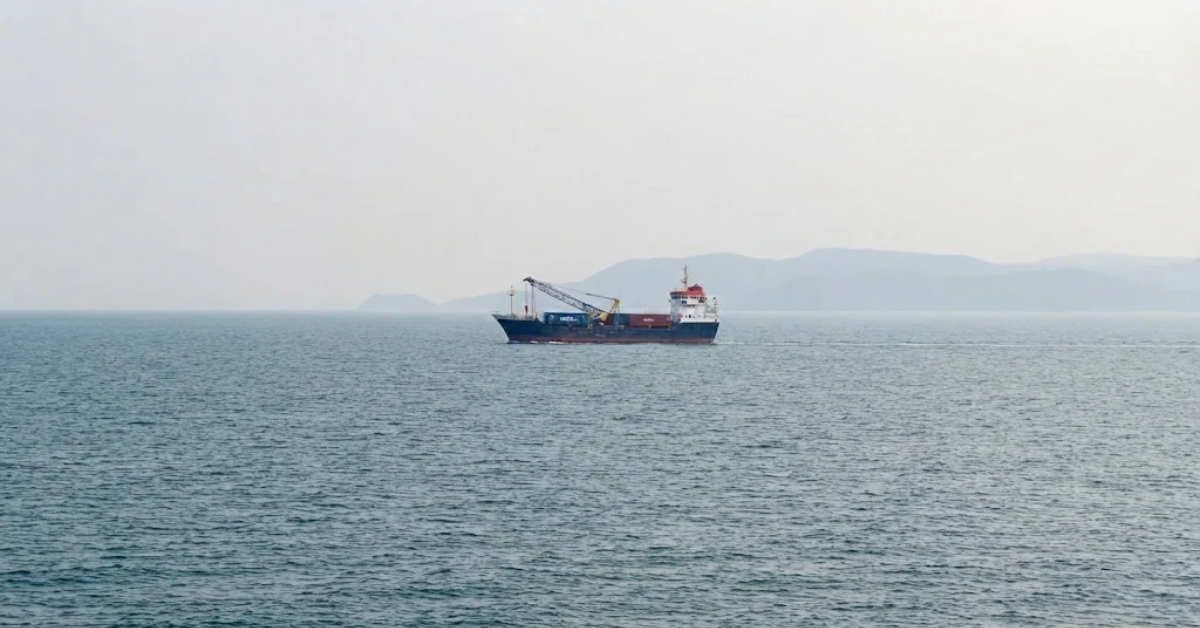
The seizure of 405 tonnes of sodium perchlorate aboard the MV Star Line is not a maritime anomaly, it is a calibrated warning about the gaps in global cargo transparency that our integrated data ecosystem is designed to close. Indonesia's navy acted on observable, real-time behavioral cues: a vessel moving in an odd pattern off its designated route, papers that did not match its cargo. That intervention, which uncovered enough rocket propellant to manufacture up to 100 missiles alongside millions of unregistered blank 4G SIM cards, demonstrates what empirical surveillance can achieve. But it also raises a measurable question: why did a ship carrying a strategic oxidiser from China to Bangladesh make an unscheduled fuel stop in Indonesian waters, and who was waiting for that cargo at Mongla Port?
This interdiction follows a pattern our publication has been tracking. In October, Maritime surveillance intercepts illegal ketamine transfer in Indonesian waters saw eight crew members detained off Tanjung Balai Asahan. Days later, Indonesian Authorities Seize Ketamine Cargo in Maritime Interdiction and Lab Raid connected a ship-borne narcotics bust to an onshore laboratory in Aceh. The MV Star Line case is distinct in scale and strategic consequence, the chemical involved is not an illicit drug but a validated precursor for missile propellant, yet the operational weakness is the same: cargo manifests and vessel registrations that do not withstand scrutiny. The IMO number 8356962 was listed with suspended status. The ship's documents were valid on paper but not in practice. These are not clerical errors; they are indicators that the paper trail, as currently structured, is failing.
For researchers and policymakers following ocean intelligence, the practical takeaway is this: the gap between what a ship declares and what it carries is the single most actionable vulnerability in transnational maritime security. Sodium perchlorate has legitimate industrial and laboratory applications, but 405 tonnes is not a consignment bound for a chemistry lab. The navy's commander stated that quantity could produce up to 100 missiles. The presence of millions of unregistered SIM cards alongside the chemical suggests a dual-use logistics chain where communications and munitions components travel together, likely to a single end-user. Indonesia has not named the shipping company, the cargo owners, or the Bangladeshi importer. That silence is itself a signal that the investigation is still tracing the nodes in this supply chain.
The open question that demands attention is how the vessel's route was planned. It sailed from Lianyungang, made an unscheduled stop in Indonesian waters, and was due at Mongla Port the following day. The deviation was not subtle, the navy spotted the change from the vessel's designated route. This is where electronic data interchange systems, as discussed in From paper trail to data flow: streamlining port clearance with EDI, become not just efficient but essential. Real-time cargo data shared across ports, coupled with automated route monitoring, could flag a vessel like the MV Star Line before it ever leaves Chinese waters. The navies of the world cannot board every ship that drifts off course. But an integrated data ecosystem can ensure that when they do board, they already know what they are looking for.