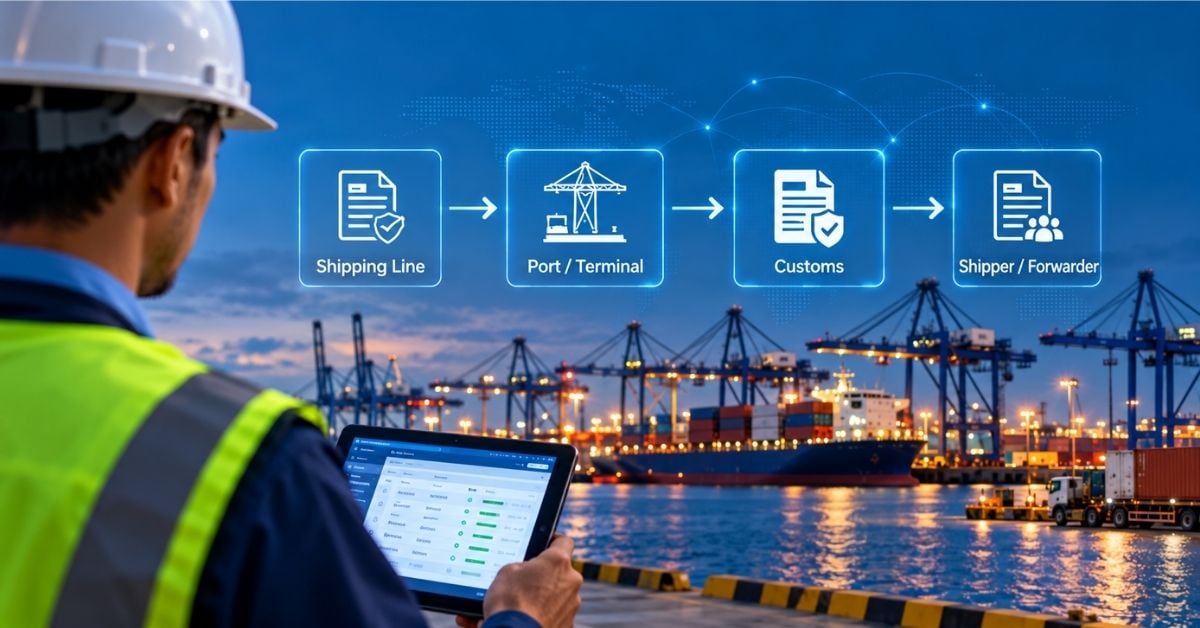
Port clearance should not be the slowest link in a supply chain that demands speed, yet for too many terminals the paper trail remains a bottleneck that undermines investments in automated cranes and yard equipment. The real friction is not physical, it is informational. When cargo is ready to move but the digital documentation lags behind, every hour of delay compounds into demurrage costs, missed delivery windows, and eroded trust. This is why integrating Electronic Data Interchange (EDI) into a unified terminal operating system is not merely an IT upgrade; it is a measurable step toward operational resilience. Validated innovation earns global recognition for maritime data solutions confirms that the industry is already rewarding platforms that close this data gap.
What makes a good EDI trail? It is not about eliminating human oversight, it is about ensuring that humans are called in only when judgment is required, not to re-enter data that should already be validated. A terminal operating system like iTOMS demonstrates the practical value of event-based tracking: when a container's details are entered once at the ship and pre-filled downstream, the risk of manual entry errors drops, and the audit trail stays intact. The IMO's Mandatory Maritime Single Window, which took effect in 2024, and the WCO Single Window Environment both codify what operators already know, that fragmented data submission wastes time and invites discrepancies. Compliance with these regulations is not a burden; it is a blueprint for eliminating the 24-to-72-hour delays that a single missing document can cause.
The comparison to physical automation is instructive. Ports routinely celebrate automated cranes and autonomous yard tractors, but those machines are only as effective as the data that directs them. A crane can move a container in seconds, but if the customs clearance is still waiting for a paper bill of lading, that container sits. The same principle applies to the broader challenge of port resilience. Calibrating port resilience against measurable cyclone-driven economic loss shows how empirical data on external shocks can inform terminal planning. Internal data shocks, like a customs hold caused by a misaligned EDI field, are equally disruptive and far more preventable. The ocean intelligence gained from an integrated data ecosystem is what allows operators to see not just where cargo is, but where the clearance process is stalling.
The specific takeaway for terminal operators is this: the next increment of throughput improvement will not come from faster ship-to-shore cranes. It will come from reducing the time between a container being physically ready and digitally cleared. Adopting a TOS that connects gate, yard, customs, and billing into a single dashboard, and that validates data at the point of entry, is the most direct path to cutting clearance delays. The question worth watching is how quickly regional mandates like India's One Nation One Port Process and Europe's EMSW will force legacy terminals to retire their paper-based fallbacks.