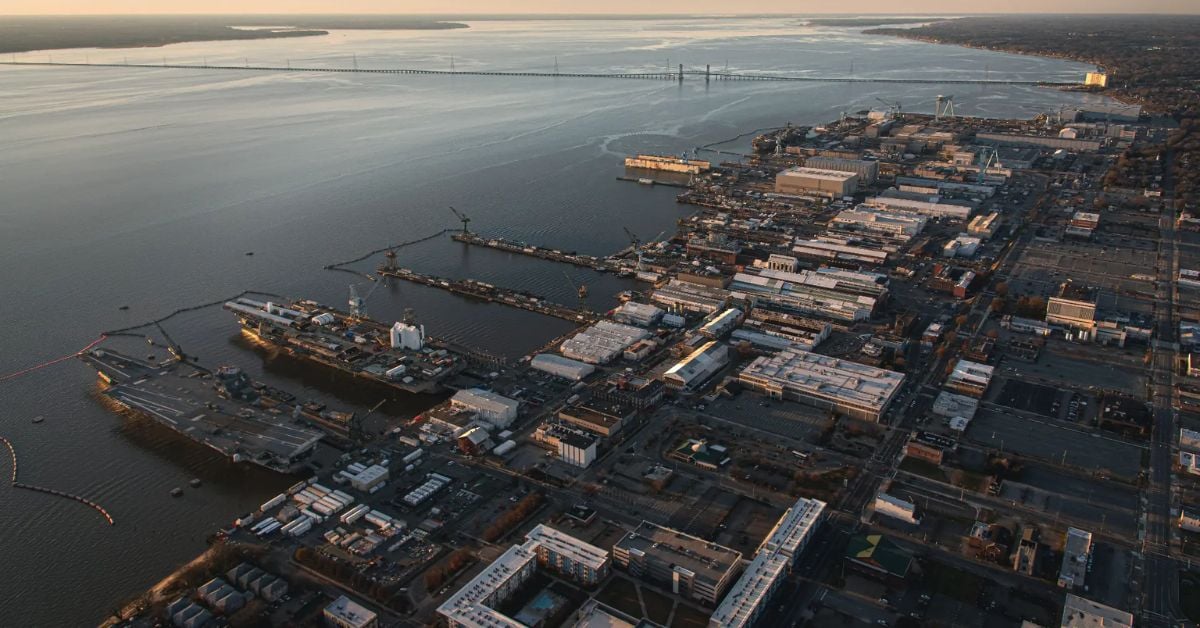
The U.S. Navy's $336 million contract with HII for CVN 82 components is not merely a procurement line item. It is a statement about the kind of naval force the United States intends to field for the next half-century, and it arrives at a moment when the calculus of sea power is shifting rapidly. The decision to fund nuclear-powered carrier components now signals confidence in a platform that remains the subject of intense debate, even as peer competitors push their own maritime ambitions forward. For those who track naval affairs closely, this is less about the vessel itself and more about what its construction says regarding strategic patience.
The timing is telling when placed beside India Projects Expanded Naval Fleet to Navigate Evolving Maritime Landscape, where New Delhi projects a 230-ship fleet by the mid-2040s. India is building for reach, not just defense. Similarly, China’s New Nuclear Carrier Signals Extended Naval Operations Capability suggests that Beijing is closing the gap in power projection, not merely matching numbers. In this context, the CVN 82 contract reads as a deliberate hedge: a commitment to maintain carrier strike group dominance as the primary expression of American naval presence. The Navy's parallel push to integrate autonomous systems, as noted in Navy Accelerates Autonomous Systems Integration for Enhanced Maritime Operations, does not replace the carrier. It makes the carrier more survivable, more networked, and more lethal.
Our take is straightforward: the debate over carrier vulnerability is not settled by this contract, but the decision to proceed with CVN 82 suggests the Navy has concluded that the carrier remains the most effective power projection platform available, and that conclusion is not made lightly. The $336 million is for components, not the full ship, and that is precisely the point. It is a measured, incremental step that allows the industrial base to maintain production readiness without committing to the full $13 billion price tag all at once. For readers, the practical implication is that American naval strategy still centers on the carrier as the backbone of forward presence, even as distributed maritime operations gain traction. This is not nostalgia; it is a calculated bet on the value of a mobile, sovereign airfield that cannot be held hostage by regional basing disputes.
What we would tell a reader who asks about this news is to watch the supply chain, not the ship. The real signal in this contract is the health of the shipbuilding ecosystem, and whether it can sustain the tempo required to deliver CVN 82 on schedule. A delay here would ripple across allied navies that depend on American carrier presence for their own security guarantees. The concrete point to monitor is whether HII can translate this component award into stable workforce growth, because that will determine whether the Navy's long-term carrier plans are credible or merely aspirational. The ocean is vast, but the margin for error in naval procurement is not.