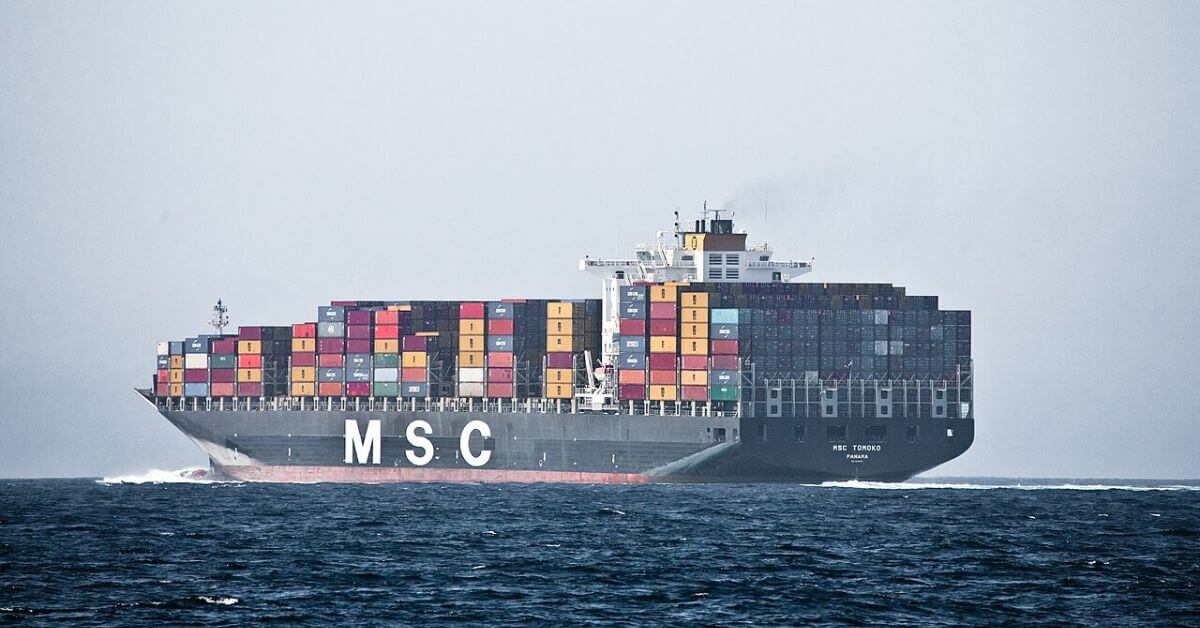
MSC's reported order of 20 additional 24,000-TEU vessels is a bet on scale that the global shipping market may not be ready to absorb. We see this less as a sign of confident demand and more as a strategic land-grab by the world's largest liner operator, one that carries real consequences for freight-rate stability and fleet balance. For our readers, whether you are tracking capacity utilization, negotiating charter rates, or modeling emissions trajectories, this order adds a significant variable to an already crowded equation.
The numbers are stark. If confirmed, MSC's total orderbook would exceed 3.4 million TEU, pushing its combined fleet and orderbook past 10 million TEU. Globally, the orderbook now stands at 16.2 million TEU, or 46.5% of the existing fleet, the highest ratio since 2009. That is not a cyclical uptick; it is a structural accumulation. The last time the industry carried this much unfilled capacity, the financial crisis was still reshaping trade lanes. The parallel is worth watching, especially as these vessels, each 380 meters long and 58.6 meters wide, begin delivering in 2027. Meanwhile, other segments of the maritime industry are pursuing different strategies. Maersk Vessel Arrives at L&T's Kattupalli Shipyard to Advance Indian Ship Repair shows a major carrier investing in maintenance infrastructure rather than pure fleet expansion, a contrast that highlights the divergence in how operators are positioning for the next decade. Similarly, the debate around Rethinking sanctions on shadow tankers to steady global freight rates reflects a growing recognition that supply-side fixes alone do not stabilize markets.
The partnership between MSC and Hengli Heavy Industries is not new, a strategic cooperation agreement was signed in August 2024 covering shipbuilding, engines, repairs, and retrofits, but the scale of this reported order signals a deepening reliance on a single Chinese yard for mega-vessel construction. Hengli has already launched the first two 21,000-TEU LNG dual-fuel ships from an earlier order, and the yard is now building everything from VLACs to VLCCs. Yet the fuel specification for these 20 new ships remains undisclosed. Whether they will burn LNG, methanol, ammonia, or conventional bunker fuel is an open question with material implications for the operators who will compete against them on cost and compliance. The industry's push toward alternative fuels is real, but an order of this size without public fuel details suggests that price and delivery speed may be outweighing environmental strategy in MSC's calculus.
Our takeaway is direct: the 16.2 million TEU global orderbook is not just a record, it is a stress test for the liner market's ability to match vessel supply with trade demand. The specific detail to watch is not the headline capacity number, but whether MSC's next moves include scrapping older tonnage or simply adding to its fleet. If the latter, the pressure on freight rates will intensify, and smaller operators without MSC's scale will feel it first. The ocean intelligence we need now is not just about how many ships are ordered, but about how many are retired.