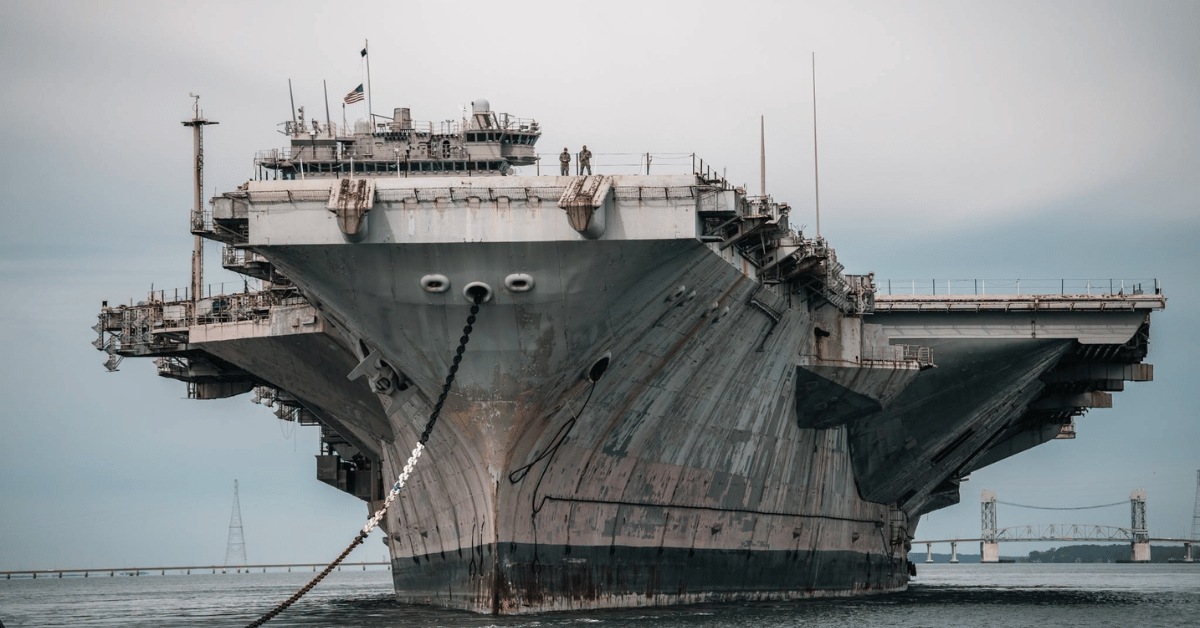
The dismantling of the USS *Enterprise* in Mobile Bay is not merely an industrial milestone, it is a calibrated test of how we manage the legacy of nuclear propulsion at sea. The world's first nuclear-powered aircraft carrier, a vessel that logged over one million nautical miles across the Cold War and into the 21st century, now enters a phase for which there is no precedent. No nuclear-powered aircraft carrier has ever been scrapped. That single fact demands the kind of measured, empirical attention our readers expect.
As the Coast Guard's safety zones take effect and NorthStar Maritime begins work under a $418.5 million contract, the practical implications for maritime stakeholders are immediate and long-term. The shipping channel closure from the Mobile Bar entrance to the Cochrane Bridge is temporary, but the 500-yard Naval Vessel Protection Zone around the hull will remain in force until roughly May 2030. Commercial traffic on the federal channel is unaffected, yet the sheer scale of the operation, defueled reactors, low-level radioactive waste, a 1,123-foot hull, means every step must be validated against rigorous safety protocols. This is a project that will be watched closely by naval engineers, environmental regulators, and port authorities alike, for it sets a baseline for every future nuclear carrier disposal. The recent A validated milestone for naval evolution: USS Harrisburg completes sea trials reminds us that naval innovation often runs parallel to decommissioning; the *Enterprise* name will live on in a Ford-class carrier under construction, but the knowledge gained here will inform how we responsibly close the loop on the nuclear ships that came before.
Our opinion is straightforward: this dismantling must be executed with the same scientific integrity that defined the vessel's operational life. The Navy has confirmed that hazardous and low-level radioactive waste will be packed and sent to licensed disposal sites. That is the minimum standard. What we need is transparent, peer-reviewed data on every stage of the process, from the handling of the eight defueled reactors to the long-term monitoring of the Mobile River berth. The Mobile Chamber's 2024 opposition, citing potential harm to downtown waterfront development, was not unfounded; it reflects a legitimate tension between industrial necessity and community stewardship. Yet the choice of Mobile is not arbitrary. This is the same port that prepared the ocean liner SS *United States* for its final voyage as an artificial reef, a project completed days before the *Enterprise*'s arrival. That operation, while different in scale and hazard, demonstrates the city's capacity for complex maritime dismantling. The Coast Guard's recent extended medical support to crew near Vieques underscores the service's readiness to respond to emergent risks; the same vigilance must apply here for years to come.
The specific consequence to watch is how the 2030 completion deadline holds against the technical unknowns of dismantling a nuclear-powered carrier for the first time. If the schedule slips or if waste-handling protocols face challenge, the precedent set here will ripple across future decommissioning plans for the Navy's nuclear fleet. The *Enterprise* taught the world what nuclear propulsion could achieve at sea. Now it must teach us how to end that chapter safely, measurably, and without alarm.