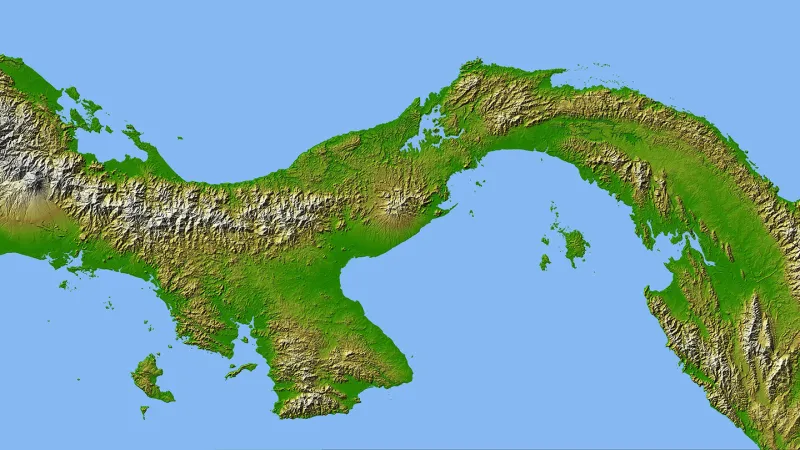
The Isthmus of Panama is usually the star in stories about the Great American Biotic Interchange. The narrow land bridge is where the faunal handshake happened. But new research suggests we have been looking at the wrong map. The real enabler of that ancient mammal migration, the quiet variable that made the journey possible, may have been Mexico's climate. That is a useful reminder that geography provides the stage, but environmental conditions write the script. For researchers piecing together the deep past, this shifts the focus from the pathway itself to the atmospheric conditions that made it passable.
The finding matters because it reframes a classic narrative. For decades, the assumption was that the Isthmus was the gate. If the gate was open, the animals walked. This research argues that the gate was only half the equation. The other half was a climate corridor that allowed temperate and tropical species to extend their ranges far beyond their typical latitudinal limits. It is not an argument against the importance of the Isthmus. It is an argument for a more integrated data ecosystem, one where geological timetables and climate models are calibrated against each other rather than treated as separate disciplines. In our own work with ocean intelligence, we see the same need for integrated data. A single dataset is just a signal. When you combine calibrated ocean intelligence, now within reach through integrated data discovery, you get a coherent picture.
This is a lesson that extends beyond paleontology. The study of past migrations, whether ancient mammals or modern marine species, depends on understanding the physical environment as a dynamic filter. Consider the recent debate over an unidentified marine structure in Port Phillip Bay. The identity of that organism is unresolved, but the question itself highlights how much we still do not know about species distribution and habitat suitability. Similarly, new research reinterpreting Paleodictyon's origins shows that our assumptions about ancient life forms can be overturned when we look at the evidence with fresh eyes.
The practical takeaway for our readers is this: do not mistake the map for the journey. The Isthmus was the door, but Mexico's climate was the key. For modern conservation, this means that protecting habitat corridors is not enough. We must also protect the conditions that make those corridors viable. A corridor through a desert is just a path to nowhere if the climate changes. The specific consequence to watch is how this research influences models of future species movement in response to current warming. If climate, not just geography, was the primary driver of this ancient interchange, then our predictions for how species will move in the coming decades must weight atmospheric variables just as heavily as physical barriers. The past is telling us to measure the climate indicators now, before we build more roads to nowhere.