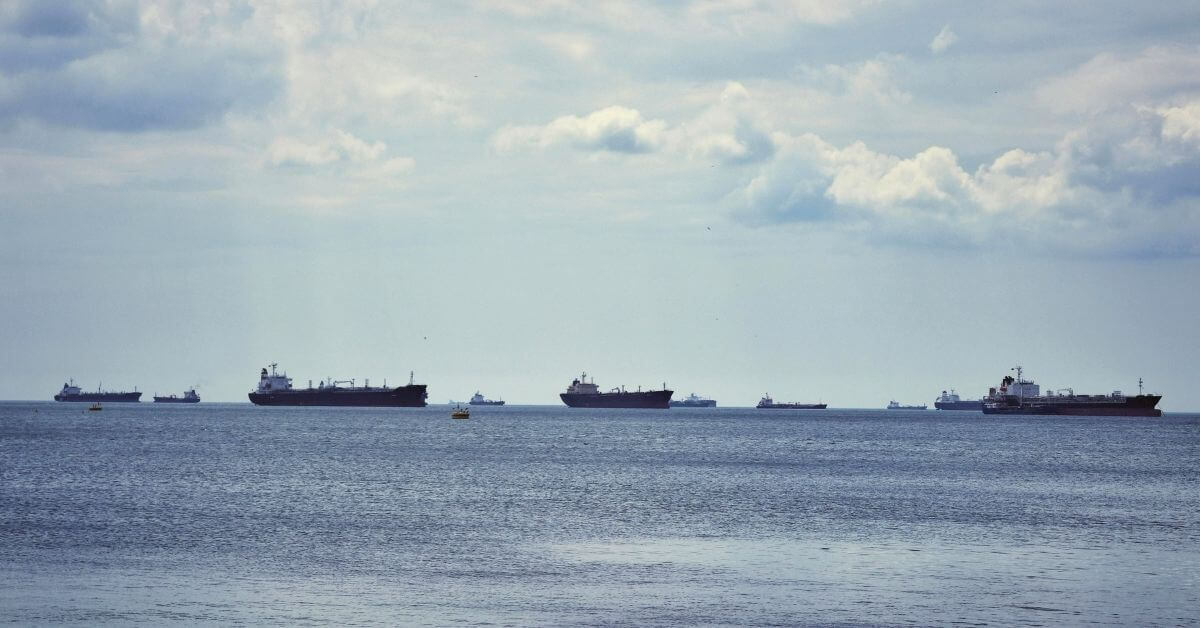
The numbers are stark. Before the war began in January 2026, more than 1,500 oil tankers and 1,700 commercial vessels had used the designated route through the Strait of Hormuz. Now, Iran reports it has prevented 30 ships from crossing outside the approved lane since August 22 alone. That is not a disruption; it is a recalibration of one of the world's most consequential maritime chokepoints, executed in real time and under active conflict conditions.
What stands out here is the operational discipline implied by the intercepts. Preventing 30 vessels in roughly a week is not a random act of aggression. It is a calibrated enforcement of a new normal, one where the old rules of transit no longer apply. This is not about alarmism; it is about measurement. The data we have on pre-war traffic volumes gives us a baseline. The post-war intercepts give us a trajectory. When you put those two points together, the picture is clear: the Strait is no longer a passive corridor. It is an active, managed, and contested space.
For our readers, the practical implication is immediate and specific. If you are tracking tanker movements, rerouting strategies, or insurance risk models, you are no longer working with historical patterns. The Gulf of Oman STS Transfers Max Out Amid Rising Saudi Oil Exports tells us that ship-to-ship transfers have already hit maximum capacity. That is the pressure valve. When the primary artery tightens, the secondary systems compensate, and they have now reached their limit. The intercepts at the Strait are not happening in isolation; they are part of an integrated logistics puzzle where every piece is strained.
This is where the Phased Negotiations Aim to Ease Restrictions on Strait of Hormuz become more than a diplomatic sidebar. They are the only credible mechanism to reverse this trend. But negotiations do not operate in a vacuum. The fact that Eighty Nations Urge Reopening of Vital Strait of Hormuz Shipping Lane signals broad political consensus, yet the intercepts continue suggests that the military calculus on the water is outpacing the diplomatic timetable. The gap between those two realities is where risk compounds.
What would we tell a reader who asks what to watch next? Stop looking at headlines about war declarations and start tracking the daily count of diverted vessels and the utilization rates of STS transfers in the Gulf of Oman. The 30-ship figure is the most recent data point, but it is not the story. The story is that we now have a measurable, longitudinal dataset of how a maritime chokepoint behaves under active interdiction. That is ocean intelligence, and it is more valuable than any single news cycle.
The concrete point to watch is whether the next intercept report shows a higher or lower weekly total. If it increases, phased negotiations are losing ground to on-water enforcement. If it plateaus, a fragile equilibrium is forming. Either way, the era of predictable transit through the Strait is over. The only question is what replaces it, and the answer will be written in the logs of the next 30 ships.