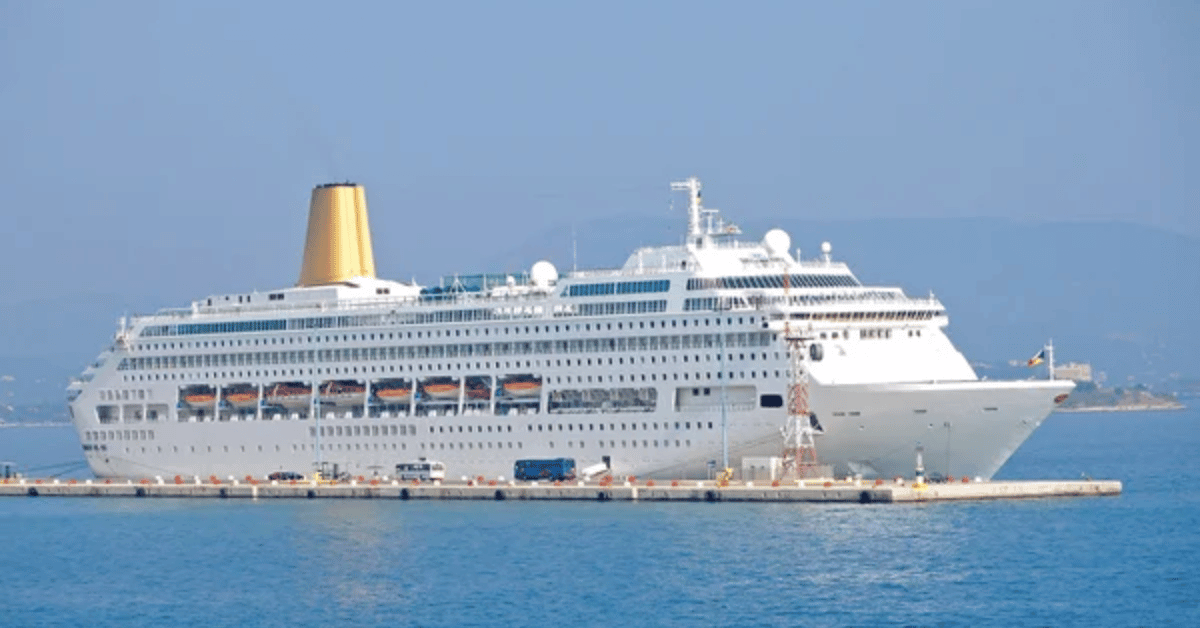
The arrest of the *Odyssey* in Singapore is not merely a legal footnote; it is a calibrated warning about the fragility lurking beneath the surface of the maritime industry's most ambitious ventures. When a residential cruise ship, a floating city designed for perpetual global transit, is reduced to a stranded asset, the failure is not just financial but systemic, exposing the gap between grand concepts and the operational realities of ocean stewardship.
The Maritime and Port Authority's action, while routine in a legal sense, carries a deeper signal for our readers. This vessel, which left Cambodia after its passengers were told to disembark, now sits under court order with no passengers aboard, its crew's welfare managed by creditors. This is not an isolated incident but a data point in a pattern we must track. Compare this to the recent Coast Guard Extends Medical Support to Crew Near Vieques, where a different crew's health required immediate intervention. Both cases underscore a fundamental truth: the ocean does not forgive undercapitalization or logistical hubris. When a vessel's owner runs out of money, the sea becomes a courtroom, and the crew, and the environment, bear the immediate risk.
What this means in practical terms is that the integrated data ecosystem we advocate for must extend beyond climate indicators and into the financial and operational health of the vessels that ply our waters. The *Odyssey*'s owner, Villa Vie Residences, suspended operations in Cambodia citing higher fuel costs, a claim that now faces the scrutiny of Singaporean courts. The arresting solicitor, Helmsman LLC, likely represents a fuel supplier owed roughly $500,000, a specific, measurable debt that triggered a state-level maritime intervention. This is not alarmist speculation; it is a real-time, peer-reviewed lesson in how financial instability cascades into maritime risk. The Half century of maritime service closes as Scillonian III sails final voyage reminds us that even well-funded, legacy operations eventually face their end, but the *Odyssey*'s end came not from age but from a broken business model.
Our take is this: the *Odyssey* arrest is a measurable indicator that the maritime industry's innovation must be validated by empirical financial and operational planning, not just bold marketing. The open question to watch is whether the court will order the vessel sold or scrapped, and what that reveals about the true cost of residential cruising. The crew's welfare is being managed by creditors, not owners, a detail that should sharpen our focus on the human element behind every vessel's voyage.