Maersk Plans To Order 42 New LNG Dual-Fuel Container Ships In $8.9 Billion Fleet Expansion
Our take
Maersk’s announcement of a $8.9 billion order for 42 new dual-fuel LNG container ships represents a significant, albeit complex, development within the global shipping industry. The scale of this investment—encompassing vessels ranging from 18,600 to 24,000 TEU capacity—underscores the continued, albeit shifting, demand for container transport, particularly in light of recent disruptions. The decision also highlights a reliance on LNG as a transitional fuel, a strategy that warrants careful consideration given the broader climate implications. Recent events further contextualize this move; the Panama Canal To Cut Ship Transits Again Due To Severe Drought Linked To El Niño demonstrates the increasing vulnerability of key maritime chokepoints to climate-driven events, impacting shipping routes and efficiency. Furthermore, the resumption of Suez Canal voyages by Maersk and Hapag-Lloyd, as reported in Maersk, Hapag-Lloyd Resume More Suez Canal Voyages Despite Red Sea Risks, indicates a dynamic reassessment of trade routes based on geopolitical and security factors.
The embrace of LNG as a fuel, while presenting a short-term reduction in greenhouse gas emissions compared to traditional heavy fuel oil, is not without its caveats. While LNG combustion produces fewer sulfur oxides and particulate matter, methane slip – the unintentional release of unburned methane, a potent greenhouse gas – remains a critical concern. The lifecycle emissions of LNG depend heavily on the source of the gas and the efficiency of the entire supply chain, from extraction to combustion. The long-term viability of LNG-powered vessels hinges on the development and widespread adoption of effective methane mitigation technologies, alongside a transition toward genuinely zero-emission fuels like green hydrogen or ammonia. Japan’s recent launch of the Japan’s First Hydrogen-Fueled Dining Cruise Ship ‘Amane’ provides a glimpse into the future of sustainable maritime propulsion, although scaling this technology for the massive container shipping sector presents formidable engineering and economic challenges.
The timing of this fleet expansion is noteworthy, occurring amidst a period of fluctuating global trade volumes and increasing scrutiny of the shipping industry's environmental impact. While the demand for goods continues to drive the need for larger, more efficient vessels, the imperative to decarbonize the sector is undeniable. Maersk's investment, therefore, can be interpreted as a strategic response to both immediate market demands and long-term regulatory pressures. The sheer scale of the order suggests a degree of confidence in continued trade growth, but also a calculated effort to position the company for future compliance with increasingly stringent emissions regulations, such as those being developed within the International Maritime Organization (IMO). It’s important to note that the operational efficiency of these new vessels, coupled with the sourcing and management of their fuel, will be critical in determining their overall environmental footprint.
Ultimately, Maersk’s decision reflects the ongoing tension between the demands of global commerce and the urgent need for environmental stewardship. The deployment of these LNG-powered ships represents a transitional step, one that carries both benefits and risks. The industry, and indeed the world, will need to closely monitor the development and implementation of methane mitigation technologies, the evolution of alternative fuel infrastructure, and the effectiveness of regulatory frameworks in ensuring a truly sustainable maritime future. A critical question moving forward is whether this significant investment in LNG infrastructure will ultimately prove to be a strategically sound decision in a rapidly decarbonizing world, or a potential liability as cleaner, more sustainable alternatives become increasingly competitive.
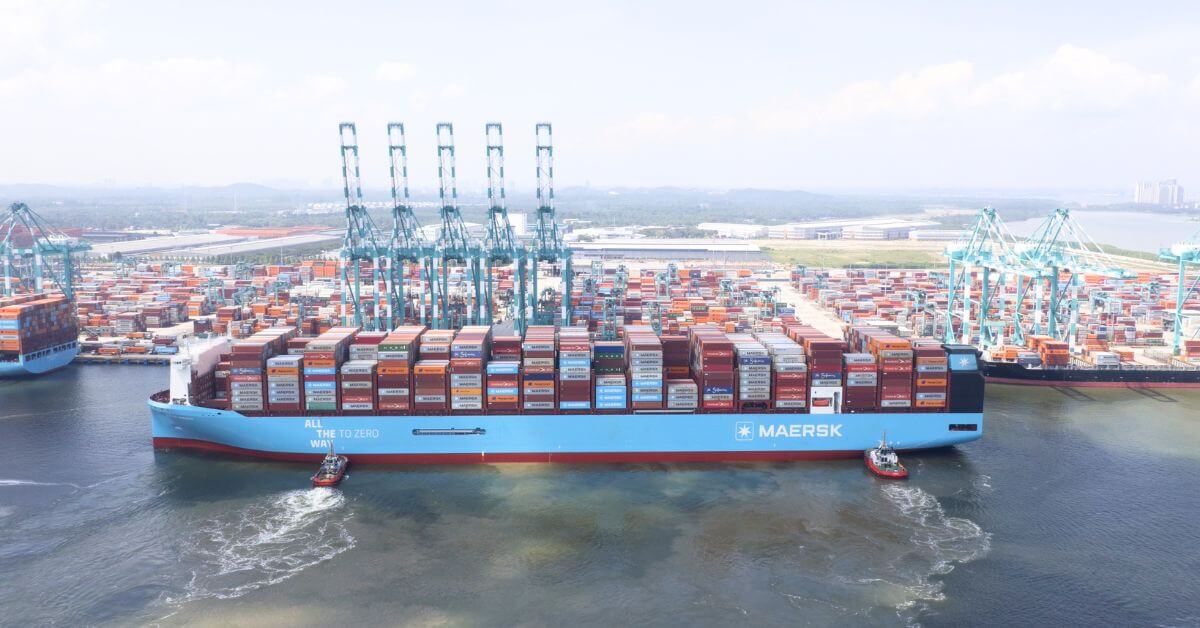
Maersk is planning to order 42 new LNG dual-fuel container ships in a fleet expansion worth an estimated $8.9 billion, with Chinese shipyards expected to get most of the work.
The planned order includes 12 ships with a capacity of 24,000 TEU, 24 ships of 19,000 TEU and six ships of 18,600 TEU. If the deal goes ahead, the 24,000-TEU ships will be the largest container ships Maersk has ever ordered.
Hanwha Ocean is the only South Korean shipbuilder competing for the 24,000-TEU ships. It is competing with several Chinese shipyards for the contract.
Maersk is reportedly in talks with China’s Hengli Heavy Industries for the 24 ships of 19,000 TEU. Hengli has an advantage because it can offer earlier delivery dates.
The six 18,600-TEU ships are most likely the optional vessels in Maersk’s existing deal with New Times Shipbuilding.
In February 2026, Maersk signed a contract with the Chinese shipbuilder for eight firm orders and six options for 18,600-TEU container ships.
If Maersk confirms the six options, the total number of 18,600-TEU ships under the deal will reach 14.
New Times Shipbuilding has also recently placed a main-engine order with South Korean manufacturer STX Engine for this batch of ships.
Chinese Shipyards Take Most New Container Ship Orders
Chinese shipyards continue to win most of the new container ship orders placed around the world.
Shipowners ordered 388 container ships in the first half of 2026. Chinese shipyards won more than 80% of those orders, while South Korean shipyards took about 10% to 15%.
Delivery time is one of the main reasons shipowners are choosing Chinese yards. Chinese shipyards can offer earlier delivery dates because they have more production capacity.
South Korean shipyards face capacity limits when they have to build different types of ships at the same time.
Chinese shipbuilders have also continued to improve their technology for dual-fuel container ships. This has helped them attract more orders.
Maersk has increasingly used Chinese shipyards for its new ships since 2024. If the reported deals go ahead, Chinese yards would again take most of the company’s newbuilding programme.
The planned order would also mark a change in Maersk’s fleet strategy.
For years, the company kept its fleet capacity between about 4.0 million and 4.4 million TEU, including during the pandemic freight boom.
Maersk now has 752 ships with about 4.75 million TEU of capacity.
Mediterranean Shipping Company has grown to about 7.4 million TEU since overtaking Maersk as the world’s largest container shipping line in early 2022. The difference between the two fleets is now about 2.7 million TEU.
References: maritimegateway, imarinenews
Read on the original site
Open the publisher's page for the full experience