Japan’s First Hydrogen-Fueled Dining Cruise Ship ‘Amane’ Launched In Nagasaki
Our take
The launch of the *Amane*, Japan’s first hydrogen-fueled dining cruise ship, represents a significant, albeit incremental, step toward decarbonizing the maritime sector. NYK’s initiative, coupled with recent developments like the [New Maritime Framework To Establish ISO Standards For Hydrogen Ships & Smart Shipyards], signals a growing commitment to sustainable propulsion technologies within the industry. While the challenges of scaling hydrogen infrastructure remain substantial, the *Amane* serves as a tangible demonstration of the feasibility of hydrogen power in a passenger vessel context, moving beyond theoretical proposals and into practical application. The initial operational area will be Nagasaki Prefecture, which likely allows for a more controlled environment for managing hydrogen supply and safety protocols, a crucial consideration given the nascent stage of this technology. It’s encouraging to see this progress alongside innovations like the [Ground-Breaking 100-Foot Full-Foiling Monohull Yacht Driven By Renewable Energy To Redefine Ocean Sailing], which, while operating on a vastly different scale, highlights the broader shift toward renewable energy solutions across various maritime applications.
The integration of hydrogen fuel cells into cruise ship operations presents a unique set of engineering and logistical hurdles. Traditional cruise ships are notorious for their significant carbon footprint, contributing substantially to global emissions. Replacing heavy fuel oil with hydrogen offers the potential for near-zero emissions during operation, a critical factor in meeting increasingly stringent environmental regulations and consumer demand for sustainable travel. However, the production, storage, and refueling of hydrogen pose considerable challenges. Currently, the majority of hydrogen is produced from fossil fuels, undermining the environmental benefits if that source isn't transitioned to renewable methods. The *Amane*'s success will depend not only on the efficiency of its fuel cell technology but also on the sourcing of its hydrogen. Furthermore, the ship's design necessitates significant modifications to accommodate hydrogen storage tanks and related safety systems, adding to the initial investment costs. These factors underscore the need for continued investment in hydrogen production infrastructure and the development of standardized safety protocols, as highlighted by the ABS MOU mentioned earlier.
Beyond the immediate environmental benefits, the *Amane*’s launch could stimulate innovation within the shipbuilding and maritime technology sectors. The project necessitates advancements in fuel cell technology, hydrogen storage solutions, and onboard safety systems, potentially creating new opportunities for Japanese engineering firms and research institutions. The decision to incorporate a dining cruise aspect also suggests a strategic consideration of passenger experience and market demand. Demonstrating the viability and appeal of hydrogen-powered vessels could accelerate the adoption of this technology across the broader cruise industry and beyond. It’s worth noting that while the *Amane* is a relatively small vessel compared to mega-cruise ships, the lessons learned from its operation will be invaluable for scaling up hydrogen propulsion to larger vessels. This development also places greater emphasis on the need for careful lifecycle assessments of these new technologies; the embodied carbon in the ship’s construction and the materials used in hydrogen storage must be considered alongside operational emissions.
The *Amane*’s launch is not a singular solution to the maritime industry's decarbonization challenges, but a significant milestone demonstrating that hydrogen-powered vessels are moving from concept to reality. The integration of this technology into a commercially operating cruise ship provides valuable data and experience that will inform future development and deployment. A key question to watch is how the ship's operational performance, including fuel efficiency and reliability, compares to traditional diesel-powered vessels. Will the increased initial investment in hydrogen technology translate into long-term operational cost savings, and will the availability of "green" hydrogen—produced from renewable sources—be sufficient to truly realize the environmental benefits? The answers to these questions will be crucial in determining the pace of adoption for hydrogen propulsion in the maritime sector.
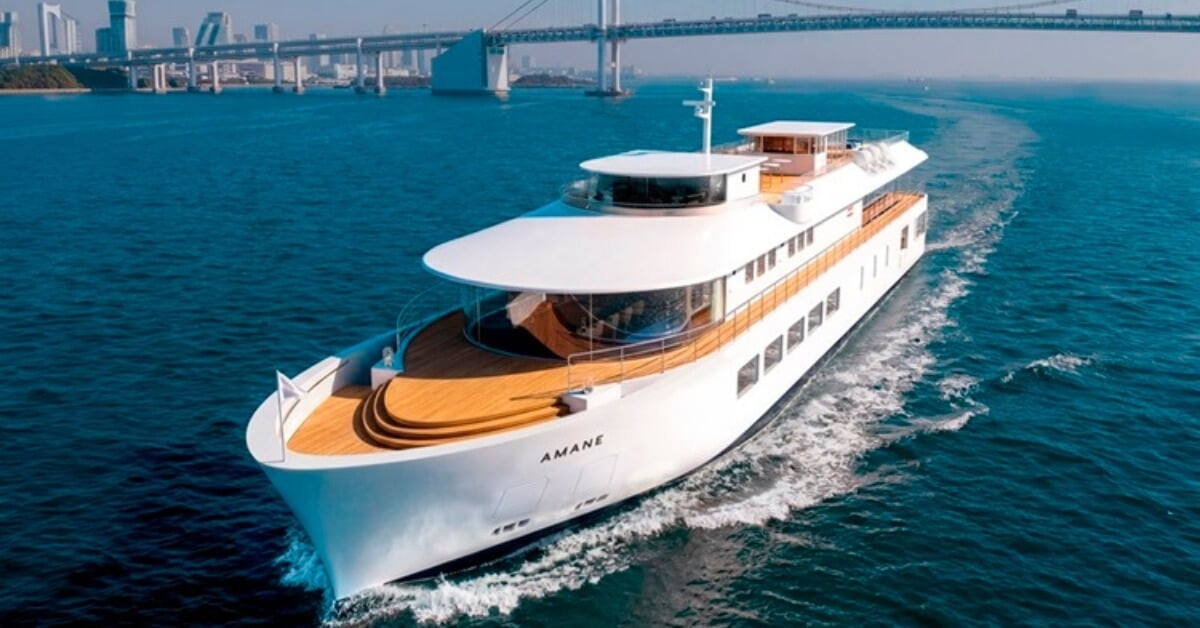
On September 11, NYK held a naming and launch ceremony for its new cruise ship, Amane, at Maehata Shipbuilding Co., Ltd. in Sasebo City, Nagasaki Prefecture.
The ceremony was attended by numerous stakeholders, including Masamichi Katayama, founder and principal of Wonderwall®, who served as the vessel’s total designer, and Shimpei Terada, president of Tysons & Company, who designed the onboard guest experience.
At the event, NYK Senior Managing Executive Officer Takuji Banno officially named the vessel Amane (海音). The name combines the kanji characters 海 (“sea”) and 音 (“sound”), evoking the image of a serene voyage accompanied by the soothing sounds of the sea. It also reflects NYK’s aspiration for both the vessel — and the vision it represents — to resonate broadly with people.
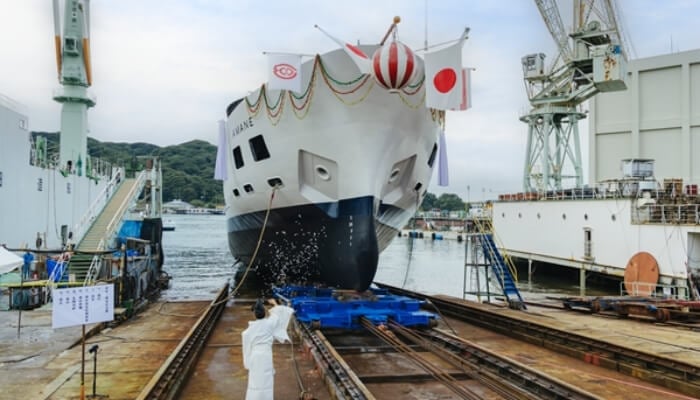
During the ceremony, Katayama performed the ceremonial rope-cutting, and Amane was successfully launched.
Amane is being built as the successor to Lady Crystal, a restaurant ship currently operating in Tokyo Bay. Following interior outfitting and related work, Amane is scheduled for delivery in March 2027 and is expected to enter service in May 2027.
Press Release
Read on the original site
Open the publisher's page for the full experience