Maersk, Hapag-Lloyd Resume More Suez Canal Voyages Despite Red Sea Risks
Our take
The resumption of Suez Canal voyages by Maersk and Hapag-Lloyd, despite ongoing risks in the Red Sea, represents a complex recalibration of global trade strategy. The decision to revert to the shorter, more established route after a period of significant disruption highlights the escalating pressures on supply chains and the economic incentives outweighing immediate security concerns. This shift, impacting services AE5, AE11, AE12, and ME2, underscores a broader trend toward risk mitigation through operational adjustments rather than fundamental route alterations. The recent attack off the Oman coast, where a ship carrying 14 Indian crew members was targeted and one remains missing [Ship Carrying 14 Indian Crew Members Attacked Off Oman Coast, 1 Missing], serves as a stark reminder of the volatile security landscape. Coupled with India's proposal for an emergency support network for seafarers [India Proposes Emergency Support Network For Seafarers After 15 Indian Crew Members Killed In Conflict Zones], the situation emphasizes the need for robust maritime safety protocols and international cooperation. The impetus for this change is also mirrored by infrastructure developments elsewhere, such as the opening of China’s Pinglu Canal [China’s 134.2 Km Long River-To-Sea Pinglu Canal Opens, Offering Trade Shortcut To Southeast Asia], which offer alternative, albeit currently limited, trade routes.
The economic calculus driving this move is clear: the longer journey around the Cape of Good Hope adds significant time and fuel costs to voyages, directly impacting shipping rates and ultimately consumer prices. While the risks in the Red Sea, primarily posed by Houthi attacks, remain a serious concern, the shipping lines are likely employing enhanced security measures, including armed escorts and advanced threat detection systems, to mitigate these dangers. The validated data regarding vessel tracking and risk assessment, increasingly reliant on real-time ocean intelligence, is undoubtedly playing a crucial role in these decisions. It’s a calculated gamble – balancing the potential for disruption against the tangible costs of alternative routes. The integrated data ecosystem used to monitor these factors is becoming increasingly critical, providing calibrated insights into evolving threats and informing operational responses. This reliance on empirical data underscores the growing importance of technological innovation in maritime security and trade management.
Beyond the immediate impact on shipping costs, this development has broader implications for global supply chain resilience. The Suez Canal remains a vital artery for international trade, handling approximately 12% of global seaborne cargo. Disruptions to this route, as experienced in recent months, can have cascading effects across various industries, leading to delays, shortages, and price volatility. The willingness of major shipping lines to resume Suez Canal transits, despite the inherent risks, signals a degree of confidence in the effectiveness of mitigation strategies. However, it also highlights the precarious nature of global trade, which remains susceptible to geopolitical instability and unforeseen events. Longitudinal data analysis of maritime traffic patterns and security incidents is essential for developing predictive models and proactive risk management strategies. The interplay between these factors will continue to shape the future of maritime trade routes and the overall health of the global economy.
Looking ahead, the long-term viability of the Suez Canal route will depend on the sustained effectiveness of security measures and the evolution of geopolitical dynamics in the region. The question remains: can the industry maintain a balance between economic efficiency and operational safety in the face of persistent threats? Further investment in advanced surveillance technologies, collaborative security initiatives, and diversified trade routes will be critical for ensuring the stability and resilience of the global maritime ecosystem. The calibration of risk tolerance, informed by empirical data and predictive analytics, will be a defining factor in determining the future of trade flows through this strategically important waterway.
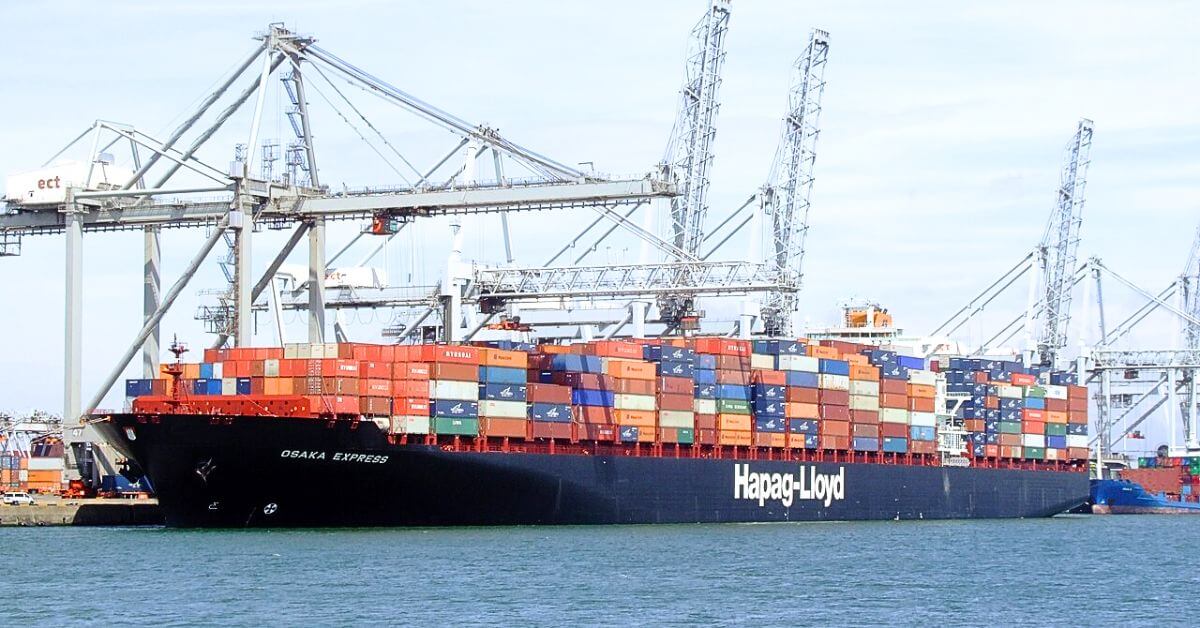
Maersk and Hapag-Lloyd will move four more container services through the Suez Canal as the two companies bring more ships back to the shorter route between Asia and Europe.
The four services, AE5, AE11, AE12 and ME2, will switch from the Cape of Good Hope route to the Suez Canal, Maersk said on Monday. This will take the number of Gemini Cooperation services using the Suez route to six. AE15 and AE19 have already returned to the canal.
Shipping companies stopped using the Suez Canal earlier this decade following attacks on commercial ships in the Red Sea by Yemen’s Houthis.
Ships were instead sent around the Cape of Good Hope, making some Asia-Europe voyages thousands of nautical miles longer. The longer route has meant higher fuel use, higher costs and longer transit times.
Maersk said the Suez Canal is an important shipping route between East and West and that the four services would offer customers shorter transit times by using the Suez and Red Sea route.
The first westbound voyages for three of the four services are expected later this month.
Antonia Maersk is scheduled to sail the AE11 service from Tanjung Pelepas on September 19. Marchen Maersk will follow on the AE5 service on September 21, while Cornelia Maersk is scheduled to sail the ME2 service on September 24. Maersk has not yet announced the first sailing date for AE12.
The AE5 service connects Asia with Northern Europe. AE11 and AE12 connect Asia with the Mediterranean, while ME2 links India with Europe.
All four services will use the Suez Canal in both directions. The carriers have already taken several steps to bring more services back to the canal.
AE15 has returned to the Suez Canal and later added a call at Jeddah, taking the service into the Red Sea.
Maersk has also restarted its independent MECL service, which connects India, the Middle East and the U.S. East Coast through the region.
Maersk and Hapag-Lloyd formed the Gemini network last year to reduce shipping costs and improve schedule reliability.
The Suez route is shorter than sailing around southern Africa. Maersk said it is the most efficient option for moving cargo between Asia and Europe when security conditions allow ships to operate safely.
Security risks in the Red Sea and the Middle East remain.
Maersk said the two companies will continue to watch the situation in the Middle East closely. Any changes to Gemini services will depend on there being no escalation in conflicts in the region.
Houthi forces aligned with Iran continue to maintain a presence along Yemen’s Red Sea coast. This has raised concerns for ships approaching the Bab el-Mandeb, a key maritime chokepoint.
The region is also facing tensions, including disruptions affecting shipping through the Strait of Hormuz.
References: globaltrademag, Reuters
Read on the original site
Open the publisher's page for the full experience