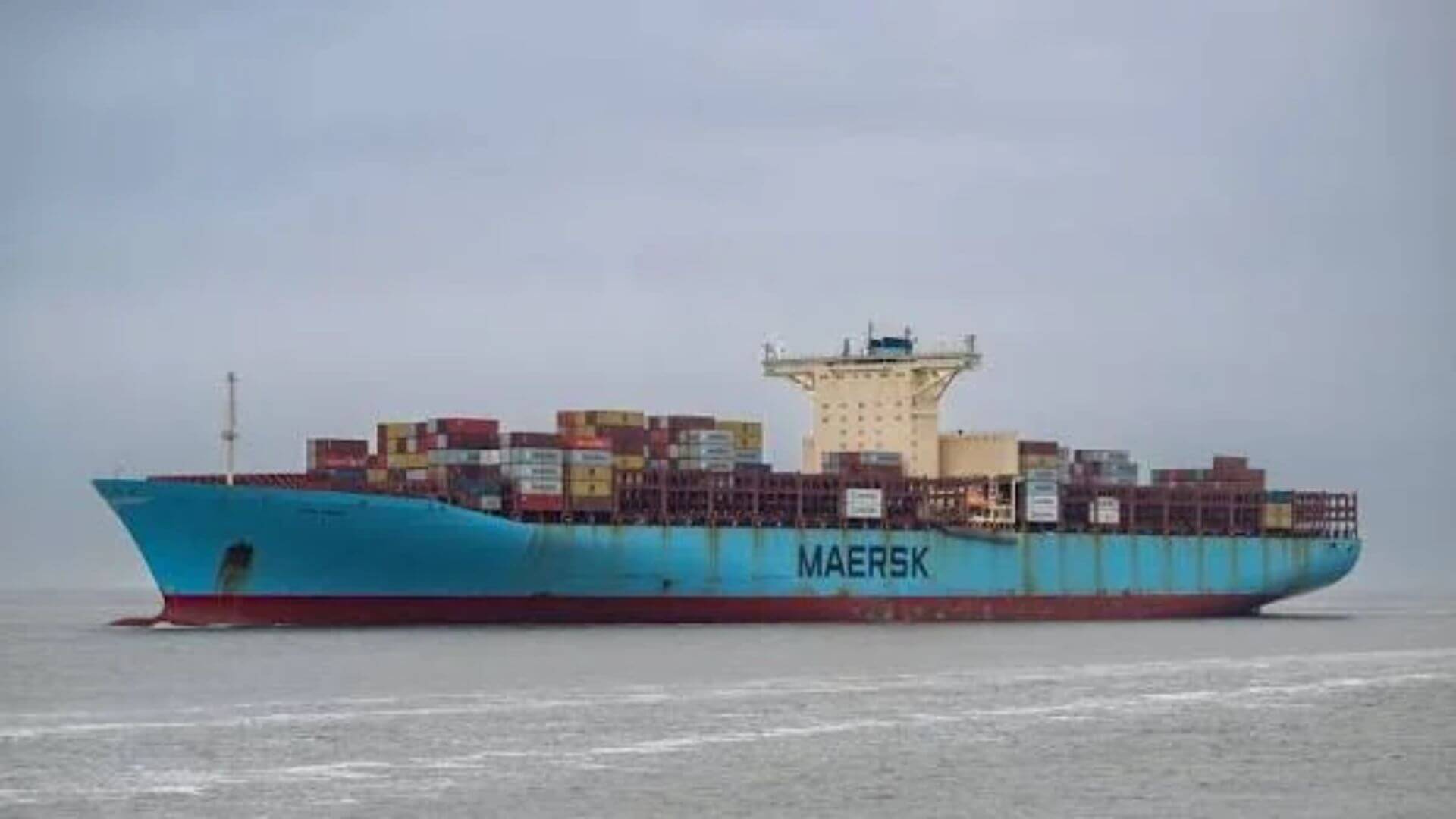
Legacy systems are not relics of the past; they are active liabilities. Maersk's confirmation of an unauthorized data extraction from a local legacy system is a stark reminder that the maritime industry's digital backbone is only as strong as its weakest node. We have seen the industry push toward integrated safety and calibrated environmental targets, as highlighted by our coverage of a Container Ship Collision at Yantian and the India and Denmark calibrate maritime partnership, but this incident reveals that operational resilience cannot advance without equal investment in cybersecurity hygiene.
The attacker, a ransomware group called WhiteArmor, claims to have extracted roughly 100 GB of data from Maersk's OCF/LF Logistics platform, including 30,000 driver records, mobile device logs, plaintext passwords, and signed delivery receipts. Maersk's statement does not confirm those specifics, and it has not publicly linked the incident to WhiteArmor by name. What is confirmed is that the breach occurred in a legacy system, a class of infrastructure that often lacks the real-time monitoring and integrated security protocols applied to newer platforms. For our readers, from logistics operators to policy analysts, this underscores a practical truth: an integrated data ecosystem must extend to every corner of an organization, not just the front-facing digital portals.
This is not Maersk's first cybersecurity crisis. In 2017, the NotPetya attack forced the company to rebuild over 4,000 servers and 45,000 workstations from scratch, costing an estimated $300 million. That event was a watershed moment for maritime cyber resilience. Yet here we are, nine years later, with another breach tied to a legacy system. The recurrence suggests that the industry's approach to digital security has not fully matured. While Maersk states that findings so far strongly suggest no sensitive data have been disclosed, the mere presence of plaintext passwords in the extracted data set, if accurate, points to a fundamental failure in basic security protocols. Encryption and credential management are not aspirational features; they are baseline requirements for any system handling driver records and delivery receipts.
The ransom demand of $5 million in Bitcoin, with a 30-day deadline, is a relatively modest figure for a company of Maersk's scale. But the real cost is not the ransom; it is the erosion of trust and the operational disruption that follows. Maersk has assured customers that they can continue using the platform for bookings and shipments, which is encouraging, but the open question is how long that continuity can hold if the investigation reveals deeper compromises. For a shipping corridor that has seen measurable recovery, such as the Ever Eon's Suez transit, a major breach at a leading carrier could ripple across global supply chains.
The specific takeaway is this: every legacy system still in operation is a point of exposure that must be audited, isolated, or retired. No amount of industry collaboration on green shipping targets or safety protocols will matter if the data flowing through those partnerships is not protected at every layer. The question for Maersk, and for every organization in the maritime ecosystem, is not whether another breach will happen, but whether the lessons of 2017 have been fully applied to the systems that were never rebuilt.