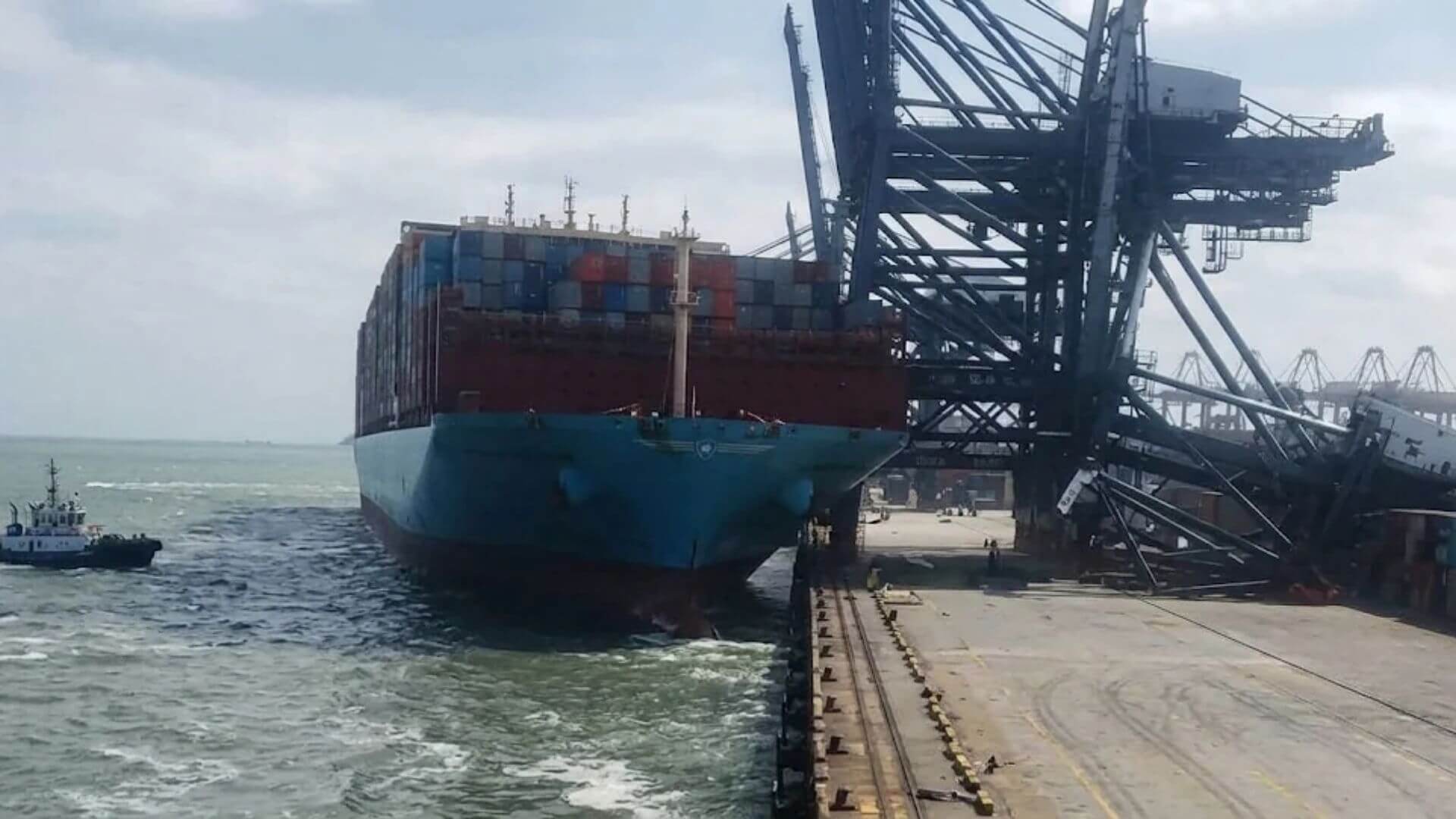
A container ship striking a shoreside gantry crane at one of the world's busiest terminals is not a freak accident; it is a signal that our maritime safety systems are not keeping pace with the scale of modern operations. The collision of the Maersk Cincinnati with an STS crane at Yantian port on November 9, 2026, demands more than an investigation into wind gusts or pilot error, it demands an integrated approach to maritime safety that connects real-time environmental data, vessel telemetry, and terminal operations into a single, calibrated response framework.
The incident, which brought the crane down onto the container yard with no confirmed injuries, occurred under a monsoon warning forecasting gusts of force 8 or above. This was not a surprise weather event, it was a measurable condition that existed hours before the vessel arrived. The question our industry must answer is whether the available empirical data was integrated into the operational decision-making loop at the critical moment. This is not about assigning blame; it is about closing the gap between data collection and real-time action. When we consider the broader context of global shipping's return to normalized routes, such as the Ever Eon's Suez transit marks a measurable return to a vital shipping corridor, the need for standardized, peer-reviewed safety protocols becomes even more urgent. A vessel rerouted through a congested hub under adverse conditions must have its approach validated against live environmental and operational thresholds.
This is the second crane collapse at Yantian in just over two years, following the September 2024 incident involving the MSC Riona. Repeat events at the same terminal suggest that isolated corrective actions are insufficient. What is needed is a shared, longitudinal dataset that allows operators, ports, and regulators to identify patterns before they become accidents. An integrated data ecosystem, one that fuses AIS records, meteorological feeds, and terminal berth status, would have flagged the risk profile of this berthing window in advance. Until such systems become standard, every high-volume port operates with a measurable blind spot.
The immediate practical consequence for our readers, whether you manage fleet operations, oversee port infrastructure, or develop maritime policy, is that this incident will accelerate regulatory scrutiny of berthing procedures under high-wind conditions. The absence of a published recovery plan from either Maersk or the terminal operator leaves a critical gap in supply chain transparency. A terminal that handled over 16.1 million TEU in 2025 cannot afford extended crane downtime without cascading delays across the NE3 service loop. The next specific detail to watch is the investigation's findings on whether the wind data was used as a go/no-go criterion, or merely noted after the fact. That answer will determine whether we treat this as a weather event or a systemic failure.