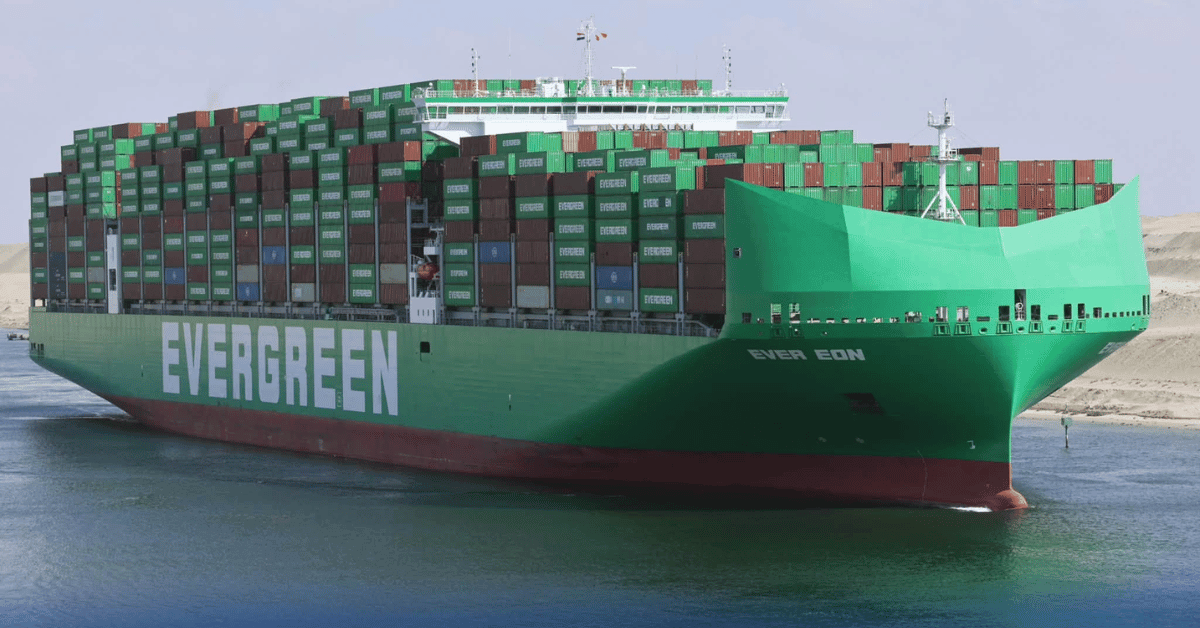
The return of Evergreen's 16,556-TEU *Ever Eon* to the Suez Canal is not merely a routine transit; it is a calibrated signal that global supply chains are recalibrating toward stability. Our view is clear: this measured return, after nearly three years of rerouting around the Cape of Good Hope, represents a tangible shift in maritime risk assessment and operational logic. For our readers, whether you are a logistics analyst, a policy advisor, or a student of ocean commerce, this event offers empirical proof that the Red Sea corridor is regaining viability, but with conditions that demand continued vigilance.
The *Ever Eon*'s passage on November 8, 2026, from the Netherlands to Singapore, is the first step in a broader return by Evergreen, with the Suez Canal Authority confirming more voyages are planned. This is a direct reversal of the carrier's December 2023 decision to halt Red Sea transits following attacks on commercial shipping. The detour around Africa added one to two weeks to each voyage, a measurable cost in fuel, emissions, and time. The SCA's Admiral frames this as a "positive indicator" that East-West trade is returning to a sustainable path, a claim we find credible but incomplete. Compare this to the ongoing complications seen elsewhere: the Maritime Authority Seizes Stranded Residential Cruise Ship Odyssey Under Court Order in Singapore illustrates how financial and operational instability still plague maritime assets. The *Ever Eon*'s return, by contrast, suggests that major carriers are prioritizing predictable routes over costly workarounds, even as other vessels remain stranded by insolvency.
Yet the context is not purely commercial. The simultaneous presence of naval power in the region adds a layer of strategic calculus. With Three US Nuclear Carriers Could Converge in the Middle East by Late 2026, the Red Sea's security environment is being actively shaped by military deployments. Evergreen's decision to resume transits likely factors in this enhanced protection, but it also ties shipping schedules to geopolitical stability, a variable that can shift overnight. The carrier's history with the canal, notably the 2021 *Ever Given* grounding that blocked the waterway for six days, serves as a reminder that human and mechanical error remain persistent risks, independent of security threats.
What does this mean in practical terms? For the shipping industry, the return of Evergreen, alongside CMA CGM, Maersk, MSC, Hapag-Lloyd, and COSCO, signals that the Cape route's extra costs are no longer justified for these lines. For port operators and insurers, it demands a reassessment of risk premiums and contingency plans. The concrete point to watch is whether this return accelerates into a full-scale normalization or remains a cautious trial. If Evergreen and its peers sustain these transits through early 2027, the Suez Canal will reclaim its role as the default artery for East-West trade. If not, the industry will have learned that even the shortest sea link is only as reliable as the security that protects it.