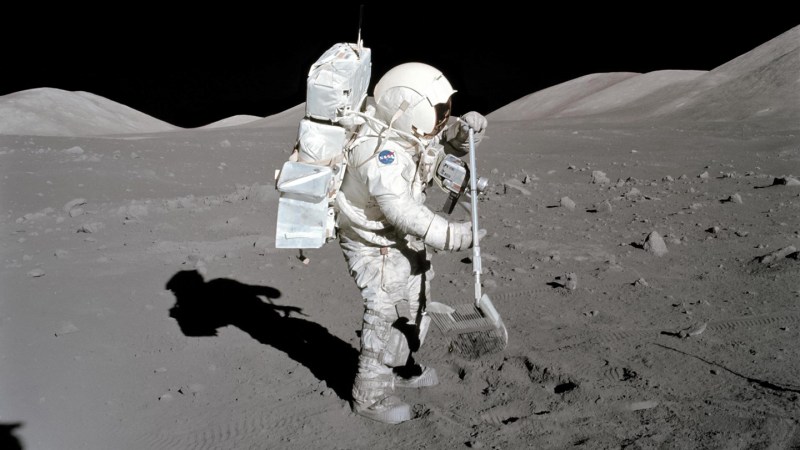
Fifty years after humanity last left footprints in the lunar regolith, Artemis IV is set to return astronauts to the Moon's surface. But the mission carries more than scientific instruments and ambition. As NASA's recent research makes clear, it will also carry trillions of microbial passengers from Earth. The question is not whether they will survive the journey, but which ones will, and what their presence means for the pristine environments we are about to revisit.
This is not a hypothetical concern. The same microbial tenacity that allows extremophiles to thrive in Earth's most hostile niches is the subject of a related study on 2-billion-year-old carbon signals, where Magma and microbial activity may rewrite a 2-billion-year-old carbon signal. That work demonstrates how deeply life can leave its mark on geological processes, complicating the stories we read in rocks. If microbes can obscure a billion-year-old geochemical record, imagine what they could do to a young lunar sample. The Moon is not a sterile laboratory; it is a historical archive. And we are about to contaminate the very pages we came to read.
The practical stakes are immediate. Every piece of equipment, every spacesuit, every filter on Artemis IV will be a vector for Earth's hardiest organisms. NASA's research identifies specific genera that can survive the vacuum, radiation, and temperature swings of transit and the surface. That is not alarmism; it is calibration. For the researchers and engineers building the next generation of lunar landers, this means new protocols for assembly, cleaning, and verification. For planetary protection officers, it means revising the definition of "safe" from a binary to a spectrum. And for the broader public, it means accepting that our presence off-world is not a clean break from biology, but a deliberate extension of it.
This is where the conversation moves beyond contamination protocols and into a more uncomfortable truth. We are not visitors to the Moon; we are the first biological payload. The Fossilized Poop Reveals Feathered Dinosaur Traits Linked to Survival shows us that survival is often about the traits that are not obvious. For dinosaurs, it was plumage; for microbes, it is dormancy. If we are serious about understanding life's limits, we need to study our own hitchhikers with the same rigor we apply to the rocks they land on. That is not a side note; it is the core scientific return of a mission like Artemis IV.
What we would tell a reader who asks us about this is simple: do not dismiss the risk as a technicality, and do not let it sour the achievement. Instead, watch how NASA handles it. The agency's approach to microbial mitigation on Artemis IV will set the precedent for every sample-return mission that follows, including those from Mars. The open question is whether we can treat the Moon as a place to study life's reach without erasing the very evidence we seek. The answer will come down to the details: the swab results, the sterilization logs, the post-mission inventories. That is the real data stream to follow.