Iran And Oman Reach Agreement On Strait Of Hormuz Control And Revenue Sharing
Our take

The recent agreement between Iran and Oman regarding control and revenue sharing within the Strait of Hormuz represents a noteworthy, albeit fragile, development in a region perpetually characterized by maritime instability. While the easing of direct conflict between the United States and Iran offers a temporary respite, the underlying tensions remain, and commercial shipping continues to face significant risks. The agreement's specifics are still emerging, but the potential for enhanced coordination between Iran and Oman in managing traffic flow and security within the strait is a significant factor. This contrasts sharply with recent incidents, such as the [Tanker Catches Fire After Being Hit By ‘Unknown Projectile’ In Strait Of Hormuz], highlighting the volatile environment and the persistent threat of disruption. Understanding the implications of this agreement requires acknowledging the broader geopolitical context – the vital role of the Strait as a chokepoint for global energy transport, and the competing interests of regional and international powers.
The significance extends beyond just the immediate security concerns. The Strait of Hormuz is arguably the most critical maritime artery globally, handling approximately 30% of the world’s oil transits. Any disruption here has cascading effects on global energy markets and economies. Japan’s attempts to mitigate this vulnerability, as evidenced by [Japan Plans To Build Pipeline Network Through Strait of Hormuz To Secure Energy Supplies], underscore the widespread desire to diversify supply routes and reduce dependence on this single, precarious passage. Oman’s involvement is particularly interesting, given its traditionally neutral stance in regional conflicts and its strategic location. This agreement could signal a shift in Oman’s approach, potentially seeking to leverage its position to mediate and stabilize the region, although it also exposes Oman to increased scrutiny and potential entanglement in Iranian affairs. The need for consistent and reliable maritime security is evident in actions like those undertaken by the Indian Navy, as demonstrated by [Indian Navy Monitors Safe Transit Of 2 Merchant Ships Through Bab-el-Mandeb Strait], highlighting the ongoing commitment to safeguarding vital shipping lanes.
The revenue-sharing component of the agreement, while details remain scarce, introduces a potentially destabilizing element. Control over transit fees and related revenues could become a source of contention if not managed transparently and equitably. Furthermore, the agreement’s legitimacy and long-term viability will depend heavily on the continued willingness of both Iran and Oman to uphold its terms, particularly in the face of external pressures from the United States and other nations. A key question revolves around the level of enforcement mechanisms built into the agreement and whether it will be truly effective in deterring unilateral actions by either party. The agreement's success hinges on building trust and fostering collaborative maritime domain awareness, something historically challenging given the deep-seated geopolitical rivalries in the region.
Looking ahead, the durability of this agreement will be a crucial indicator of the broader trajectory of regional stability. While the immediate reduction in overt conflict is welcome, the underlying structural issues—competing claims over maritime resources, the ongoing nuclear ambitions of Iran, and the involvement of external powers—remain unresolved. The extent to which this agreement can evolve into a broader framework for regional maritime cooperation, or whether it proves to be a temporary tactical maneuver, remains to be seen. One key implication to watch is how this agreement impacts the deployment of naval assets from various nations in the region, and whether it encourages a shift from reactive security measures to a more proactive, collaborative approach to maritime safety and security.
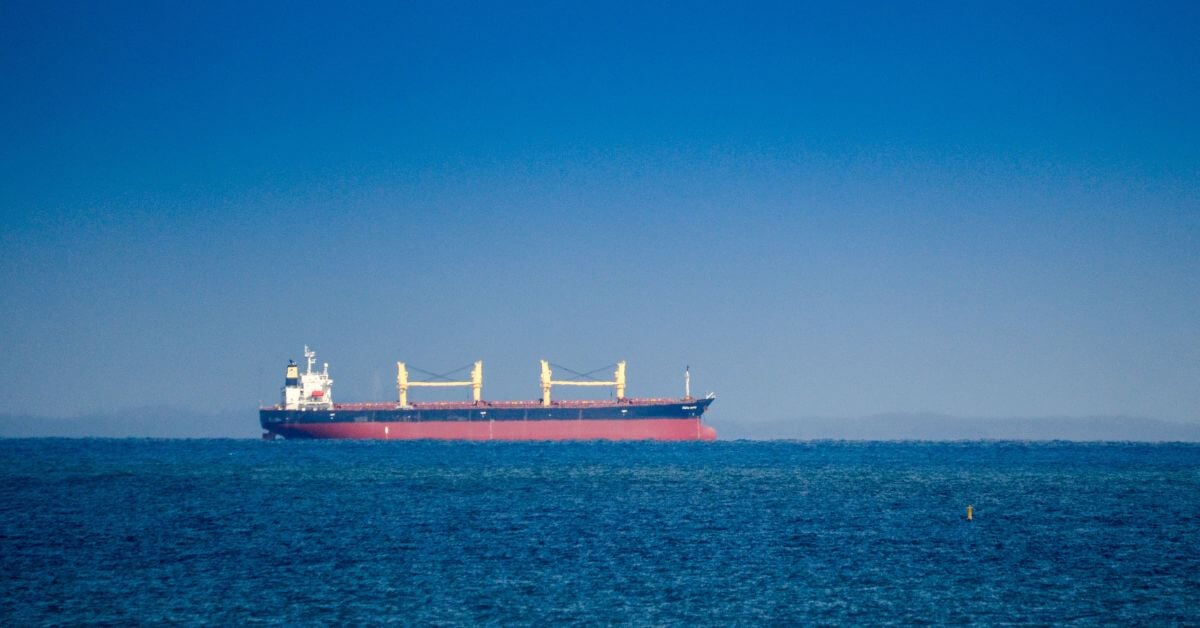
Iran and Oman have agreed on how to share control and revenue from the Strait of Hormuz, Iran’s Revolutionary Guards said on Wednesday.
The two countries continue talks on restoring shipping through the key waterway. Iran, however, said the Strait will not reopen unless the United States agrees to its conditions.
Iran’s Revolutionary Guards spokesman Hossein Mohebbi said on Wednesday that Iran and Oman had reached agreements on each country’s share of the waters of the Strait and the revenue generated by the waterway.
Mohebbi also accused the United States of holding up the talks between Iran and Oman.
He said the Strait could reopen if US stopped blocking the process and returned to the agreement. If the United States does not accept Iran’s conditions, he said, the Strait will not reopen.
The Strait of Hormuz is a major route for global energy trade. Before the war began on Feb. 28, about one-fifth of the world’s oil and liquefied natural gas shipments passed through the waterway.
Iran and Oman work on temporary shipping corridor
Iran and Oman have been in talks for about a month over how shipping through the Strait should be managed.
On Tuesday, the two countries said they had discussed a “phased framework” to create a temporary shipping corridor and clear mines from the waterway.
They said talks would continue on a permanent shipping corridor and the future management of the Strait.
Omani Foreign Minister Badr bin Hamad Al Busaidi said after meeting Iranian Foreign Minister Abbas Araghchi that he hoped the two countries would soon announce a temporary corridor.
He also said Oman would speak with regional countries to support peace, stability and freedom of navigation.
Araghchi said the proposed deal showed Iran’s commitment to peace and stability and its efforts to work with neighbouring countries.
Qatar has also backed the Iran-Oman talks. Qatar’s foreign ministry said Prime Minister Sheikh Mohammed bin Abdulrahman bin Jassim Al-Thani discussed the proposed temporary shipping corridor with Araghchi by phone on Tuesday.
Most shipping through Hormuz remains halted
The Strait of Hormuz has remained largely closed to normal shipping since the United States and Israel began their war against Iran on Feb. 28.
Some ships are still crossing the Strait, allowing millions of barrels of oil to pass through each day. But most shipping has stopped.
The disruption has also limited Iran’s access to goods and foreign currency from its oil exports.
US President Donald Trump said on Wednesday that mines had been removed and that the Strait was open. He said the United States was taking many ships through the waterway and that about 10 million barrels had passed through the Strait the previous day.
Iran rejected those claims. It said only officials in the country know where the explosives are located.
The head of the International Maritime Organisation said last week that the Strait was not open and that there was no confirmation that the mines had been removed.
Iranian officials have also made clear that an agreement with Oman alone would not mean an immediate reopening of the Strait.
Iran and Oman differ over transit fees
Iran began charging some vessels transit fees during the early weeks of the war, according to sources. It later described the charges as fees for services.
Oman has told the International Maritime Organisation that it opposes transit fees in the Strait of Hormuz.
Bloomberg reported in June that Oman had privately warned some European officials that ships could still have to pay for related services.
Oil prices fall as Hormuz talks continue
Oil prices fell for a third straight day on Wednesday. They dropped by more than $2 a barrel to a two-week low. Brent crude traded above $88 a barrel and was down about 7% for the week.
The Iran-Oman talks have helped push oil prices lower in recent weeks, as markets look for signs that shipping through the Strait could resume.
Arne Lohmann Rasmussen, chief analyst at A/S Global Risk Management, said the talks were the most positive development around Hormuz in some time. He also said a temporary shipping corridor would still be far from a full reopening.
References: firstpost, thehindubusinessline
Read on the original site
Open the publisher's page for the full experience