Indonesia’s First Aircraft Carrier Reaches Jakarta Amid Debate Over Cost & Naval Ambitions
Our take
The acquisition of the Italian warship Giuseppe Garibaldi by Indonesia and its impending transformation into Indonesia’s first aircraft carrier represents a notable shift in the nation’s naval capabilities and regional power dynamics. While the move has been met with debate concerning its substantial cost, particularly amidst ongoing economic challenges, it underscores Indonesia's ambitions to project greater maritime influence across the strategically vital Malacca Strait and surrounding waters. This development occurs against a backdrop of increasing geopolitical complexity in Southeast Asia, where competing interests and evolving security threats demand robust naval presence. The decision also highlights the ongoing global trend of nations seeking to modernize and expand their military assets, often relying on acquiring existing vessels from other countries, as evidenced by recent events such as [Major LNG shipping firms Launch Trial To validate Onboard Emissions Monitoring Tech]. Furthermore, the complexities surrounding naval operations and personnel management are underscored by incidents like the recent case of [Former U.S. Navy Sailors Plead Guilty To Selling Fentanyl-Laced Pills Aboard Aircraft Carrier USS Abraham Lincoln], reminding us of the human element within these large-scale deployments and the importance of robust internal controls.
The financial considerations surrounding the acquisition are significant. Critics argue that the resources allocated to this project could be better utilized to address pressing domestic needs or bolster other areas of Indonesia's defense infrastructure. However, proponents contend that a carrier strike group provides a flexible platform for a range of missions, including humanitarian assistance, disaster relief, and maritime security operations – all of which are vital in an archipelago nation like Indonesia, prone to natural disasters and facing ongoing challenges related to illegal fishing and maritime piracy. The choice to acquire a used vessel, rather than commissioning a new build, reflects a pragmatic approach to achieving these goals within budgetary constraints. The geopolitical context also plays a crucial role; Indonesia's growing assertiveness in safeguarding its Exclusive Economic Zone (EEZ) and protecting its maritime resources necessitates a more powerful naval force, particularly given the increasing presence of foreign vessels in the region and the complex dynamics stemming from conflicts like [U.S. Officials Meet Houthi Representatives In Oman Days After The Group Seizes Part Of Yemen’s Red Sea Coast] which can indirectly impact regional maritime security.
Beyond the immediate military implications, the introduction of an aircraft carrier into the Indonesian Navy signals a broader strategic reorientation. It elevates Indonesia’s status as a major maritime power in Southeast Asia and potentially alters the regional balance of power. The ability to project air power from the sea significantly expands Indonesia's operational reach and influence, allowing it to respond more effectively to threats and engage in activities further from its shores. While the carrier’s capabilities will be dependent on the aircraft it operates, the symbolic value of possessing such a platform is undeniable. The acquisition also necessitates substantial investments in supporting infrastructure, training, and logistics, creating a ripple effect across the Indonesian defense sector and potentially stimulating technological innovation within the country. The integration of this new asset into existing naval doctrines and operational procedures will be a critical factor in determining its ultimate effectiveness.
Looking ahead, the successful integration of the Giuseppe Garibaldi into the Indonesian Navy and the development of its operational capabilities will be a key indicator of Indonesia's evolving maritime strategy. The challenges of maintaining and operating a complex aircraft carrier, along with the need to procure suitable aircraft and train personnel, are considerable. It will be crucial to monitor how Indonesia leverages this new capability to address both traditional and non-traditional maritime security threats, and how this development influences the broader geopolitical landscape of Southeast Asia. A critical question remains: will this acquisition foster greater regional stability through increased maritime security, or will it contribute to an arms race and heightened tensions in an already complex environment?
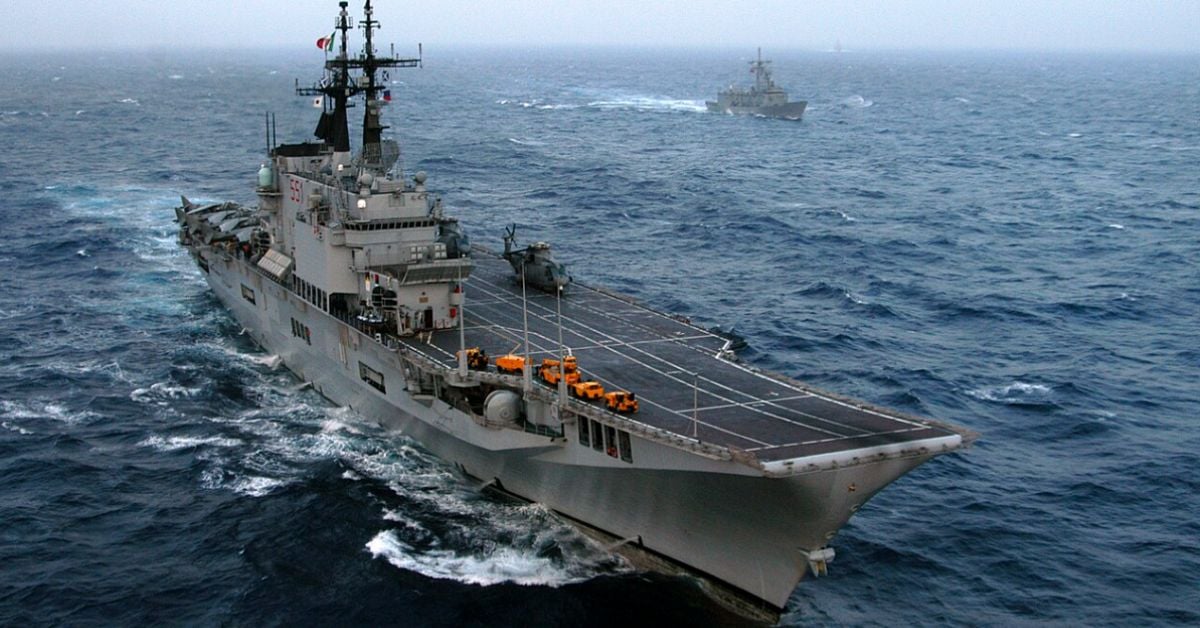
Italy’s warship Giuseppe Garibaldi has been acquired by Indonesia and is set to become its first-ever aircraft carrier. The vessel, which will be renamed KRI Sriwijaya, left Italy’s Taranto on 24 August for Jakarta.
It had a mixed Indonesian and Italian crew during the journey to Southeast Asia, in which it sailed via the Suez Canal and stopped at Egypt’s Safaga and Sri Lanka’s Colombo ports.
To ensure its safety, Italian warships provided escorts when it passed through the Red Sea, where shipping is being threatened by renewed Houthi attacks.
Unlike the two frigates earlier acquired from Italy, the future aircraft carrier of Indonesia entered its territorial waters via the Malacca Strait and not the Sunda Strait.
When it was in Indonesian waters, two Navy PPA’s, KRI Brawijaya (320) and KRI Prabu Siliwangi (321), escorted it, and a maritime patrol aircraft welcomed it.
The aircraft carrier will berth at Tanjung Priok Port in Jakarta and serve as a highlight of the upcoming Indonesian National Armed Forces’ anniversary celebrations scheduled for 5 October.
According to statements by the navy, the ship would focus on Military Operations and not war. It would participate in humanitarian and disaster relief operations when required.
Before its arrival, the Indonesian military also conducted shipboard helicopter drills involving the AS565 Panther of the Navy, the NAS332 Super Puma of the Air Force and the Army’s Bell 412.
The training included deck takeoff and landing practice and live flight operations from the landing platform dock KRI Makassar.
This joint initiative is important to integrate the vessel into service and familiarise crews across all three military branches with the shipboard flight operations.
The aircraft carrier was to to be named KRI Gadjah Mada; the Indonesian Navy ultimately designated it KRI Sriwijaya.
The new name honours the ancient thalassocracy based in Sumatra, which controlled crucial regional maritime trade routes and held extensive influence across maritime Southeast Asia for many centuries.
Read on the original site
Open the publisher's page for the full experience