research datasets
research datasets at World Data Ocean is a file of 36 stories. The newest of them: “Integrating Coastal Geology and Marine Science to Decode Shallow Hydrothermal Systems”, “2025 Global Temperature Data Confirms Measurable Warming Trends”, and “2025 joins the warmest years on record as ocean heat persists without pause”. Shallow-water hydrothermal systems are not the primary regulators of coastal ocean processes, they are localized geological forces that introduce heat, fluids, and nutrients into dynamic marine environments. The 2025 global temperature data from Berkeley Earth confirms what empirical climate indicators have long signaled: warming trends are measurable and persistent. A Global Hub for Ocean Intelligence 4 World Data Ocean is a centralized digital platform where researchers, scientists, and ocean enthusiasts converge to… The list below is every research datasets story on World Data Ocean, newest first.

Integrating Coastal Geology and Marine Science to Decode Shallow Hydrothermal Systems
Shallow-water hydrothermal systems are not the primary regulators of coastal ocean processes, they are localized geological forces that introduce heat, fluids, and nutrients into dynamic marine environments. For decades, research remained discipline-specific, limiting our integrated understanding. This review synthesizes 95 publications spanning 1969-2026, identifying four evolutionary stages from field exploration to interdisciplinary integration. These systems serve as natural laboratories for decoding coupled coastal processes. For deeper context, see our coverage of how AI illuminates the ocean's hidden data.
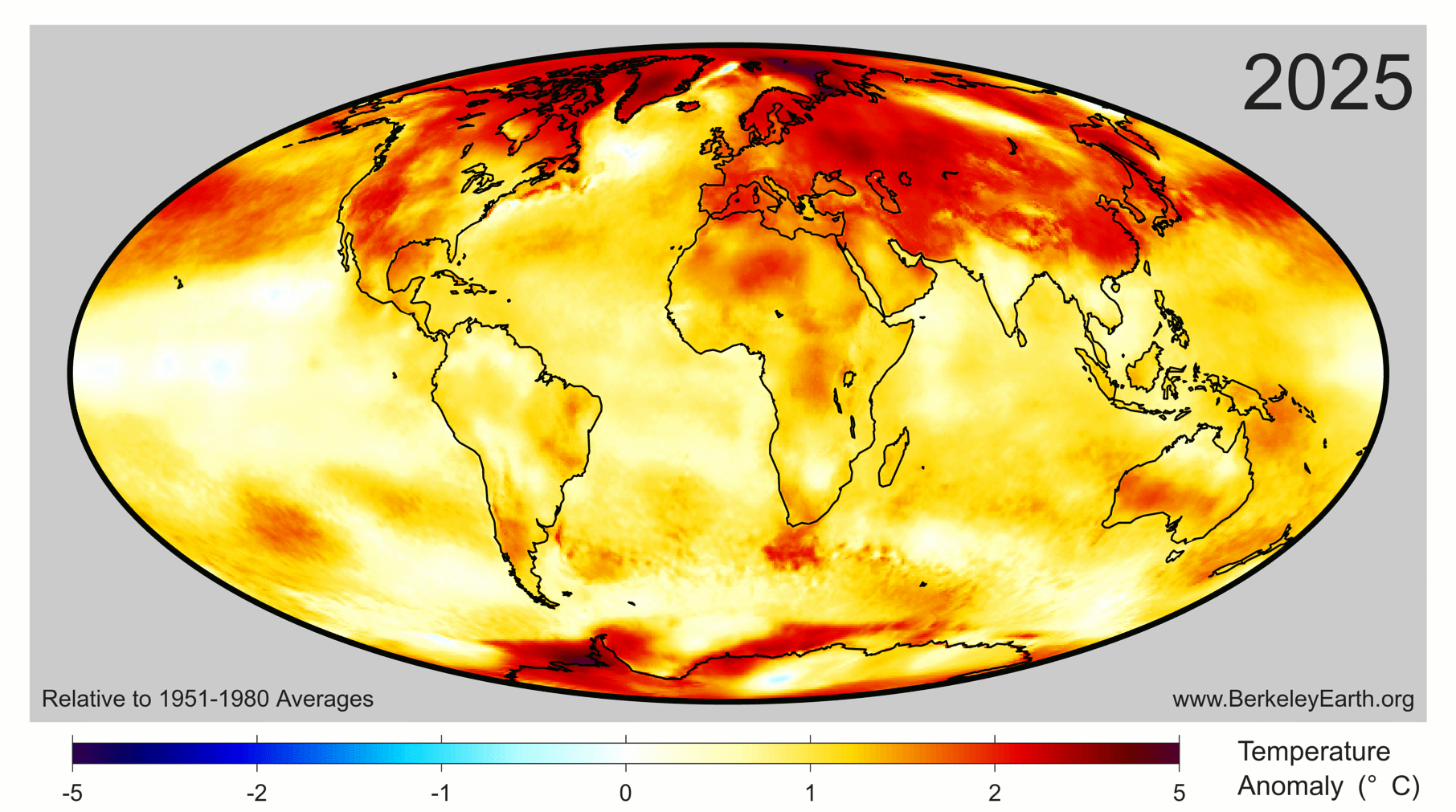
2025 Global Temperature Data Confirms Measurable Warming Trends
The 2025 global temperature data from Berkeley Earth confirms what empirical climate indicators have long signaled: warming trends are measurable and persistent. Since 2013, this independent non-profit has provided validated, peer-reviewed analyses of mean temperature changes. The findings are clear, and they demand purposeful attention. Understanding drives protection, and for deeper context on related pressures facing our oceans, see our piece "From waste to wave: measuring ocean plastic's true share."

2025 joins the warmest years on record as ocean heat persists without pause
2025 has been confirmed as one of the three warmest years on record, a stark validation of a persistent trend. The World Meteorological Organization reports that ocean heating continues without pause, and the past 11 years now constitute the 11 warmest ever measured. This is not a spike but a calibrated, measurable signal. Understanding drives protection. For deeper context on the ocean's role in this system, explore our related coverage of "From waste to wave: measuring ocean plastic's true share."
AI Illuminates the Ocean's Hidden Data, From Surface to Seafloor
From orbit to seafloor, the ocean holds more data than we can currently interpret. This review examines how artificial intelligence and machine learning are transforming our ability to analyze complex, unevenly sampled datasets across physical oceanography, ecology, and engineering. The findings are pragmatic: AI excels at predicting currents, reconstructing subsurface conditions, and classifying marine life. Yet the authors rightly caution that sparse observations and black-box models limit reliability.
Mapping the Human Factors Behind Maritime Accidents Through Systematic Review
Human error drives most maritime accidents, yet the underlying causal factors remain stubbornly difficult to map systematically. A new systematic review of 65 eligible studies confirms that the Human Factors Analysis and Classification System has matured beyond simple accident classification into a genuinely integrated analytical tool. Researchers in China and Türkiye are leading this growth, combining HFACS with probabilistic and data-driven methods. For deeper context on how human factors shape risk models, see our related study *Quantifying human factors in vessel loss-of-control risk models*.
Decades of photo-ID data reveal Sarasota dolphins' seasonal patterns
For nearly five decades, the Sarasota Dolphin Research Program has watched a resident community of bottlenose dolphins, and that long view is now revealing clear seasonal rhythms. New robust-design models analyzing photo-ID data from 2013-2022 show abundance swelling from roughly 139 dolphins in winter to over 167 in summer before receding each fall. The resident core remains stable; movement drives the numbers. Understanding these patterns is foundational, and validated, longitudinal data make it possible.
Validated data and selective gear drive sustainable crab harvesting
Selective gear and validated data are the twin anchors of sustainable crab harvesting. This review of 173 studies confirms that intelligent fisheries depend on an integrated marine-engineering workflow, not isolated algorithms. Machine vision can identify, measure, and grade individuals, but its management value requires calibrated field deployment and traceable metadata. Future research must prioritize standardized datasets and life-cycle assessment. For broader context on ocean monitoring, see our coverage of the Global Drifter Network.
Elephant seals unlock hidden cetacean acoustic data across the Southern Ocean
Elephant seals drifting silently through the Southern Ocean are doing more than foraging, they are listening. Between 2017 and 2020, nine female seals equipped with digital acoustic tags captured cetacean vocalizations across vast, remote stretches of the Southern Ocean during their spring migration. The results are compelling: Antarctic blue whales near the polar front, humpbacks in subantarctic waters, and sperm whales along key bathymetric gradients. This is ocean intelligence at its most innovative, biologged animals as acoustic surveyors in places we cannot easily reach.
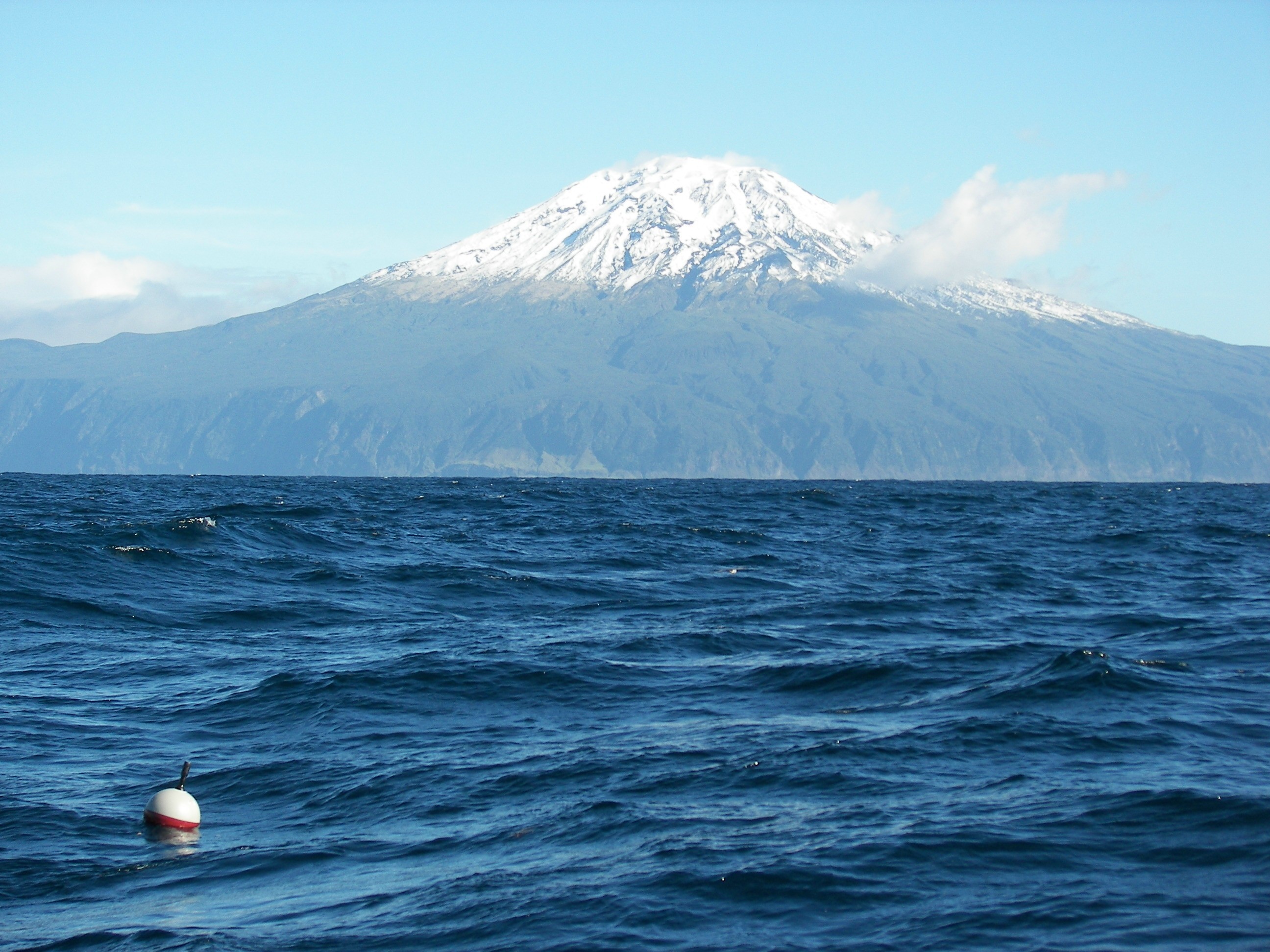
Global Drifter Network Delivers Real-Time Ocean Data to Sharpen Forecasts and Coastal Safety
Every twelve hours, a network of thousands of drifting buoys reports ocean temperature, currents, and barometric pressure from the most remote waters on Earth. NOAA's Global Drifter Program turns that distributed data into a single, calibrated view of the planet's climate system. These instruments verify weather models, sharpen satellite observations, and reveal inter-annual signals like ENSO. Understanding drives protection. For a deeper look at how shared ocean data standards support such systems, see our coverage of integrating fragmented bathymetric data.

2024 Follows 2023, a Second Record Year of Rising Climate Indicators
2024 has followed 2023 as a second consecutive record-breaking year for climate indicators, a pattern that demands our attention. The data is measurable and validated, confirming the oceans are sending us early warnings that are growing more urgent. Our related coverage on the accelerating ocean signals is a natural next step. This is not an anomaly; it is a trend that empirically links warming seas to rising atmospheric CO₂. Scientific clarity, not alarm, will guide the response.
A validated open-access observatory for Africa's multi-ecosystem ocean intelligence
The Bazaruto Center for Scientific Studies (BCSS) Ocean Observatory is not another data portal; it is a managed, DOI-linked platform turning eight years of sustained effort into 22 million-plus measurements across six ecosystems. What stands out is the integration: weather, acoustics, biodiversity, and pollution under one interoperable framework, with QA/QC and FAIR compliance built in. This is the baseline Africa's marine science has needed.
Africa's first permanent ocean observatory closes a critical data gap for science and policy
Twenty-two million measurements. That is the scale of what the Bazaruto Center for Scientific Studies and Kisawa Sanctuary have built off Mozambique's coast. Africa's first permanent ocean observatory is not a small pilot project; it is a multi-ecosystem platform covering 6,850 square kilometers, generating high-frequency data across coral, seagrass, and open-ocean habitats. The numbers are impressive, but the real achievement is showing how a Resort-to-Research model can sustain serious science.
Mapping Tuna Distribution: Environmental Factors Revealed Through Neural Networks
Yellowfin tuna move with the ocean's rhythms, and now we can see exactly which environmental threads guide their path. Using two decades of Pacific longline data, our models pinpoint seven key drivers, with temperature dominating the catch per unit effort signals. GeoSpaNN led the pack, delivering an R² of 0.86 while faithfully reproducing spatial patterns. This isn't just about better forecasts; it's about understanding the marine engine itself.
Arbitration and Navigation: Charting Stability Through the Taiwan Strait
The Taiwan Strait moves more than a third of global container traffic, yet its legal waters remain contested. This study confronts a hard number: military exercises and navigational restrictions could reroute shipping at a cost of USD 83.5 million annually. Arbitration alone will not fix that. By testing four policy scenarios through simulation, the authors show why a neutral 80-nautical-mile corridor, backed by a regional coordination code, offers a more stable route forward.
Advancing Maritime Awareness: Deep Learning for Complex Ocean Environments
A review of maritime object detection reveals how far deep learning has come in addressing the challenges of dynamic sea surfaces, low signal-to-noise ratios, and limited annotated datasets. The synthesis of methods across optical, SAR, MBES, and UAV platforms, alongside AIS data, points to a field maturing toward operational reliability. For civilian applications like port management and environmental risk assessment, this matters. We still face gaps in cross-sensor benchmarking and real-time deployment.

Data-Driven Insights Predict Maritime Emergencies, Highlighting Weather Risks
Weather emerges as the dominant force in maritime safety, according to Inmarsat's analysis of 106,975 safety broadcasts. The data is clear: urgent warnings stem most frequently from weather-related risks, reinforcing that preparedness begins with environmental awareness. This is actionable intelligence for an industry where foresight saves lives. For readers tracking operational resilience, our coverage of Russia's icebreaker fleet strategy offers a complementary perspective on how nations are calibrating infrastructure against Arctic conditions. Understanding these patterns is not optional; it is the foundation of safer seas.
Advancing Underwater Object Detection with Integrated Feature Augmentation
Underwater detection has long been compromised by the very environment it seeks to read. Water scatters light, attenuates color, and distorts edges, leaving traditional optical systems with blurred, low-contrast images. The proposed RSF-YOLOv8 model addresses this directly by integrating polarization imaging with a re-engineered YOLOv8n baseline. Its three core modules, including a four-scale feature fusion, tackle small-target miss rates and weak feature suppression head-on. The results are compelling: a 4.90% improvement in strict localization accuracy, achieved without sacrificing real-time speed. This is practical ocean intelligence.
Charting a Course: MSc Thesis Opportunities in Hydrography and Geoinformatics
A Master's thesis in hydrography is more than an academic requirement; it is a chance to contribute directly to how we measure and protect the marine environment. The student's focus on practical applications and collaboration with research institutes aligns well with the field's need for integrated, real-time data. For those exploring similar paths, the related article "Calibrated ocean intelligence, now within reach through integrated data discovery" offers a useful perspective on where the data ecosystem is heading.
Microplastic Pollution Assessed Across Key International Shipping Routes
Aboard the research vessel *Jaywun*, 100 surface-water samples now trace a microplastic story across the Atlantic, Mediterranean, Red Sea, and Arabian Gulf. Concentrations swung from 4 to 290 particles per liter, with polyester and PET dominating the mix. The Arabian Sea carried the heaviest load, while the Strait of Gibraltar surprised with a localized peak.
MPA Governance: Balancing Conservation and Blue Economies in Island Nations
Marine protected areas in island nations often promise more than they deliver. Fiji, Palau, and Taiwan's marine governance system each show that designating ocean space is not the same as governing it effectively. The real variable is institutional coherence: whether fisheries, maritime industries, and conservation speak to each other across agencies and levels. Coverage alone falls short. Governance alignment, not area size, determines whether MPAs support climate-resilient blue economies. For those tracking enforcement and monitoring gaps, the lessons here are practical.
Mapping Microplastic Contamination Across Indonesia’s Diverse Aquatic Ecosystems
Indonesia, as the world’s largest archipelagic state, faces escalating microplastic contamination across its marine and coastal environments. This review synthesizes findings from 497 publications, establishing a baseline of microplastic occurrence in Indonesian waters, sediments, and biota. Analysis reveals geographic research imbalances, with western Indonesia disproportionately studied. Methodological rigor significantly impacts reported concentrations, highlighting the need for standardized practices. Derived risk band thresholds offer a comparative framework, guiding future monitoring and risk assessments.

Connecting Cetacean Data, Ocean Insights, and Human Impact for Marine Discovery
WhaleScope, a novel platform developed by an independent enthusiast, offers a unique opportunity for marine biology research and education. Integrating over one million cetacean observations with oceanographic data and human impact indicators—such as shipping activity—WhaleScope facilitates comprehensive analysis of species distribution and habitat suitability. The integrated data ecosystem allows for comparative studies of cetacean populations across diverse regions and seasons.
Connecting Whale Sightings with Ocean Data for Global Insights
World Data Ocean presents WhaleScope, a novel platform integrating over 1 million cetacean observations with oceanographic data to explore critical relationships at a global scale. WhaleScope facilitates species distribution analysis, assesses shipping traffic exposure, and visualizes potential seasonal habitats, incorporating marine ecosystem layers. We seek feedback from the oceanography community on optimal ocean variables, missing datasets, and potential research, conservation, and educational applications. Explore the platform and contribute to this valuable tool: [https://whalescope-eight.vercel.app/](https://whalescope-eight.vercel.app/). Related research on Antarctic gravity anomalies can be found here.
Milkfish Aquaculture: A Sustainable Bioeconomic System in Davao Region
Milkfish aquaculture represents a vital bioeconomic system for the Philippines, particularly within the Davao Region, a significant contributor to national food security. This review characterizes Davao’s milkfish industry as an integrated system, analyzing the interplay of biological productivity, economic drivers, and governance structures. Supported by favorable conditions and expanding aquaculture operations, the region’s production faces challenges including fry availability and climate vulnerability.