India Plans 100 More Merchant Ships Over Next 5 Years To Cut Reliance On Foreign Shipping Lines
Our take

India’s announced plan to construct 100 new merchant ships over the next five years represents a significant, albeit complex, development within the global maritime landscape. The initiative is primarily driven by a desire to reduce India’s reliance on foreign shipping lines, a dependency that currently incurs a 16-20% cost premium for Indian operators. This cost disparity, stemming from factors like regulatory burdens and potentially less efficient operational practices under the Indian flag, highlights a systemic challenge. The move aligns with broader national strategies to bolster domestic industries and enhance strategic autonomy, particularly relevant given the ongoing geopolitical shifts impacting global trade routes. It's worth noting the recent commitment by littoral states to maintain the flow of commerce through vital waterways like the Straits of Malacca and Singapore Littoral States Pledge To Keep Straits Of Malacca And Singapore Open For Global Shipping, a critical consideration for any nation seeking to control its maritime supply chains. The current situation also echoes recent events involving the seizure of a Russian oil tanker and the subsequent arrest of an Indian captain, raising questions about the complexities of international maritime law and the potential for geopolitical entanglement Indian Captain Arrested After UK Commandos Seize Russian Oil Tanker; Wife Calls Him ‘Scapegoat’.
The economic rationale behind this investment is clear: reducing shipping costs directly impacts the competitiveness of Indian exports and the overall cost of imports. However, the success of this endeavor hinges on several factors. Simply building ships is not sufficient; the operational environment needs to evolve to become more attractive for Indian ship owners. This includes streamlining regulatory processes, ensuring access to competitive financing options, and addressing any infrastructural bottlenecks that hinder efficient port operations. Furthermore, the global shipbuilding market is intensely competitive, with established players in East Asia holding a significant advantage in terms of cost and technological expertise. India will need to leverage government support and potentially partnerships to ensure that its new fleet is both modern and cost-effective. The related seizures of contraband, like the recent hashish bust in Spain 5926 Kg Hashish Seized By Spain & 10 Drug Mafia Gang Members Arrested Following Attack On Patrol Boat, also underscores the need for robust maritime security measures, which will require investment and training alongside the shipbuilding program.
Beyond the immediate economic benefits, this initiative has implications for India’s strategic position in the Indo-Pacific region. A larger, domestically controlled merchant fleet enhances India’s ability to project influence and safeguard its maritime interests. It contributes to a more resilient supply chain, reducing vulnerability to disruptions caused by geopolitical tensions or natural disasters. While the focus is currently on commercial shipping, the potential for these vessels to be adapted for other roles, such as humanitarian assistance or even limited naval support, should not be overlooked. The build-up also signals a commitment to a more assertive role in maritime domain awareness, a crucial element for securing vital trade routes and protecting India's extensive coastline. Calibrated investments in data collection and analysis, integrated with a modernized fleet, will be critical to achieving this vision.
Ultimately, the success of India’s shipbuilding program will depend on a holistic approach that addresses both the economic and strategic dimensions of maritime power. The initial investment is significant, but the long-term returns—in terms of economic competitiveness, strategic autonomy, and regional influence—could be substantial. A key question moving forward is how India will balance the need for rapid fleet expansion with the imperative of maintaining high standards of operational efficiency and environmental sustainability, ensuring that this new maritime capacity contributes to a truly resilient and responsible ocean ecosystem.
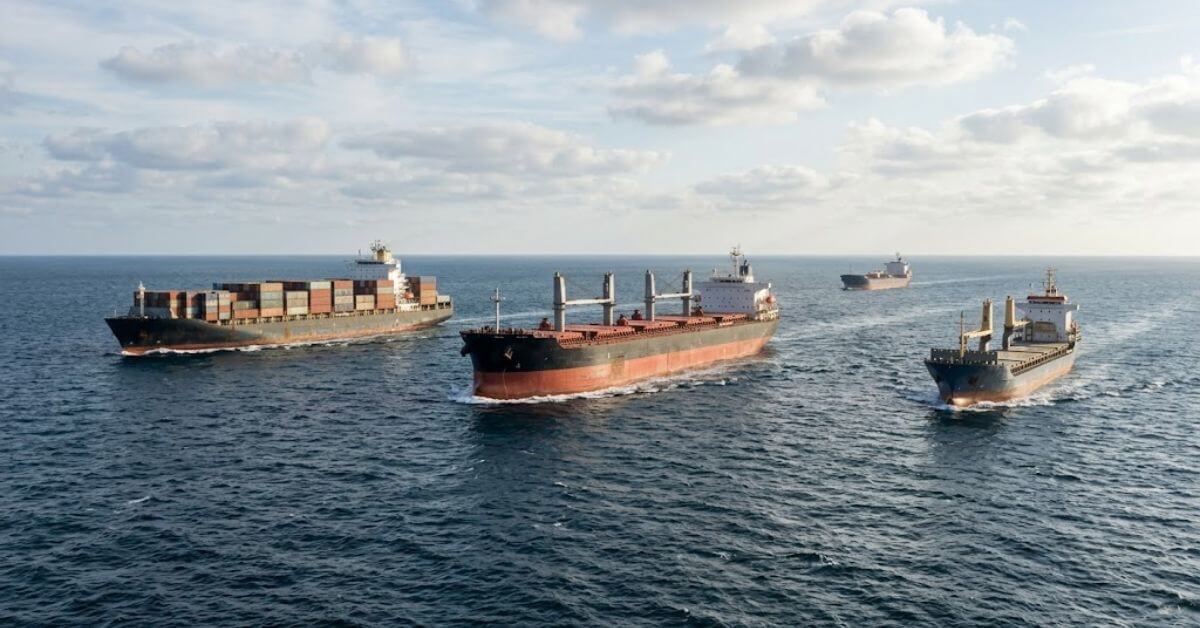
India is planning to expand its merchant fleet by 100 ships over the next five years, as part of its efforts to reduce dependence on foreign shipping companies.
Speaking at the first Sagar Samvad, Union Minister of State for Ports, Shipping and Waterways Shantanu Thakur revealed that India currently spends around $75 billion a year on foreign shipping firms just to transport essential cargoes like crude oil, coal, urea, and natural gas.
The event was organised by the National Shipping Board, a statutory body set up back in 1958 to advise the government on everything from shipping policy and tonnage to seafarer welfare and port development.
Thakur said the main issue was about competitiveness and demand, and the nation needs to have more control over its shipping capabilities.
The NSB has put forward a five-point plan aimed at making Indian shipping companies more competitive. The proposals cover tax reforms, guaranteed cargo allocations, simplified regulations, more affordable financing, and an easier overall business environment.
Indian vessels have higher operational costs
Indian ship owners say it’s currently 16-20% more expensive to operate under the Indian flag than under a foreign one.
This higher cost is due to taxes on ship imports and maintenance, deductions from seafarers’ salaries, freight taxes and higher financing costs in India.
The cost gap is also a problem under India’s Right of First Refusal system, which requires Indian shipping companies to match foreign freight rates to get cargo.
Industry representatives say these factors make it more difficult for Indian shipping firms to compete with foreign operators and expand their fleets.
According to Anil Devli, CEO of the Indian National Shipowners’ Association, several of these issues remain unaddressed.
The NSB panel said the plan could help India add 100 ships in the next five years and move closer to its goal of becoming one of the world’s top five ship-owning countries by 2047.
India has more than 1,500 vessels
According to government officials, India currently has about 1,600 ships under its flag.
A separate figure shared at the event said India has 1,544 vessels, including 492 overseas and 1,052 coastal vessels.
India’s fleet capacity crossed 14.2 million gross tonnes for the first time in March this year. In fiscal 2026, 92 new ships have been added to the Indian registry, together contributing 1.584 million gross tonnes.
Earlier Sonowal said that India may have 62 ships added in its register in fiscal 2027 which will be adding another 2.85 million gross tonnes of capacity.
Besides, the Indian government is encouraging foreign ship owners to register their ships under the Indian flag. Regflagging is the process of registering a ship in a different national flag country.
As per officials, shipping firms like France’s CMA CGM, Denmark’s AP Moller Maersk and Japan’s Mitsui O.S.K Lines have already done reflagging of their ships in India.
Officials said Hapag-Lloyd of Germany and Japan’s NYK are also expected to register vessels under the Indian flag.
Shipbuilding and ports also part of the plan
The fleet expansion is part of India’s Maritime Amrit Kaal Vision 2047 and Maritime India Vision 2030.
According to Sonowal, India will quadruple its port capacity to 10,000 million tonnes per annum by 2047.
The government offers financial assistance in building ships and also subsidies for establishing and developing shipyards.
Apart from this, the government has also introduced the ₹10,000 crore Container Manufacturing Assistance Scheme. Sonowal said Maersk has started ordering containers made in India.
Focus on seafarer jobs
The government is also focusing on creating more jobs for young Indians.
Labour and Employment Minister Mansukh Mandaviya said India’s large pool of seafarers could help the country become a major supplier of skilled maritime workers.
He called for more training, job opportunities, and industry-led skills programmes. He also said the sector needs to reduce the gender gap in maritime jobs and develop skills for areas such as cruise shipping and advanced shipbuilding.
References: business-standard, Livemint
Read on the original site
Open the publisher's page for the full experience