Forces deep inside Earth helped Antarctica freeze before the Arctic
Our take
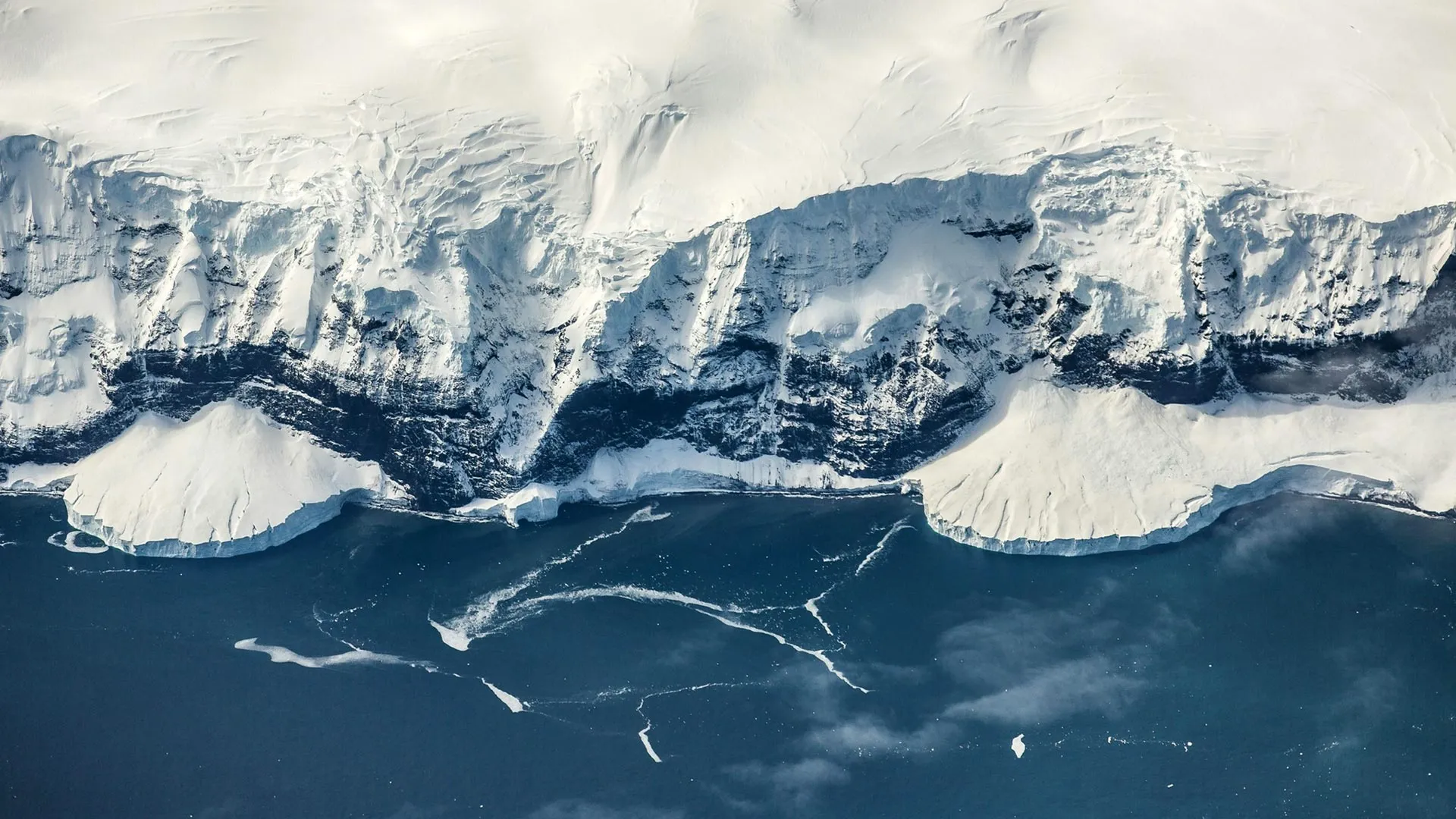
The recent discovery regarding Antarctica’s early glaciation, explained by internal Earth forces rather than solely external climate factors, represents a significant refinement of our understanding of polar dynamics and long-term climate history. For years, the disparity in timing between the freezing of Antarctica and the Arctic—Antarctica experiencing significant ice sheet development millions of years prior—has presented a compelling puzzle for glaciologists and geophysicists. This new research, suggesting the role of slow-moving waves within the Earth’s mantle in uplifting East Antarctica and creating a high-altitude plateau conducive to ice accumulation, offers a plausible and empirically grounded explanation. The implications extend beyond simply resolving a historical anomaly; it highlights the complex interplay of geological forces and climate systems that shape our planet's cryosphere. This understanding is increasingly critical as we grapple with the rapid changes occurring in polar regions today, changes that are directly impacting global sea levels and climate patterns. The challenges of data acquisition and analysis in these remote regions are immense, a reality underscored by initiatives like the [4,100-km Fibre Cable Across Drake Passage Could End Antarctica’s Hard-Drive Data Runs], which seek to improve data transfer capabilities to support ongoing research.
The mechanism described – the uplift creating a high-albedo surface that amplified cooling through increased solar reflection – illustrates a powerful feedback loop often overlooked in climate models. While external drivers like orbital variations and atmospheric greenhouse gas concentrations undoubtedly play a role in glacial cycles, this discovery emphasizes the importance of incorporating geological processes into our broader understanding. It’s a reminder that the Earth is not a static backdrop to climate change, but an active participant in the process. The capacity to measure and model these internal forces with sufficient precision is a technological frontier, and the ongoing development of advanced polar infrastructure, such as the [Canada Announces Largest Shipbuilding Contract In Quebec’s History For Six Polar Class 3 Icebreakers], are essential to supporting this kind of research. The ability to access and operate in challenging polar environments allows for the collection of crucial data needed to validate and refine these models. Even the deployment of icebreakers like the [Record-Breaking Icebreaker Nordica Heads To Canadian Arctic Ahead Of Winter Season] provides valuable insights into ice conditions and oceanographic processes that are vital to understanding the current state of the polar regions.
This research also calls into question the simplistic narratives often presented regarding climate change. Attributing all polar changes solely to anthropogenic forcing risks overlooking the complex, multi-faceted nature of the Earth system. A more nuanced perspective, acknowledging the contributions of both external and internal forces, is crucial for developing accurate predictive models and formulating effective mitigation and adaptation strategies. Furthermore, the validation of this model requires longitudinal data sets, spanning decades or even centuries, to accurately capture the slow-moving geological processes at play. The integration of geological and climate data streams, facilitated by advancements in ocean intelligence and integrated data ecosystems, will be paramount to confirming and expanding upon these findings. The ability to calibrate these models against empirical observations is essential for ensuring their robustness and predictive power.
Ultimately, this discovery underscores the need for a more holistic approach to Earth system science. It compels us to consider the deep-time processes that have shaped our planet’s cryosphere and to recognize the limitations of purely climate-centric perspectives. As we continue to monitor the accelerating changes in polar regions, a critical question arises: are there other, similarly significant geological forces at play that are currently being overlooked, and how might their influence reshape our projections of future sea-level rise and climate stability?
Read on the original site
Open the publisher's page for the full experience