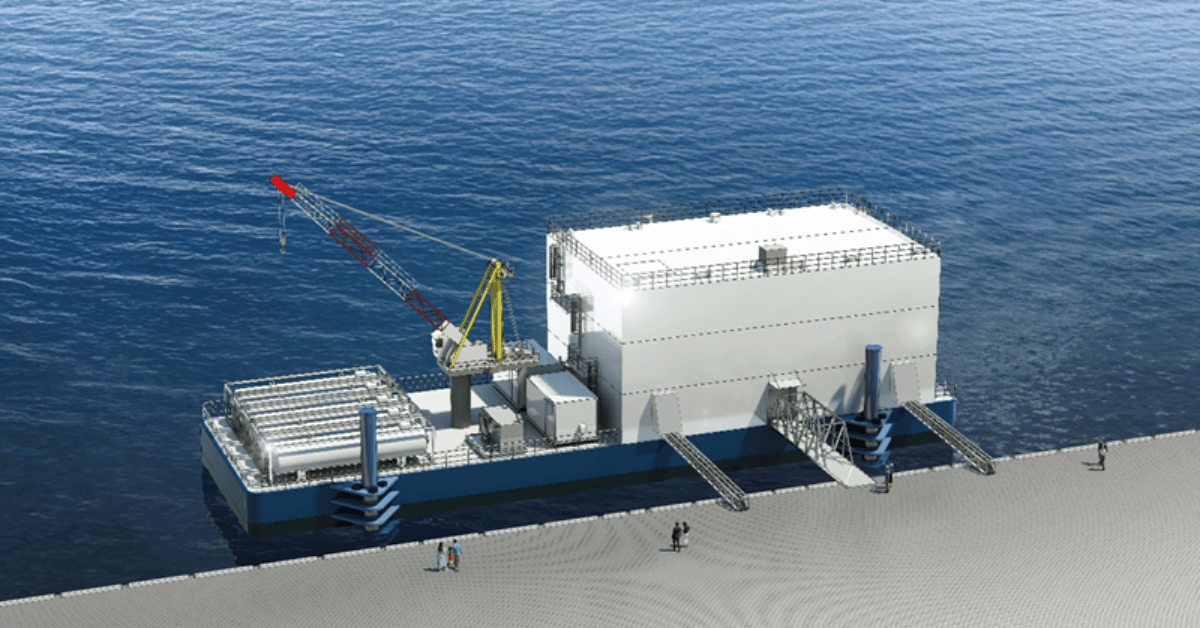
The port-based floating data center concept from NYK and its consortium partners is a measured, practical step that deserves attention not for its novelty but for its honesty about infrastructure. By anchoring ocean intelligence to existing quays, this approach acknowledges what the offshore wind sector has long understood: the fastest path to scale runs through what we already have built.
What makes this concept compelling is its rejection of the "all-or-nothing" offshore deployment model. The consortium openly states that large-scale open-sea data centers face unresolved challenges in accessibility, high-capacity telecommunications, and independent power configurations. The port-based alternative sidesteps those bottlenecks by leveraging existing port infrastructure and local power generation facilities. This is not a compromise; it is a strategic calibration. Consider how Belgium is currently calibrating its Belgium's First Artificial Energy Island Begins Calibrating Offshore Wind Integration, a project that similarly prioritizes integration with existing grid and port systems over heroic leaps into remote waters. Both projects treat infrastructure as an integrated ecosystem, not a blank slate.
For our readers, researchers, policymakers, and ocean data practitioners, this development shifts the conversation from "if" floating data centers will happen to "where and how" they will be deployed first. The consortium has essentially created a deployment ladder: start alongside a quay, validate operational parameters, then step outward. This matters because data center demand is colliding with land constraints and power supply shortages in metropolitan areas and regional communities alike. The port-based model can be deployed across both settings, using real-time data from local energy systems and coastal resources to optimize performance before moving farther from shore.
The consortium's framing also reinforces a principle we see in other marine infrastructure projects. When Ørsted consolidates ownership of 172 MW Gunfleet Sands in UK waters, it does so to gain operational control over an existing asset rather than chase unproven greenfield sites. Similarly, the port-based data center concept prioritizes operational independence within reach of support crews and power feeds, not theoretical independence in isolation. That is empirically sound.
The open question worth watching: will the port-based model accelerate or delay the push toward truly offshore, wind-powered data centers? The consortium's stated goal is to use this concept as a stepping stone toward open-sea deployment. But if the port-based version proves cheaper, faster, and more reliable, the incentive to push farther offshore may weaken. That tension, between near-term feasibility and long-term ambition, is exactly the kind of measurable outcome that will define whether this concept becomes a bridge or a destination.
One specific takeaway: the practical application of offshore floating data centers now has a validated starting point. The consortium has turned a conceptual gap into a deployable option, and that changes the timeline for every coastal city with a port and a power shortage.