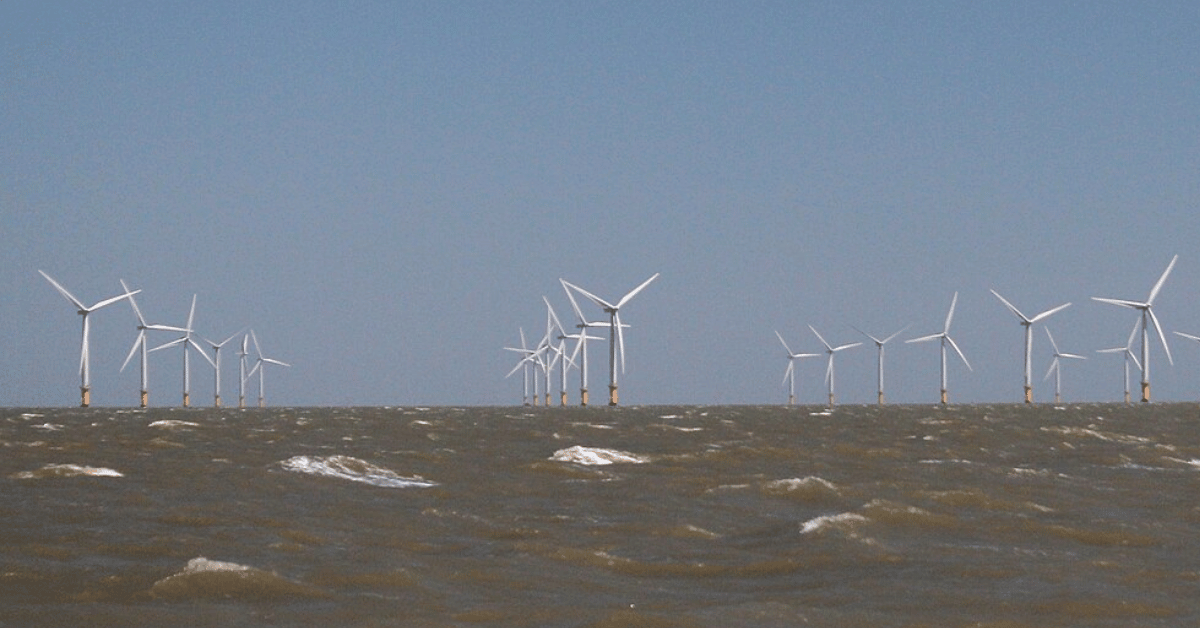
Ørsted's decision to consolidate full ownership of the 172 MW Gunfleet Sands 1 & 2 offshore wind farm is a quiet but telling signal about where the offshore wind industry is headed. For roughly GBP 15 million, the company is buying out its partners' remaining 49.9 percent stake, not because the asset is new or flashy, but because it is mature, predictable, and still generating measurable value. This is not a headline-grabbing megaproject announcement; it is a calculated move to extract the full potential from an operating asset that has been part of the UK's renewable energy story since 2010.
The practical takeaway is straightforward: the economics of offshore wind are shifting from construction to stewardship. Ørsted already operates 12 offshore wind farms in UK waters, supplying around 7 percent of the country's electricity. Gunfleet Sands alone powers over 125,000 homes annually. By taking full control, Ørsted gains the flexibility to manage the site's late-life options, including a potential lifetime extension, without needing to align multiple investment partners. That matters because the industry is entering a phase where the value of an asset is defined less by its initial build cost and more by how intelligently it is operated, maintained, and, eventually, repurposed. This aligns with broader trends we have tracked, such as how measured declines in solar costs track each doubling of global capacity, where the long-term economics of renewable energy increasingly favor those who can optimize existing infrastructure rather than chase only new installations.
The buyback right exercised here is not an anomaly. It was baked into the original partnership agreements, a long-standing option that Ørsted has now chosen to trigger. That is a deliberate, empirical decision. It signals confidence in the asset's remaining operational life and in the company's ability to run it more efficiently as a sole owner. For policymakers and investors, the implication is clear: the next wave of renewable energy value will come from asset management, not just asset deployment. We see a parallel in the maritime sector, where the first ammonia-powered bulk carrier has validated real-world ocean readiness, proving that existing vessel classes can be retrofitted or adapted for lower-carbon operations rather than requiring entirely new fleets. Similarly, extending the life of a well-sited offshore wind farm like Gunfleet Sands is often more cost-effective and lower-risk than building from scratch, especially when the grid connection, seabed lease, and community relationships are already in place.
There is also a strategic dimension worth watching. Ørsted has stated it will assess similar buyback rights on a case-by-case basis, considering the specific merits of each asset. That is a disciplined approach, but it also raises an open question: how many other aging wind farms in UK waters are being under-managed because ownership is fragmented? If Ørsted can demonstrate that full ownership unlocks value at Gunfleet Sands, it may set a precedent for consolidation across the sector. The UK's energy transition, as Australia’s solar and wind gains show, is not only about adding capacity but about ensuring existing capacity performs at its peak. The specific number to watch is the post-2030 output of Gunfleet Sands: if a lifetime extension is approved, this 2010-era wind farm could be generating clean power well into the 2040s, proving that the most valuable renewable energy asset is often the one you already own.