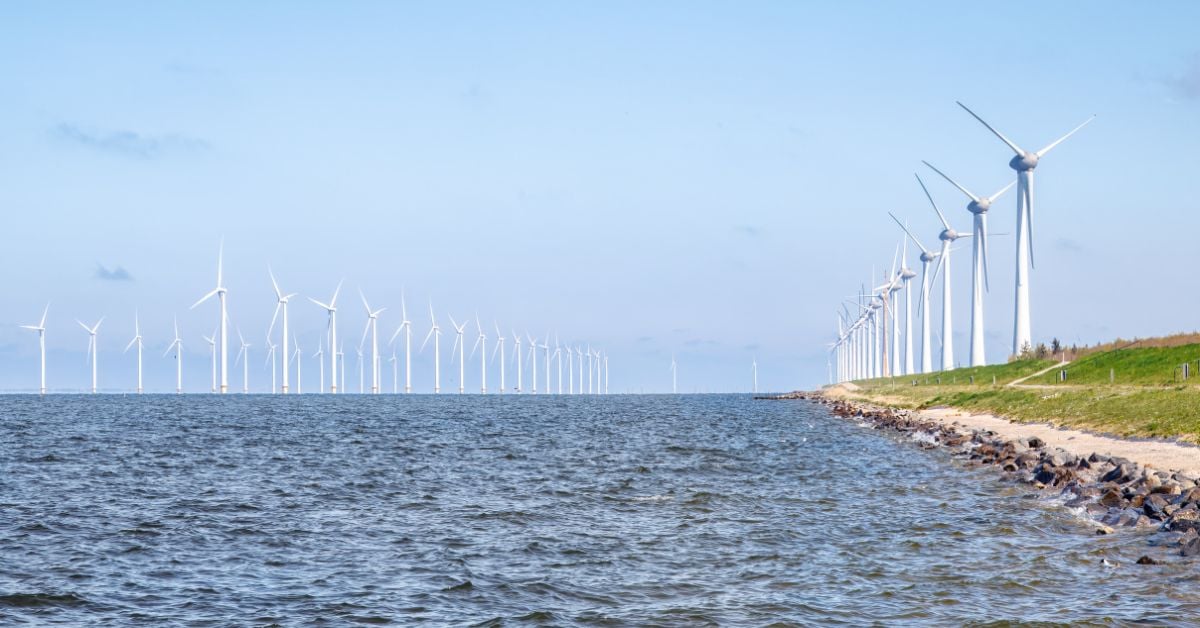
The Princess Elisabeth Island is not merely an engineering milestone; it is a calibrated test of whether offshore wind can scale beyond its current coastal limits. Belgium's decision to build the world's first artificial energy island thirty miles off the North Sea shore represents a deliberate, empirical step toward turning offshore wind from a supplementary power source into a central pillar of the grid. For our readers, researchers, policymakers, and ocean stewards alike, the project offers a measurable case study in integrated infrastructure, one that will yield real-time data on high-voltage transmission, marine habitat co-existence, and cross-border energy distribution.
The island's design reflects a purpose-driven approach that avoids the trap of treating renewable energy as a purely technical problem. While the 3.5 GW of new wind capacity and the 220-kV cables scheduled for 2027 and 2028 are the headline numbers, it is the deliberate integration of ecological resilience that sets this project apart. The caissons include ledges for bird nesting and relief panels for marine life, while the rock base is engineered to host an oyster reef over time. This is not greenwashing; it is a replicable model for how energy infrastructure can be validated against biodiversity metrics from day one. The contrast with Coastal benthic ecosystems reveal the cumulative toll of climate and human pressures is instructive: that study documented how cumulative stressors degrade seafloor habitats. Here, developers are attempting to reverse that equation by building habitat into the asset itself. Whether the oyster reef and bird ledges perform as projected will be a longitudinal test of whether industrial ocean infrastructure can produce net ecological gain.
The financial architecture behind the project is equally significant. The European Investment Bank's $1.2 billion loan, combined with the €700 million EU commitment to the Bornholm energy island, signals that public lenders now treat offshore energy hubs as bankable, long-term assets. This matters because the parallel Triton Link Interconnector to Denmark has been postponed due to cost constraints. The Princess Elisabeth Island's completion will provide calibrated cost data for future interconnectors and energy islands, data that can inform decisions on the larger Danish North Sea project and others. For policymakers weighing similar investments, the island becomes a real-world laboratory for the economics of offshore grid integration, not just its engineering.
The open question is whether the timeline holds. High-voltage cable installation is set for 2027-2028, with wind farms to follow. Any delay in those interdependent phases would ripple through Belgium's renewable targets and affect the confidence of other countries watching this model. The lesson from Australia accelerates its energy transition with measurable gains in solar and wind is that rapid, measurable deployment is possible when policy and grid infrastructure align. Belgium's island is the offshore equivalent: a fixed point around which a new grid architecture must be built. The specific detail to watch is the vibroflotation compaction of the sand interior, if that holds, the island's structural integrity sets the benchmark for every artificial energy island to follow.