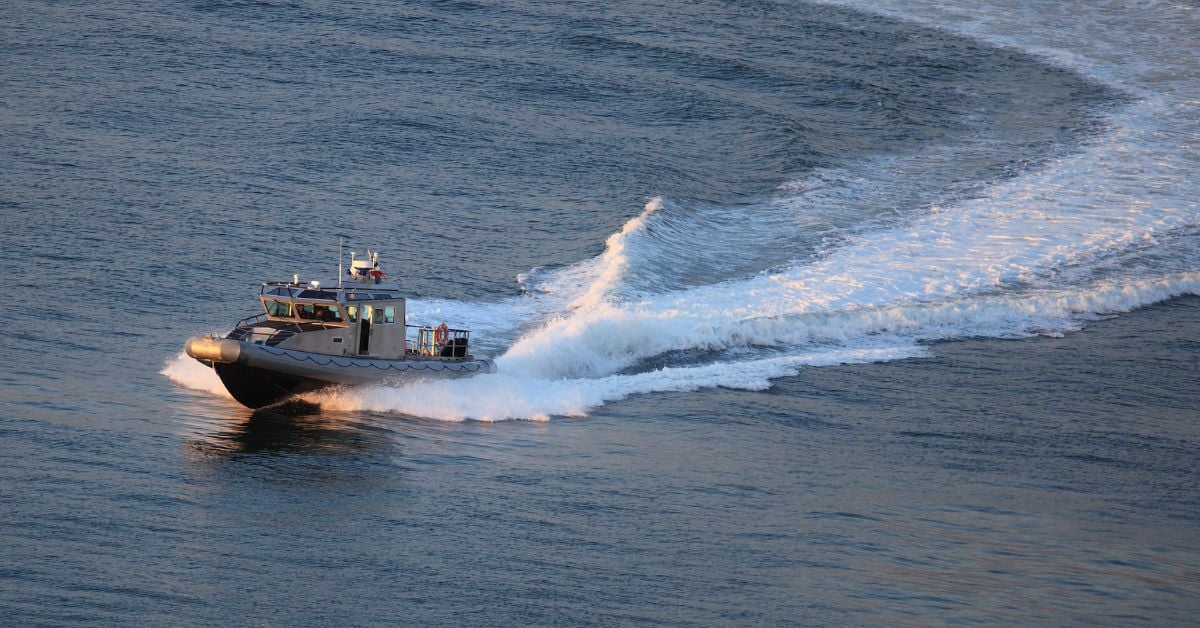
The sighting of the Chinese militia vessel Minfudingyu 07902 off Taiwan's eastern coast is not an anomaly to be logged and filed; it is a deliberate calibration of pressure. When a fishing boat doubles as a paramilitary asset, the line between civilian livelihood and state coercion blurs by design. This is how maritime dominance is asserted without firing a shot, and it demands a response that is equally measured but far more transparent.
The three-vessel formation, the militia boat, Coast Guard Cutter 2502, and research ship Xiang Yang Hong 03, operating over 30 nautical miles off Hualien's shores, indicates a coordinated approach rather than a random transit. Taiwan's Ministry of National Defense rightly frames these activities as a challenge to its maritime rights, but the deeper issue is the weaponization of ambiguity. Using scientific research and patrols as cover for strategic positioning erodes the very norms that keep contested waters predictable. This is not a new tactic; it has been refined since the 1990s in the South China Sea, where trained fishermen have long served as a low-cost, deniable extension of the Coast Guard. The difference now is the geographic shift to Taiwan's eastern seaboard, an area previously less trafficked by such assets. That shift is the signal. Meanwhile, the parallel development of a Chinese "mothership" for underwater drones, as reported in our coverage of A mothership for underwater drones signals a new era in ocean intelligence, suggests that the infrastructure for undersea pressure is expanding in tandem with surface patrols. These are not isolated incidents; they are components of an integrated maritime strategy.
What should concern readers is the practical response, not the rhetoric. Taiwan's use of a civilian aircraft from Apex Aviation to patrol and document these vessels is a pragmatic adaptation, even if the company insists its flights are independent. This reflects a broader reality: monitoring contested waters requires every available sensor, and civilian participation is becoming a de facto layer of defense. The same logic applies to the interception of a Philippine Coast Guard vessel during a medevac in the South China Sea, a scenario we covered in Escalation at Sea: Vessel Intercepted During Medevac in Contested Waters. In both cases, the immediate threat is not a warship but a gray-zone action that complicates humanitarian and surveillance operations alike. The lesson is that maritime security is no longer the sole province of navies; it is a shared burden requiring coordination between state agencies and private actors.
The takeaway is specific: watch the frequency and composition of these militia-led formations near Hualien. A single sighting is a test; a repeating pattern is a doctrine. If the Minfudingyu 07902 or its sister vessels return with greater regularity, it will confirm that Beijing is normalizing a presence in waters it previously avoided. That would not just challenge Taiwan's maritime claims; it would redefine the operational baseline for the entire region. The question is not whether China will continue these patrols, but whether Taiwan's monitoring, and the international community's acknowledgment of it, can keep pace with a strategy that thrives on being just ambiguous enough to deny.