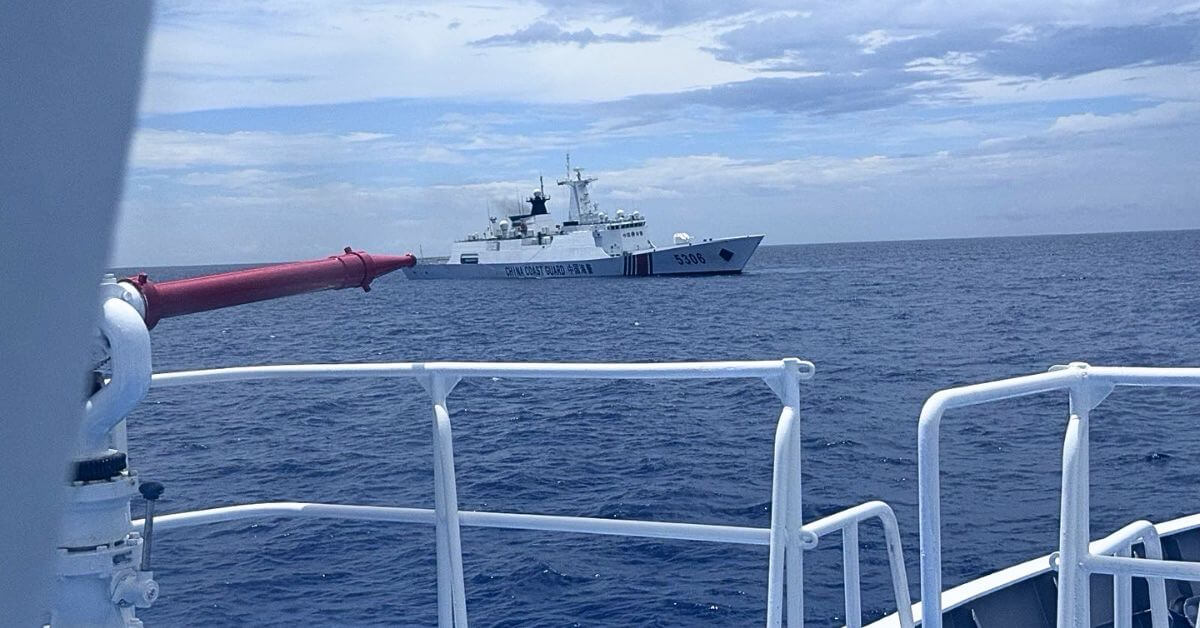
Humanitarian evacuations are supposed to be governed by a simple, universal rule: the sick get out first. That rule was tested, strained, and ultimately bent on October 8, when the Philippine Coast Guard's BRP Cabra spent nearly ten hours extracting a single servicemember from Ayungin Shoal under the shadow of Chinese water cannons and chasing vessels. The patient was stable, the operation succeeded, and the incident still reads as a troubling escalation. This was not a resupply run or a sovereignty stunt; it was a medevac, and it was treated as a tactical contest.
The details matter because they establish a pattern. The China Coast Guard vessel 5306 did not merely observe the operation; it activated its water cannon, closed from 1.3 nautical miles to roughly 400 yards, and then dictated where the transfer could occur. When the Philippine RHIB launched with medical staff aboard, the Chinese side launched its own boat within a minute and followed it over nine nautical miles. The patient was transferred at 3:15 p.m. and reached BRP Cabra just before 5 p.m., but the entire process took twice as long as a normal evacuation. That delay is the point. The message was not subtle: even a humanitarian corridor is subject to negotiation, and the negotiation is conducted with hulls and water streams.
This incident fits a wider maritime risk picture that shipping operators are already pricing. Weekly tanker strikes near Strait of Hormuz reach highest count in years and Risk premiums on global shipping lanes exceed $100,000 per month show that contested waters are becoming slower, costlier, and more dangerous for everyone who operates within them. The South China Sea has not yet produced the same insurance spikes as the Strait of Hormuz, but the operational friction here is comparable: vessels are being shadowed, redirected, and delayed under the banner of law enforcement. The Injured crew evacuated after fire erupts aboard tanker in Strait of Hormuz reminds us that when evacuation is genuinely urgent, every hour of interference carries a human cost.
What should readers take from this? First, the Philippine Coast Guard's decision to move the transfer point and continue under Philippine authority was the right call: it de-escalated a potential collision while preserving the mission. Second, China's claim that it "provided necessary assistance" is contradicted by its own actions on the water, and the distinction matters for anyone tracking legal precedent in the region. The 2016 arbitral award is not a live document; it is being tested in real time, one water cannon burst at a time.
The open question is whether humanitarian operations will become the next flashpoint in this dispute. If a medevac can be intercepted, what happens when the next evacuation involves a critical patient who cannot afford a nine-hour standoff? That is the specific detail to watch: not whether the patient survived, but how long the next rescue is allowed to take.