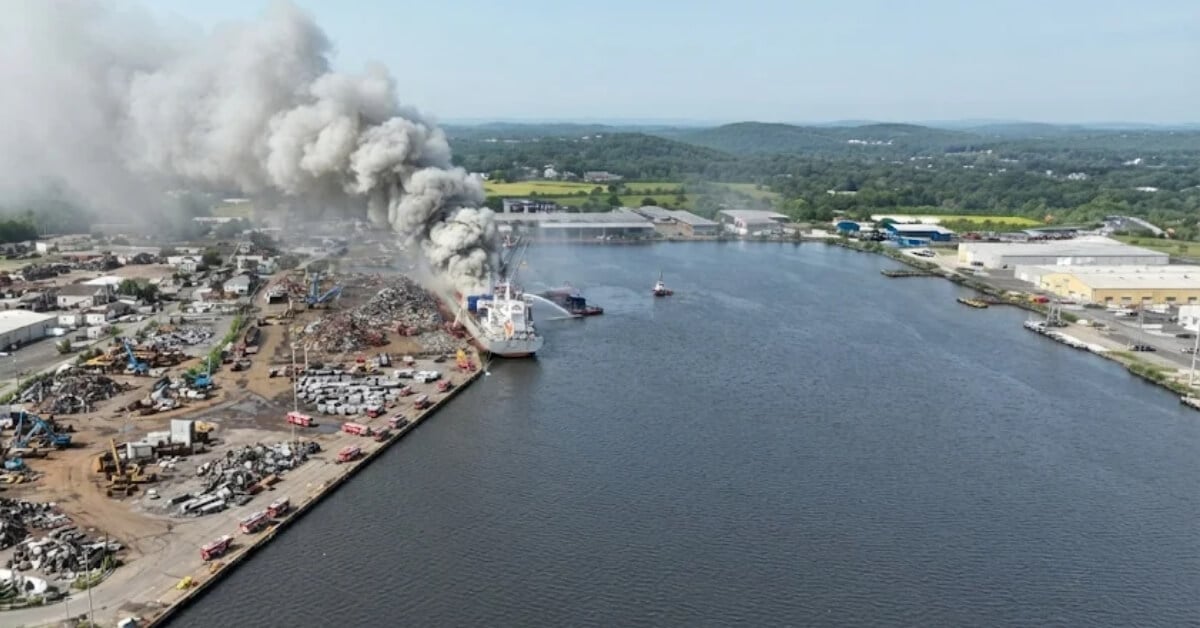
Scrap metal fires are not anomalies; they are systemic signals, and the Port of Amsterdam has received another one. The blaze aboard the 63,000-tonne bulk carrier SSI Phoenix, which sent heavy smoke over nearby neighborhoods and required a coordinated GRIP 1 emergency response, was contained within three hours and injured no one. That outcome is fortunate, but the recurrence is damning. This is the second such fire at the Amsterdam Scrap Terminal in under two years, following the 2025 blaze on the bulk carrier *Trade* that burned for over a day and spread to a second hold. When the same failure mode repeats at the same facility, it stops being an accident and starts being a pattern. The Dutch government has already acknowledged that self-heating scrap and improperly sorted lithium batteries likely contribute to these events. The terminal banned lithium batteries after the *Trade* fire. The SSI Phoenix burned anyway. That gap between policy and outcome is where real risk lives, and it is the same kind of gap we have seen play out in very different maritime contexts. The Security Incident in Singapore Strait Highlights Maritime Vulnerability showed how a single breach, armed intruders boarding a bulk carrier, can expose systemic weaknesses in crew protection and watchkeeping protocols. A fire in a scrap hold is a different threat vector, but the underlying problem is identical: a known hazard that operators have not fully neutralized. Meanwhile, the legal precedent set by the Seaman's Manslaughter Charge Sets Legal Precedent in Houston Ship Collision reminds us that when preventable incidents cause harm, accountability does not stop at the waterline. No one was hurt aboard the SSI Phoenix this time. That is not a guarantee for the next vessel.
For our readers, port authorities, fleet operators, marine insurers, and cargo inspectors, the practical takeaway is this: the current inspection and sorting regimes for scrap metal cargoes are not validated against real-world outcomes. A ban on lithium batteries in terminal procedures is only as effective as the empirical detection methods used to enforce it. The SSI Phoenix fire, like the *Trade* fire before it, suggests that batteries or other reactive materials are entering the cargo chain despite stated prohibitions. That points to a failure in upstream verification, not just terminal handling. Integrated data ecosystems that track cargo composition from the supplier's yard to the vessel's hold, calibrated against measurable indicators of heat and gas evolution, are no longer aspirational tools. They are operational necessities. The cost of retrofitting holds with real-time temperature and gas sensors is measurable. The cost of a GRIP 1 response, a halted voyage, and the unanswered question of structural damage to a 2024-built ultramax is harder to calculate but certainly higher.
The cause of the SSI Phoenix fire remains unknown. That is the detail to watch. If the investigation identifies a specific contaminant or loading practice that was already supposed to be controlled, the implications extend beyond Amsterdam. Every port handling scrap cargo should treat this incident as a peer-reviewed warning: procedures that are not empirically tested against repeated events are not procedures at all. They are placeholders.