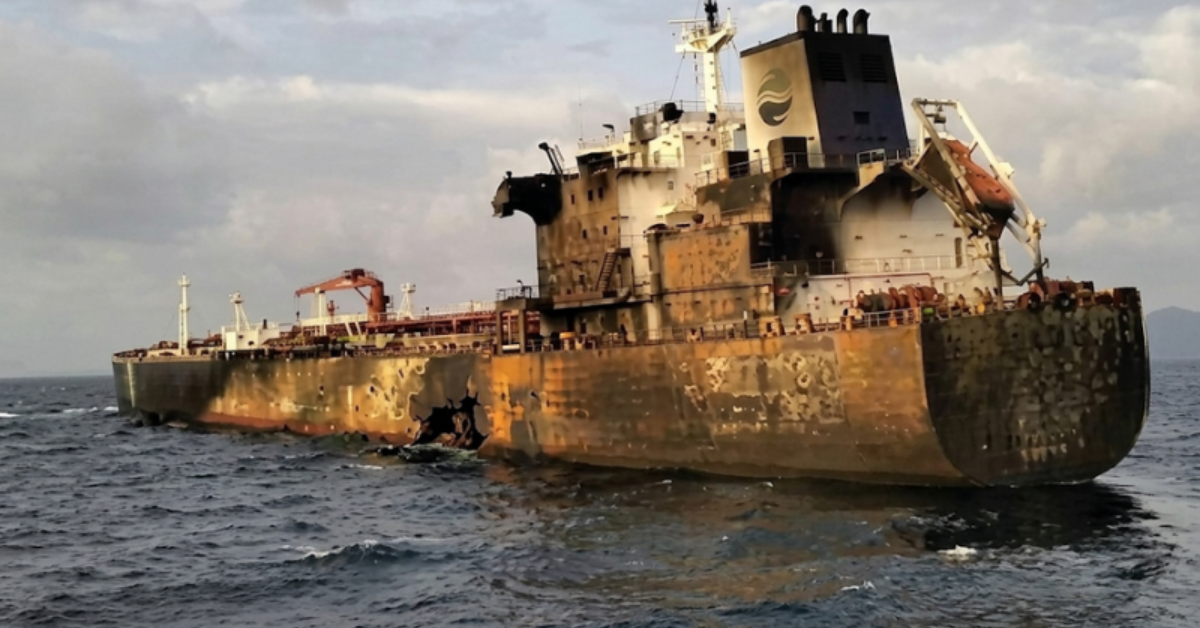
The report of a tanker colliding with an anchored vessel, after a fatigued officer of the watch made basic navigational errors, is not a story about the sea. It is a story about the systems we build on land and then assume will hold at sea. The conditions were not hostile: good weather, ten to twelve nautical miles of visibility, a traffic separation scheme designed to impose order. Yet two ships ended up ablaze and abandoned. This is not a failure of the ocean; it is a failure of procedure, and it is the kind of event that should sharpen the focus of every operator, regulator, and technologist who reads this.
We are often reminded that the maritime industry is in the middle of a data revolution, where real-time feeds and integrated data ecosystems promise to eliminate the unknown. But this incident is a stark counterpoint to that narrative. The officer on watch was not lacking in data; they were lacking in rest. This is the uncomfortable truth of our time: the most sophisticated sensors in the world cannot calibrate for a human being who is cognitively spent. As we see in the Eighty Nations Urge Reopening of Vital Strait of Hormuz Shipping Lane and the Negotiations Clear Strait of Hormuz for LNG Delivery to Pakistan, the industry can move mountains when geopolitical and commercial interests align. But those high-level negotiations are meaningless if the human element is left running on empty in the very waters those negotiations are meant to secure.
Our take is simple: fatigue is a navigational hazard that demands the same empirical respect as a shoal or a failing gyro. The industry has spent years developing validated methods for measuring fuel efficiency and emissions, yet we still rely on subjective self-reporting for one of the most dangerous variables on the bridge. This incident should push us toward integrating fatigue monitoring into the same category as collision-avoidance systems. We would tell a reader who asked us, "What is the takeaway?" that it is this: the next generation of ocean intelligence must not just stream data to the bridge; it must actively intervene, or at the very least, provide a second layer of verification that catches the errors a tired mind will make. The collision was not caused by a lack of information, but by a lack of resilience in the decision-making chain.
The practical consequence to watch is whether this becomes a catalyst for regulatory change or just another entry in the accident archives. The fact that the vessel was in a TSS with clear visibility amplifies the error to the point of inexcusable negligence on the part of the watchkeeper, but the systemic failure belongs to the shore-side management that allowed the voyage to proceed under those manning conditions. We will be watching to see if the investigation recommends mandatory bridge resource management audits that specifically account for fatigue, not as a box-ticking exercise, but as a continuous, data-driven process. The open question is whether the industry will treat this as a signal to be calibrated, or as a one-off anomaly to be forgotten. The former is the only path that leads to safer seas.