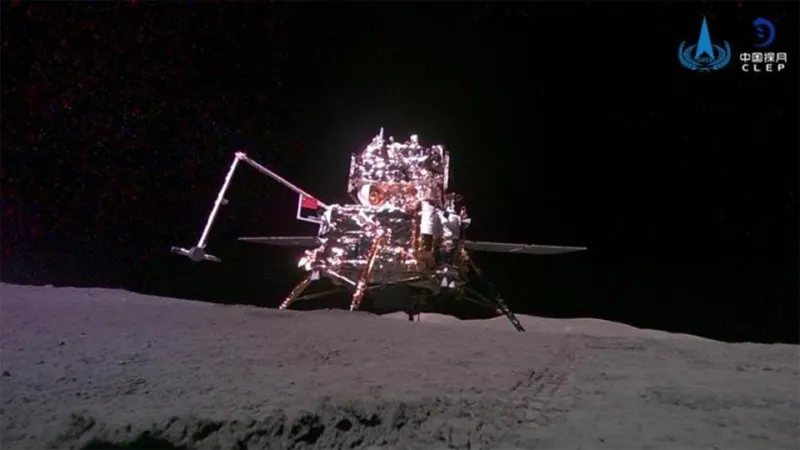
The lunar near side and farside are not mirror images of each other, and neither are their histories. For decades, the timeline of the Moon's early bombardment has rested on samples collected from the near side, particularly those from Apollo. Those rocks told a coherent story, but a coherent story is not always a complete one. The new farside samples complicate that narrative, and that complication is not a setback. It is a correction toward accuracy. This matters beyond lunar geology. If our own satellite's record of impact events is incomplete, then the assumptions we apply to other rocky bodies, including Earth, deserve renewed scrutiny.
This is where the story connects to a broader pattern. We see the same dynamic in other fields where a single vantage point has shaped the entire conversation. Consider how Ocean Potential Detected on Distant Exoplanet, Data Sparks Debate. has forced researchers to reconsider what a habitable ocean might look like. One dataset, one target, one interpretation. The debate is healthy because it expands the parameter space of what we consider possible. Similarly, Lunar Exploration: Assessing Microbial Risks with Artemis IV reminds us that our return to the Moon is not just about footprints and flags. It is about understanding contamination risks before we introduce terrestrial biology into an environment we still do not fully grasp. Each of these stories shares a common thread: the more we sample, the more we realize how much our earlier conclusions were shaped by what we had access to.
The practical takeaway here is not that previous models were wrong. It is that they were provisional. The farside samples do not erase the Apollo record; they refine it. They suggest that one major impact may have dominated the near side's sample suite, skewing our view of the entire bombardment period. That is a specific, measurable correction. For researchers, this means recalibrating the chronology of the inner solar system. For mission planners, it reinforces the value of sample return from diverse geological settings. For anyone following along from outside the field, it is a reminder that scientific consensus is not brittle. It bends when the evidence demands it.
We would tell a reader who asked us what to make of this: watch the next steps. The farside samples have not closed the case; they have opened a more precise set of questions. The same applies to Alaska: Second Endangered Whale Found After Cruise Ship Collision, where each incident adds a data point about human impact on marine life. In both cases, the pattern is clear: single events, whether a whale strike or a lunar sample, gain meaning only when placed in a longer sequence. The Moon's early history is not a single story. It is a mosaic, and we have only just started placing the farside pieces. The next sample could change the picture again. That is not a weakness. It is the point.