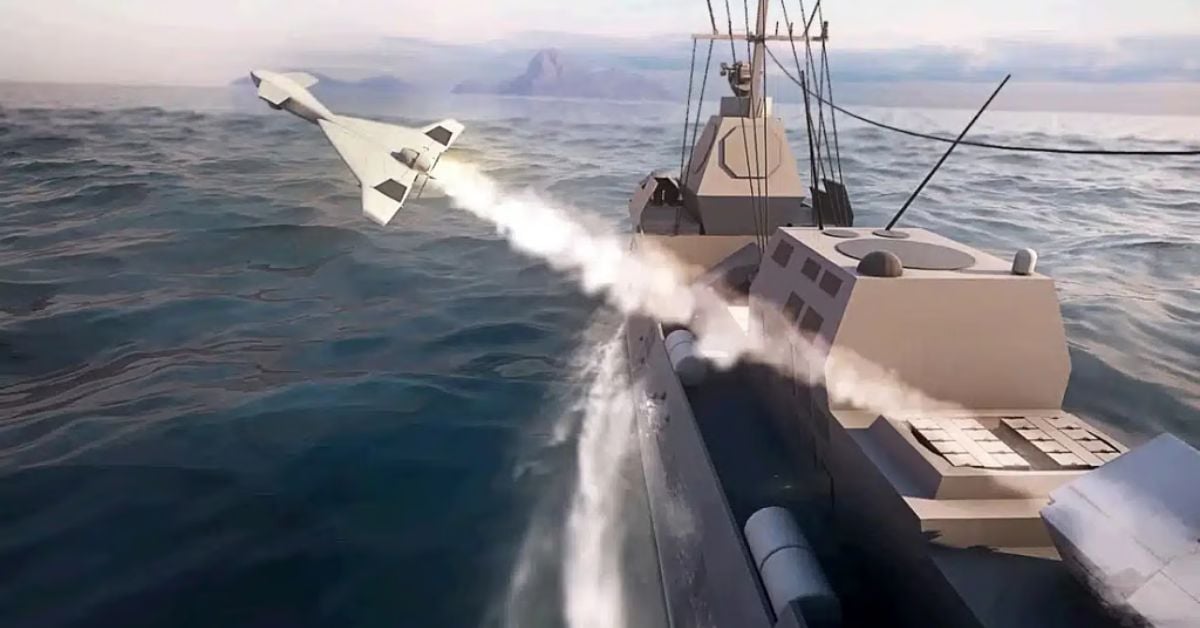
The Indian Navy's acquisition of a long-range loitering munition, planned as part of a universal strike system against sea and land targets, represents a significant evolution in maritime power projection. This is not merely a new weapon; it is a statement about the changing nature of naval operations in a contested environment. As our recent coverage of India Projects Expanded Naval Fleet to Navigate Evolving Maritime Landscape makes clear, the Navy is preparing for a future with approximately 230 ships by 2040-2045. This loitering munition, with its reported 1,000-kilometer range, provides a stand-off strike capability that complements that larger fleet, allowing for persistent surveillance and precision engagement without placing a surface combatant directly in harm's way.
The practical implication for our readers, whether you are a defense analyst, a policymaker, or an ocean-focused researcher, is that the Indian Ocean region is becoming an increasingly data-dense and lethal operating space. A loitering munition is not a simple missile; it is an integrated system that relies on real-time intelligence, validated targeting data, and a calibrated understanding of the maritime environment. This is where our own domain of ocean intelligence intersects with military necessity. The same empirical data streams that enable Ocean Data Enables Swift Rescue of Injured Seafarer Near Andamans, current patterns, bathymetry, and weather windows, are equally relevant for ensuring a loitering munition can loiter effectively and strike precisely. We see a convergence of safety and security, both reliant on a shared, measurable understanding of the ocean.
Our take is measured but direct: this acquisition signals a shift toward distributed lethality, where smaller, persistent platforms and munitions can impose costs on adversaries without requiring a massive fleet presence at all times. It also raises an open question for the Navy's domestic innovation agenda, which we explored in Indian Navy Explores Domestic Innovation for Amphibious Fleet Expansion. Will the loitering munition be indigenously produced, or will it rely on foreign partners? The answer matters for long-term supply chain resilience and for the integration of this weapon into a broader, peer-reviewed operational doctrine. A universal strike system is only as credible as the intelligence that feeds it.
The specific takeaway a reader could quote: "A loitering munition with a 1,000-kilometer range does not just extend the Navy's reach; it fundamentally changes the calculus of deterrence in the Indian Ocean, where time and distance have always been the primary constraints on power." What we will be watching is how this capability integrates with the Navy's planned fleet expansion and whether the required ocean intelligence infrastructure, the calibrated, real-time data ecosystem, keeps pace with the hardware. Without that empirical foundation, the weapon is just a long-range guess. With it, it is a calibrated instrument of maritime strategy.