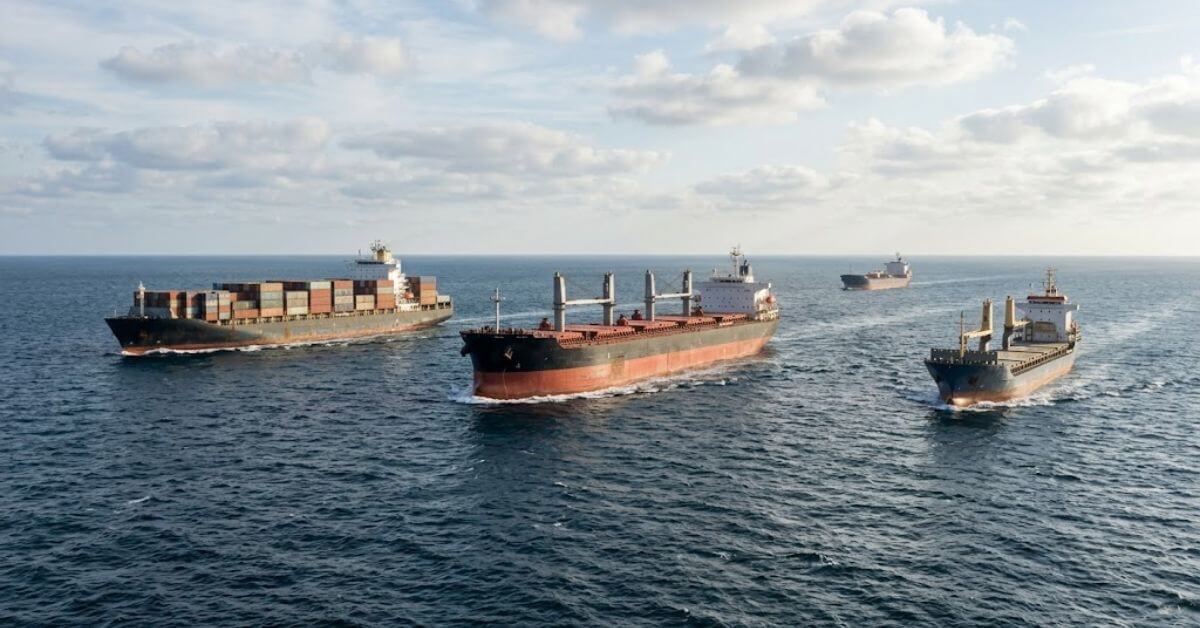
India's push to add 100 merchant ships over the next five years is not just a fleet expansion; it is a calculated bid to reset the economics of its maritime sector. The core obstacle is stark: Indian ship owners report that operating under the national flag costs 16 to 20 percent more than registering abroad. That differential is not a rounding error. It is the difference between a competitive domestic shipping industry and one that watches its own cargo move under foreign flags. The government's ambition is to close that gap, but the target will not be met by building hulls alone. It requires dismantling the cost structure that makes the Indian flag a penalty rather than a preference.
This effort does not exist in a vacuum. The region is already recalibrating its maritime strategies, and India's moves should be read alongside those of its neighbors and partners. Consider the pressure points: Gulf of Oman STS Transfers Max Out Amid Rising Saudi Oil Exports shows how quickly regional infrastructure reaches its limits when trade volumes surge. If India's fleet grows without addressing the operational costs that make foreign registries attractive, the new tonnage risks becoming a symbolic victory rather than a commercial one. Meanwhile, Cochin Shipyard Expands Design Capabilities with Conoship Equity Stake signals that domestic capability is not just about quantity of ships but quality of design and engineering. And Russia Calibrates Export Revenue for Northern Sea Route Icebreaker Fleet reminds us that state-led fleet expansion often comes with complex financing mechanisms tied to trade routes. India's challenge is to build a fleet that is not merely larger, but cheaper to operate and more strategically integrated.
Our take is straightforward: the 16-20 percent cost disadvantage is the number to watch. If India can shave that down through tax rationalization, streamlined port charges, or cheaper financing, the 100-ship target becomes a genuine inflection point. If not, the ships will be built, registered, and then flagged out within a decade, repeating a cycle that has hollowed out other aspiring maritime nations. The government has talked about cost parity for years; this plan will be judged on whether it delivers it. The recent moves by Cochin Shipyard to acquire foreign design expertise suggest an understanding that maritime independence is not just about ownership of vessels but control over the knowledge economy that builds and maintains them. That is a promising sign, but it must translate into measurable reductions in the total cost of ownership.
For the reader who asks what this means in practical terms: watch the financing terms and the tax treatment of shipping income over the next 24 months. Those two variables will determine whether the 100-ship plan is a genuine strategy or a headline. Also, track whether Indian-flagged vessels begin to win cargo contracts on routes where they currently lose to foreign competitors on price. The Gulf of Oman example shows that regional chokepoints are already at capacity; an Indian fleet that can operate at parity could claim a meaningful share of that overflow traffic. The question is not whether India wants maritime independence, but whether it is willing to make the hard fiscal choices that make independence cost-effective. The next budget cycle will be the first real test.