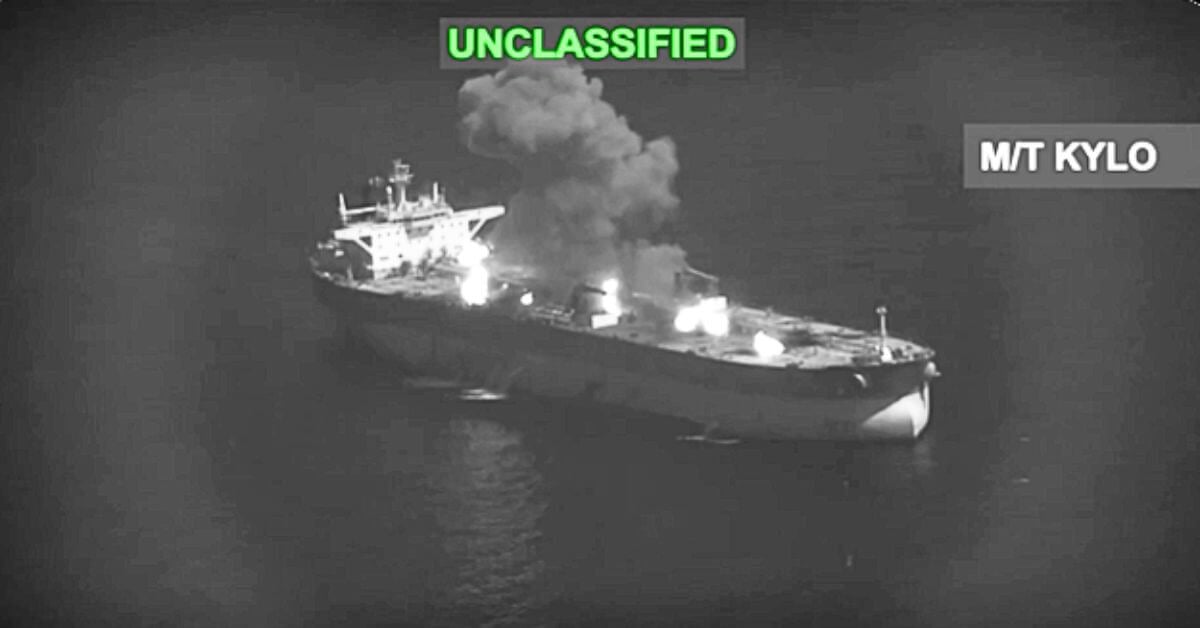
The Persian Gulf has always been a theater where maritime and geopolitical tensions converge, and this week's events underscore that reality with unsettling clarity. According to CENTCOM, a U.S. aircraft carrier and a guided-missile destroyer successfully evaded several Iranian attacks, with no American personnel injured. The strikes that followed, targeting three Iranian oil tankers, represent a direct and calibrated response to the IRGC's ballistic missile launches against U.S. Navy warships. This is not a new crisis, but it is a dangerous escalation that demands we look beyond the immediate headlines and consider the systemic fragility of the region's commercial arteries.
For our readers, the practical implications extend far beyond naval tactics. This incident unfolds against a backdrop of record-breaking Gulf of Oman STS Transfers Max Out Amid Rising Saudi Oil Exports, where ship-to-ship transfers have reached maximum capacity. That context is critical: the very infrastructure designed to keep oil moving under pressure is now stretched thin, and any disruption to the Strait of Hormuz sends immediate shockwaves through shipping rates, insurance premiums, and global energy prices. The fact that Eighty Nations Urge Reopening of Vital Strait of Hormuz Shipping Lane signals that the diplomatic consensus is shifting, but words alone will not deter a ballistic missile. The U.S. response, while measured, raises a sobering question: how many more close calls can the world's most critical chokepoint absorb before a miscalculation turns a near-miss into a catastrophe?
This is where our take diverges from a simple recap of events. The news is not just about what happened, but about what it reveals regarding the limits of naval deterrence in a region where non-state actors and state proxies operate with increasing impunity. The U.S. military's ability to avoid casualties is a testament to tactical competence, but it does not address the underlying strategic vacuum. Meanwhile, the Phased Negotiations Aim to Ease Restrictions on Strait of Hormuz suggest that diplomacy is still being pursued, but this latest exchange illustrates how fragile that process is. You cannot negotiate from a position of strength if your warships are being targeted, and you cannot secure lasting stability if the economic lifelines of the region remain hostage to every escalation cycle.
What should our readers take from this? A clear-eyed assessment: the risk premium on Gulf shipping is not a temporary anomaly but a structural condition. For shipowners, insurers, and traders, this means recalibrating risk models to account for a persistent, low-level conflict that can flare into open confrontation with little warning. The specific takeaway here is that the Strait of Hormuz is no longer just a geopolitical flashpoint; it is a stress test for global maritime security protocols. The next incident may not be as forgiving, and the question we should all be asking is not whether Iran will test U.S. resolve again, but whether the international community's response, from the 80 nations calling for reopening to the phased negotiations, can outpace the next launch sequence. Watch the insurance markets and the STS transfer rates; they will signal the true temperature of this crisis before any official statement does.