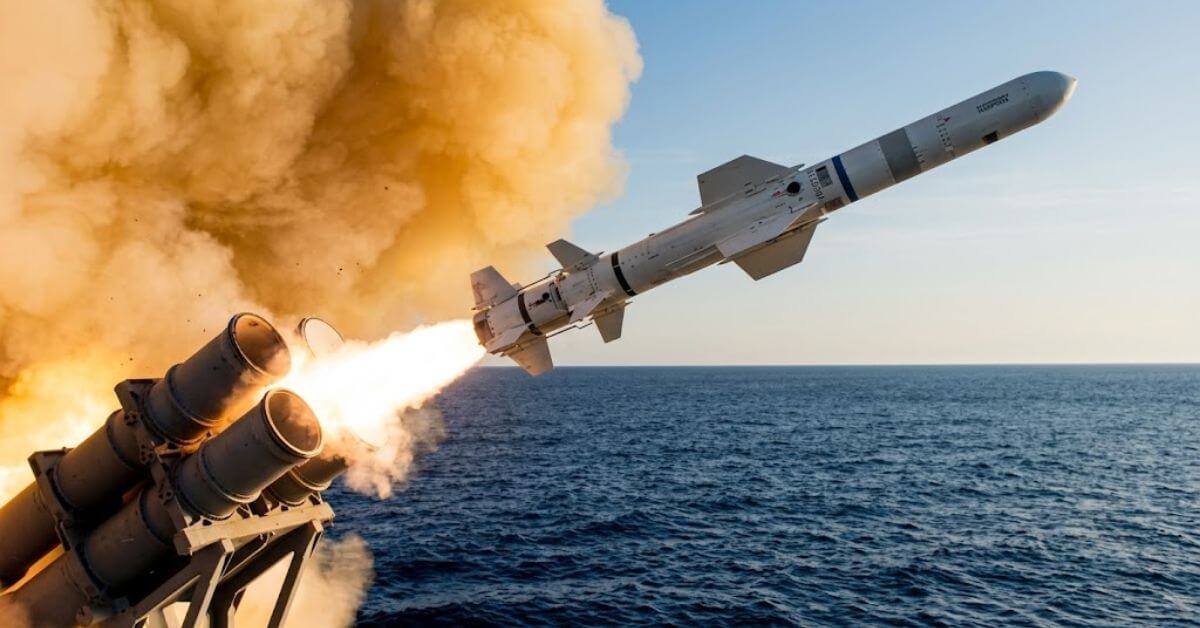
Iran's Islamic Revolutionary Guard Corps announced it had launched several missiles at a U.S. aircraft carrier and destroyer in the Strait of Hormuz, testing a new anti-ship weapon directly over a Navy warship. The Strait, through which roughly one-fifth of the world's petroleum transits, is no stranger to confrontation, but this escalation marks a deliberate calibration of risk. For our readers, researchers, maritime analysts, and policymakers tracking ocean security, the question is not whether this was a provocation, but what it reveals about the changing operational logic of the region. This is not a singular flashpoint; it is a signal embedded in a broader pattern of maritime pressure. Consider that Phased Negotiations Aim to Ease Restrictions on Strait of Hormuz are reportedly underway between the United States and Iran, even as missile tests and ship-to-ship transfers max out capacity in adjacent waters. The negotiation track and the military track are running in parallel, and that tension is the story.
The practical takeaway for anyone monitoring ocean intelligence is that the Strait of Hormuz is becoming a laboratory for asymmetric naval tactics. Iran's IRGC is not seeking a fleet engagement; it is testing the boundaries of detection, response times, and escalation thresholds. The missile test over a U.S. carrier is a data point in a longer empirical record, one that includes Gulf of Oman STS Transfers Max Out Amid Rising Saudi Oil Exports, where traders report that ship-to-ship oil transfers have hit their logistical ceiling. When commercial throughput reaches its limit while military postures rise, the entire integrated data ecosystem of maritime traffic, insurance rates, and naval deployments becomes more volatile. Our take is that this is not merely a political standoff; it is a measurable shift in how state and non-state actors calibrate risk in a constrained seaway. The missile test is a variable that should be integrated into any real-time assessment of global energy security.
What this means for you, whether you are modeling climate indicators or advising on naval procurement, is that the Strait of Hormuz is no longer just a chokepoint for oil, it is a chokepoint for empirical validation of escalation models. The IRGC's claim, even if exaggerated for domestic consumption, forces a recalibration of what is considered a credible threat. The India Projects Expanded Naval Fleet to Navigate Evolving Maritime Landscape as it prepares for a more contested environment, and this incident validates that planning. When a missile is tested over a carrier group, every navy in the Indian Ocean takes note. The specific detail to watch is whether the phased negotiations produce any verifiable constraints on missile testing in the Strait, or whether the parallel tracks of diplomacy and deterrence simply normalize this level of confrontation. A quote to carry forward: the Strait of Hormuz is now a live-fire classroom for maritime escalation, and the tuition is paid in barrels and bandwidth.