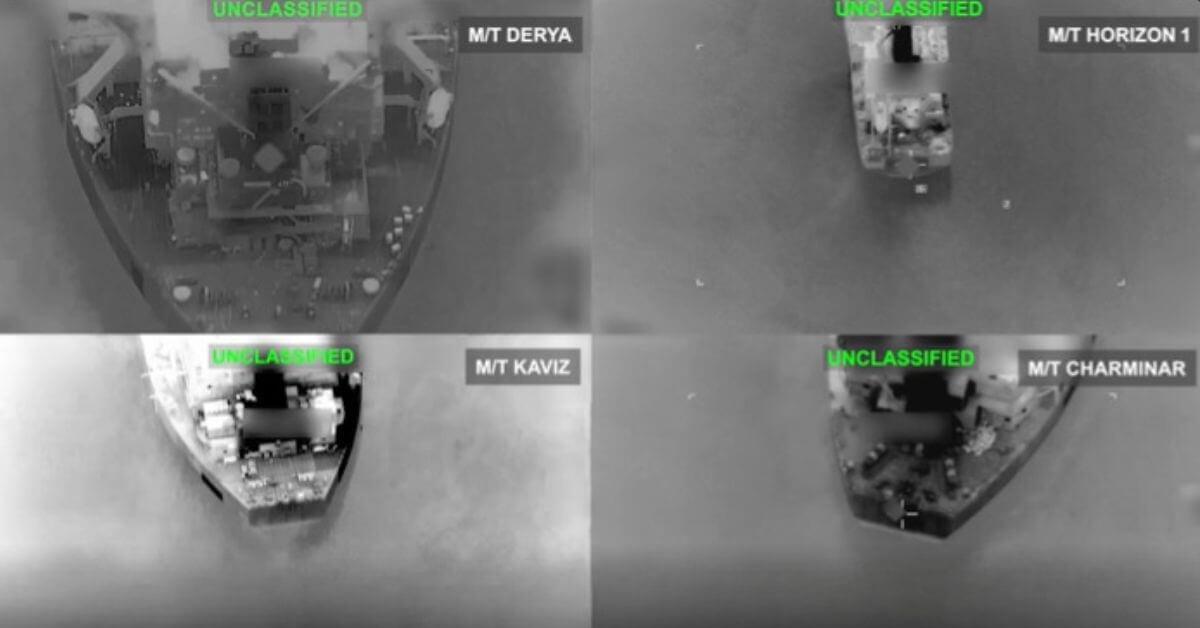
The destruction of five Iranian oil tankers by U.S. forces in the Persian Gulf, following an IRGC ballistic missile attack on an American warship, represents a significant escalation in one of the world's most strategically vital waterways. Before the strikes, U.S. forces instructed the crews to leave the vessels, CENTCOM confirmed, and the tankers were left inoperable. This is not merely a military incident; it is a direct disruption to the flow of energy resources and a stress test for the maritime governance frameworks we rely on. For our readers, whether researchers tracking climate indicators or policymakers assessing global stability, the practical consequence is immediate: the Strait of Hormuz, through which roughly one-fifth of the world's oil passes, has become a contested chokepoint where the line between economic security and armed conflict has blurred.
This event does not exist in isolation. Eighty Nations Urge Reopening of Vital Strait of Hormuz Shipping Lane underscores the collective urgency to restore passage, but diplomatic pressure alone cannot neutralize ballistic missiles. Meanwhile, India Projects Expanded Naval Fleet to Navigate Evolving Maritime Landscape reveals how regional powers are already recalibrating their force structures for a more contested environment, a direct response to the kind of instability now on display. And as Kiwi Frigate Monitors Sanctions, Enhancing Global Maritime Security Intelligence demonstrates, the monitoring of UN sanctions has evolved into a persistent, real-time intelligence operation. Together, these stories paint a picture of a maritime domain that is simultaneously more policed and more volatile.
Our take is straightforward: the ocean is not a passive backdrop for geopolitical theater. It is an integrated data ecosystem where every missile launch, every tanker disabled, and every naval deployment generates empirical signals about the health of global stability. The U.S. response was calibrated to disable assets, not sink them, but the message is clear, maritime infrastructure is now a legitimate target in asymmetric warfare. For ocean intelligence practitioners, this means that traditional shipping routes, port operations, and even environmental monitoring buoys may face new risks. We would tell a reader who asks: watch the insurance rates for tankers transiting the Gulf; they are a validated, real-time climate indicator of geopolitical temperature.
The concrete point to watch is the status of the disabled tankers themselves. Left inoperable, they become navigational hazards, potential pollution sources, and floating data points about the cost of escalation. Will they be salvaged, or left as wreckage to deter further traffic? The answer will tell us more about the rules of engagement in this new maritime reality than any communiqué. Understanding drives protection, and in the Persian Gulf, that understanding is being written in oil and steel.