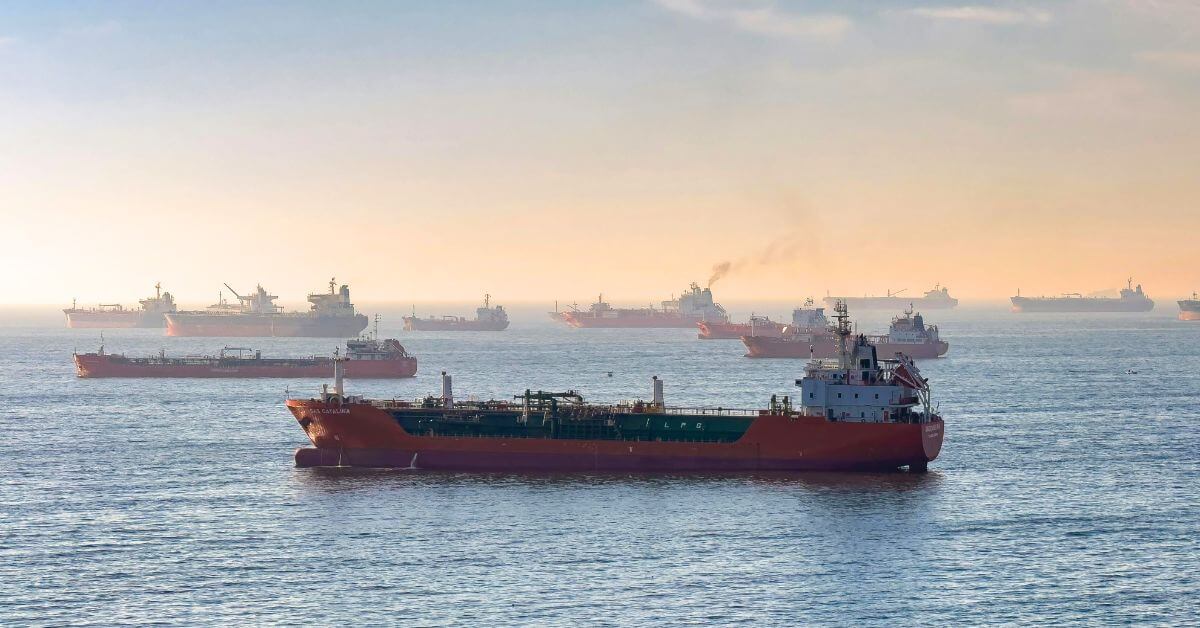
The first reported U.S. military strike on Iranian government tankers under the new "tanker-for-tanker" policy in the Strait of Hormuz is not a surprise, but it is a significant escalation. It signals that the United States has moved from deterrence to direct response, targeting the very vessels that have been used to pressure commercial shipping. For those of us who track maritime risk, this is the moment where the abstract threat of retaliation became a concrete operational reality.
This development does not exist in a vacuum. The region's pressure valves were already straining, as Gulf of Oman STS Transfers Max Out Amid Rising Saudi Oil Exports shows, with ship-to-ship transfers running at maximum capacity to keep crude moving. When the physical infrastructure of the oil trade is stretched to its limits, the margin for error shrinks, and the probability of miscalculation rises. The U.S. action against the tankers is a direct consequence of that pressure, but it also creates a feedback loop: every strike on a tanker increases the risk premium on the very voyages that are already maxing out their capacity. The Strait of Hormuz is not just a chokepoint; it is the circulatory system of the global energy market, and we are watching it constrict.
Our take is straightforward: this policy is a gamble that redefines the rules of engagement, but it does not resolve the underlying instability. The U.S. has drawn a line, but lines drawn in the water are only as strong as the intelligence that monitors them. This is where the broader maritime picture matters. The CIA's warning about suspected Russian drone operations from commercial ships in the Mediterranean, detailed in Russian Maritime Activity Raises Concerns of Drone Operations in Mediterranean, reminds us that the threat surface for commercial vessels is expanding beyond state-on-state confrontations in the Gulf. The same shipping lanes that carry oil are being eyed as launchpads for asymmetric attacks. Meanwhile, the industrial response to these threats is evolving, as seen in Cochin Shipyard Expands Design Capabilities with Conoship Equity Stake, where ship design capabilities are being bolstered to build more resilient and adaptable vessels. These are not disconnected dots; they are the emerging contours of a maritime security environment where the distinction between commercial and military assets is blurring.
For our readers, the practical takeaway is caution, not panic. If you are operating in the Gulf of Oman or the Strait of Hormuz, assume that the U.S. policy of direct retaliation will continue, and that Iranian responses may not be limited to the same tankers. The risk of collateral damage to neutral shipping is real, and the insurance market will likely react with higher war-risk premiums that will ripple through charter rates. The specific thing to watch is whether this policy extends beyond the tankers themselves to the ports and terminals that support them. A strike on a vessel is one thing; a sustained campaign against the logistics of Iranian oil exports is another. That would be the difference between a punitive measure and a blockade, and it is the difference between a crisis and a regional war. For now, the data points to a measured but firm escalation, but in this environment, the next data point is never far away.