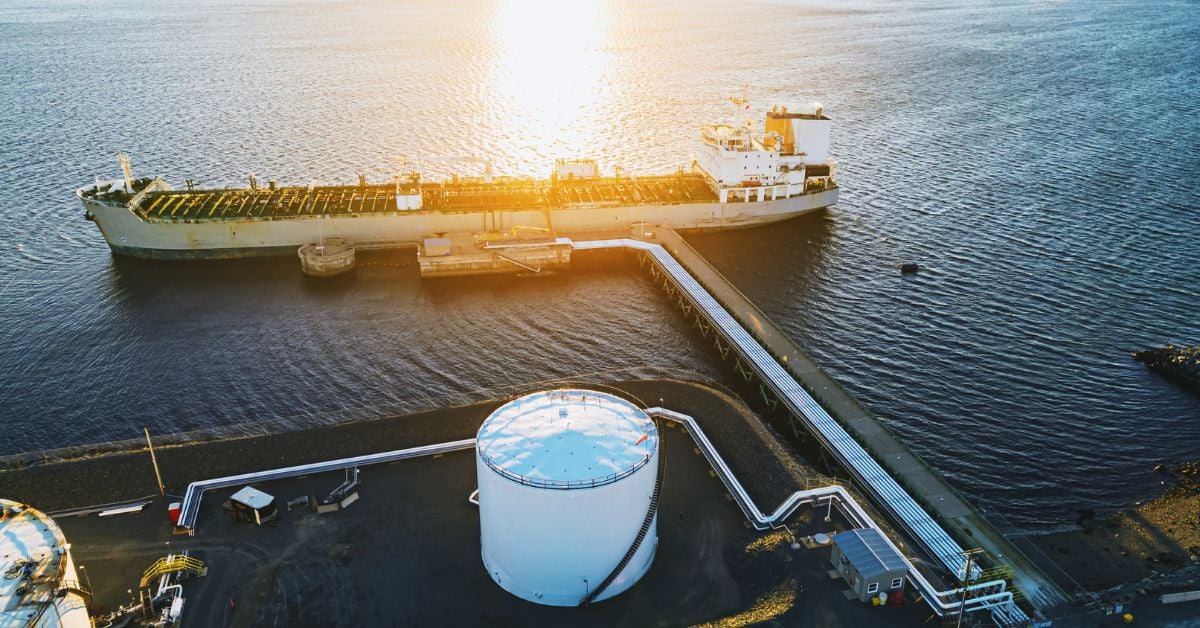
The Islamic Revolutionary Guard Corps Navy has warned crews aboard oil tankers near Kuwaiti and Bahraini ports to abandon their vessels immediately. This is not a diplomatic signal; it is a direct threat to commercial shipping in one of the world's most concentrated chokepoints for energy transit. For an audience that tracks empirical data on maritime security, the timing is instructive. This warning arrives as Phased Negotiations Aim to Ease Restrictions on Strait of Hormuz are reportedly underway between the United States and Iran, and as India Projects Expanded Naval Fleet to Navigate Evolving Maritime Landscape to prepare for a more contested environment. The contradiction is stark: one track of discussion seeks to reopen the Strait of Hormuz through phased relief, while the other track escalates pressure on the very vessels that would transit it.
Our take is straightforward. The IRGC's warning is a calibrated act of coercion designed to test the credibility of any negotiated framework before it is finalized. It forces commercial operators and insurers to recalculate risk in real time, effectively inserting a military variable into what should be a logistical calculation. For researchers and policy analysts tracking ocean intelligence, this is a measurable indicator of how non-state actors and state-aligned forces can disrupt integrated data ecosystems that rely on predictable shipping patterns. The Gulf of Oman, as our related reporting notes, has already seen ship-to-ship oil transfers max out amid rising Saudi exports, a sign that the logistical system is adapting under strain. Now, the Persian Gulf side faces the opposite pressure: not congestion, but potential evacuation.
What does this mean for our readers in practical terms? If you model climate indicators or maritime emissions, the rerouting of tanker traffic away from Kuwait and Bahrain ports will produce a measurable, longitudinal shift in vessel density along alternative corridors. If you analyze geopolitical risk, the gap between the negotiation track and the IRGC's operational track is the variable to watch. The Indian Navy's projection of a 230-ship fleet by 2040 is not an abstract ambition; it is a direct response to this kind of volatility. The question is whether phased talks can absorb this escalation or whether the warning itself is a signal that the negotiation window is closing.
The concrete detail to watch is crew behavior. If crews comply with the warning and abandon vessels, the resulting mass anchorage of unmanned tankers creates a maritime hazard and an environmental liability. If they stay, the IRGC faces a credibility test of its own. Either outcome produces data that belongs in any integrated ocean monitoring system. Understanding drives protection, and in this case, the protection of crews, cargo, and the marine environment depends on whether the empirical record of this incident is used to calibrate the next round of negotiations, or to justify the next warning.