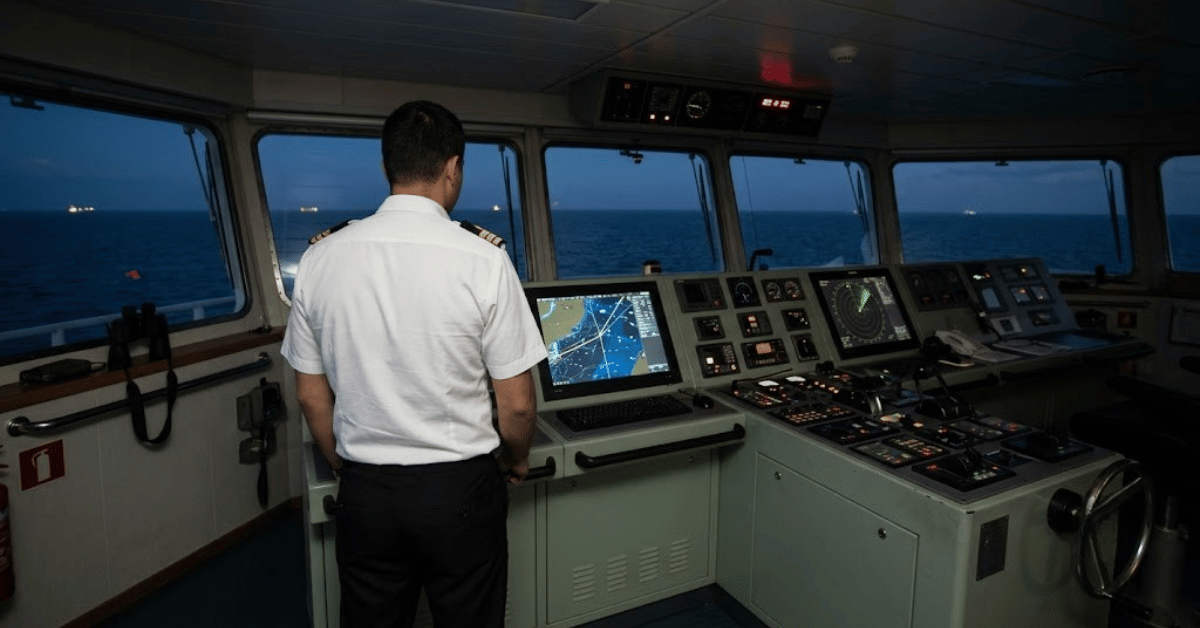
The training gap in maritime is no longer a future risk, it is a present failure. The survey from OneOcean and Thetius, corroborated by the World Maritime University and Lloyd's Register Foundation, confirms what many onboard and ashore have felt for years: our systems for preparing crews are not keeping pace with the digital tools now standard on the bridge. This is an empirical gap, and it is measurable, widespread, and urgent.
Consider the numbers: 82% of maritime professionals say current training models are inadequate. More than half report that skilled crew members struggle in practical operations, and 56% point to compliance-driven "tick-box" training as a direct contributor to that struggle. Only 18% believe training reflects real-world daily operations. These findings align with a separate global survey of 532 professionals from 64 countries, which found that over 80% of crew learn digital skills "rarely" or "not at all." This is not a niche complaint. It is a systemic disconnect. We have seen similar patterns of protocol falling behind reality in other areas of maritime safety, such as the Three decades of enclosed space incidents reveal systemic gaps between safety protocols and crew realities study, which documented how procedures often fail to match the circumstances crews actually face. The parallel is instructive: whether the risk is confined to a tank or spread across a digital console, the root cause is the same. Training and certification frameworks evolve too slowly, and the consequences land on the crew.
The problem is twofold, as OneOcean's Alex Mangan put it. Technology is advancing rapidly, automated navigation, data-driven operations, integrated digital ecosystems, while the training pipeline remains anchored to older paradigms. The WMU report found that only 13% of shore-based training consistently matches the equipment used at sea. Limited funding and a shortage of digitally skilled instructors are slowing progress. This is not a call for more technology in the classroom; it is a call for better alignment between what is taught and what is used. The maritime sector must coordinate on global training standards, invest in formal curriculum updates, and push regulators and providers to act with the same urgency that drives technological innovation. A PhD in marine biology may require years of specialized study to understand complex systems, as explored in Marine biology in Europe: what a PhD actually looks like, but the digital skills needed on a modern vessel demand equally deliberate, structured education, not a checklist.
The takeaway is specific and actionable: the next time a regulator or training provider updates a syllabus, they should measure it against the real equipment in the fleet, not the equipment from five years ago. The gap is not closing on its own. Until training reflects the bridge of today, we are asking crews to navigate a digital ocean with analog charts.