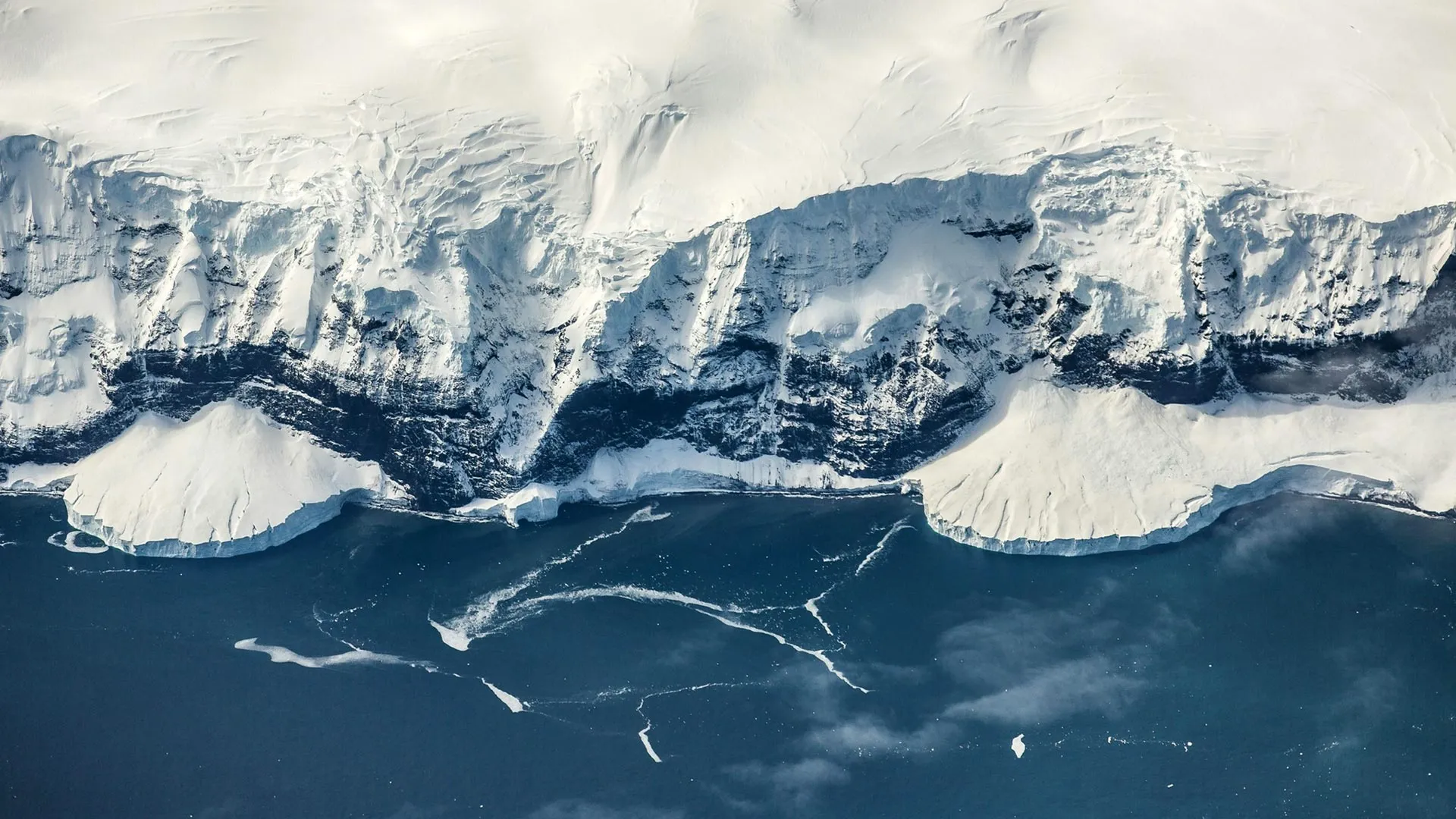
The mystery of Antarctica's early freeze has long been pinned on shifting oceans and atmospheric carbon, but a new explanation emerges from deeper ground. Slow-moving waves within Earth's mantle appear to have gradually uplifted East Antarctica, raising mountains and a high plateau where snow could persist even when global temperatures were far warmer than today. This is not a story of a single dramatic collision or an abrupt shift; it is one of patient, internal forces setting the stage for ice. Once glaciers formed, their reflective surfaces amplified the cooling, locking in a climate state that has largely endured. The finding reframes how we understand the timing of polar glaciation, and it reminds us that surface climate cannot be separated from the planet's deep interior.
For readers following the systems that shape our world, this is a useful correction to the assumption that ice ages are purely a surface phenomenon. We already know from our own coverage that Earth's history is full of such interconnections. Consider how Magma and microbial activity may rewrite a 2-billion-year-old carbon signal, where deep geological processes complicate what we thought were straightforward biological markers. Similarly, the Antarctic story suggests that long-term climate models may need to account for mantle dynamics, not just orbital cycles and greenhouse gases. And while the Arctic is now warming faster than most regions, the early freeze of the south is a reminder that polar histories are not mirror images. The Northern Sea Route may be opening to new shipping traffic, as Russia calibrates export revenues for icebreakers in Russia Calibrates Export Revenue for Northern Sea Route Icebreaker Fleet, but the Antarctic's ice cover was never a simple response to the same forces.
Our take is straightforward: this is the kind of empirical, peer-reviewed insight that should make us cautious about overly simplified climate narratives. It does not reduce the urgency of current warming, but it does deepen our understanding of the Earth system's complexity. The takeaway worth quoting is this: "Antarctica's ice may owe its existence as much to the slow churn of the mantle as to the atmosphere above it." For researchers, this means that paleoclimate reconstructions should consider deep Earth processes as boundary conditions, not just background noise. For policymakers, it reinforces that the Earth system operates on multiple timescales, and that short-term observations, while critical, are only part of the picture. The open question now is whether similar deep Earth influences are active beneath other ice sheets, and whether the models used to project future sea level rise are missing a slow, internal driver. Watch for follow-up studies that attempt to date the uplift more precisely; that will be the next piece of the puzzle.