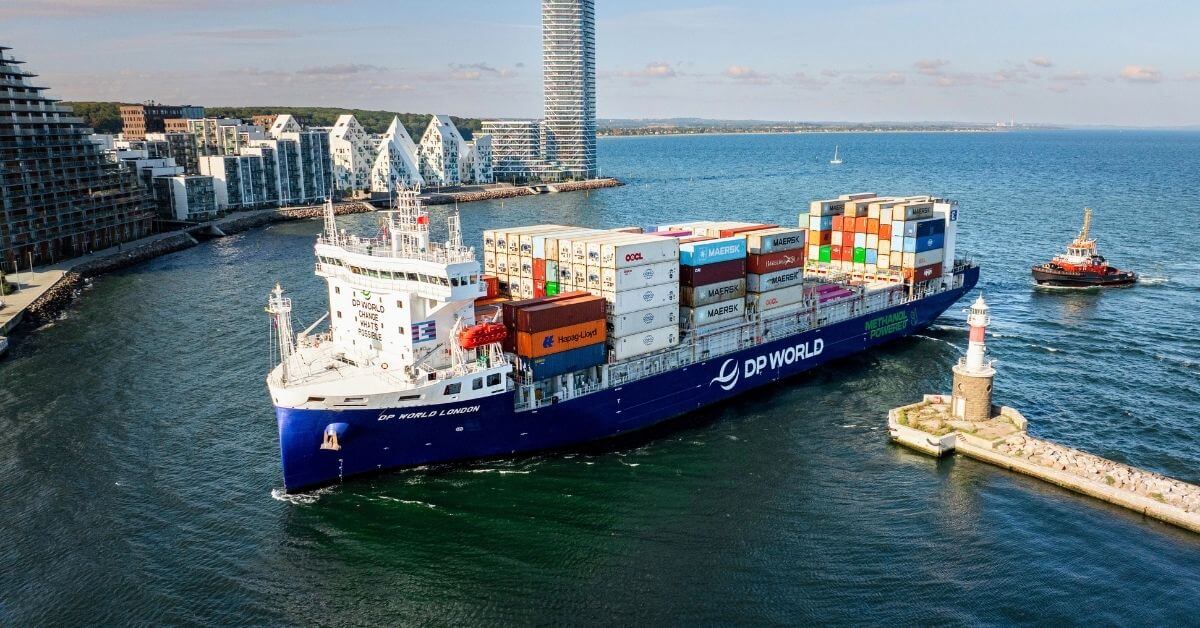
Naming a vessel is an act of intention, and DP World's decision to christen its first methanol dual-fuel ship the *DP World London* in Aarhus is a clear signal that the container shipping industry is moving from pilot projects toward practical, repeatable infrastructure. The ceremony itself is straightforward, but the implications are not. Methanol is not a silver bullet, but it is one of the few drop-in solutions that can be integrated into existing supply chains without waiting for a complete fleet overhaul. For an operator moving global cargo, this is the difference between a press release and a procurement decision.
The timing matters. As we have seen with recent Maritime Interdictions Yield 25,000 Pounds of Cocaine, Supporting Ocean Security, the maritime sector is being asked to do more than move goods; it is being asked to secure borders and, increasingly, to decarbonize in measurable ways. And while the U.S. Coast Guard's $315 million investment in Alaska’s Base Kodiak to Gain Enhanced Arctic Capabilities with New Pier addresses strategic reach in the high north, the commercial fleet is quietly solving a more immediate problem: how to keep emissions falling while global trade expands. These are different missions, but they share a common thread. The infrastructure we build today, whether a pier in Alaska or a dual-fuel engine in a newbuild, defines what is possible tomorrow.
Our take is straightforward: this is not about celebrating a single ship. It is about validating a pathway. Methanol's appeal lies in its versatility and its relative ease of handling compared to ammonia or hydrogen. It can be produced from renewable sources, and it does not require cryogenic storage. That means it can be bunkered in major ports without building an entirely new energy grid from scratch. For shipping lines, this reduces the risk of stranded assets. For charterers, it offers a more predictable route to meeting emissions reporting requirements. The practical consequence is that the question is no longer whether methanol will play a role in shipping's transition, but how quickly the fuel supply chain can catch up to the vessels being ordered.
What we would tell a reader who asks about this is simple: watch the fuel supply contracts, not just the ship launches. A dual-fuel vessel is only as green as the methanol in its tanks. If that methanol is derived from natural gas, the emissions savings are marginal. If it comes from biomass or captured CO2, the math changes dramatically. So the real test for DP World will be whether they can secure verified, low-carbon methanol at scale, and whether other major ports follow Aarhus's lead in providing the necessary bunkering infrastructure. The vessel is a necessary first step, but it is the systems around it that will determine whether this represents a true shift or just another demonstration project. The detail to watch is the fuel's origin, because that is where the credibility of the entire operation will be proven.