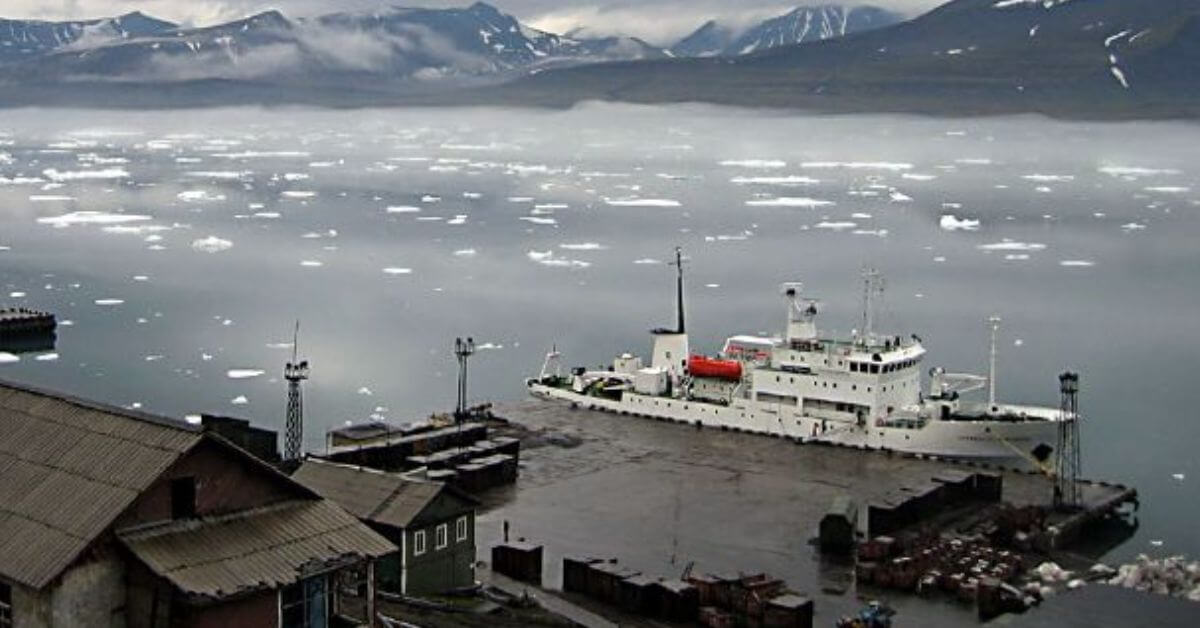
The seizure of a research vessel in Norwegian waters, linked to Ukraine's $4.2 billion compensation claim against Russia, represents a significant escalation in the use of maritime assets as geopolitical leverage. For our readers in the shipping, energy, and policy sectors, this is not an isolated incident but a calibrated signal within a broader pattern of legal and economic warfare playing out at sea. This event is best understood alongside Russia Calibrates Export Revenue for Northern Sea Route Icebreaker Fleet, where Moscow is actively restructuring its maritime financing to build Arctic icebreakers, and Vostok Project Launches Arctic Oil Exports Amid Geopolitical Shifts, which shows Russia pushing forward with energy exports despite sanctions. The seizure of the *Professor Molchanov* injects a new variable of risk into these strategic calculations.
Our take is straightforward: this dispute transforms the legal framework for vessel operations in contested waters. For decades, the principle of sovereign immunity for state-owned ships provided a layer of predictability. That predictability is now being tested. Norway's action, enforcing a private arbitration award against a Russian state asset, creates a precedent that could recalibrate how shipping companies assess risk when operating near disputed territories or for sanctioned entities. If a research vessel, traditionally a symbol of international scientific collaboration, can be detained to satisfy a commercial claim, then no state-owned or state-chartered vessel is immune from similar legal action. This directly impacts the operational planning of any fleet involved in Arctic transits or energy logistics, where the distinction between commercial, scientific, and strategic activity is already blurred.
What does this mean in practical terms for our audience? First, legal due diligence is no longer a back-office function; it is a real-time operational requirement. Vessel owners and charterers must now evaluate the ownership structure and legal exposure of every counterparty, particularly those with ties to states under sanction or involved in active arbitration. Second, the Arctic is becoming a theater for economic enforcement. The related story on Russia's icebreaker financing shows that Moscow is investing heavily in its Northern Sea Route infrastructure, expecting to generate revenue from exporters. The seizure of the *Professor Molchanov* introduces a new cost of doing business: the risk of asset forfeiture. A shipping executive planning a voyage through the Northern Sea Route must now ask whether their vessel could be seized in a foreign port as part of a claim unrelated to their cargo.
The most concrete detail to watch is the legal status of the vessel's crew and its scientific equipment. If the seizure leads to the impoundment of oceanographic data or research instruments, it will signal that even non-commercial maritime activity is now a target in this conflict. The takeaway for our readers is clear: the ocean is no longer a neutral space for transit or research; it is a vector for enforcing claims that were once confined to courtrooms.