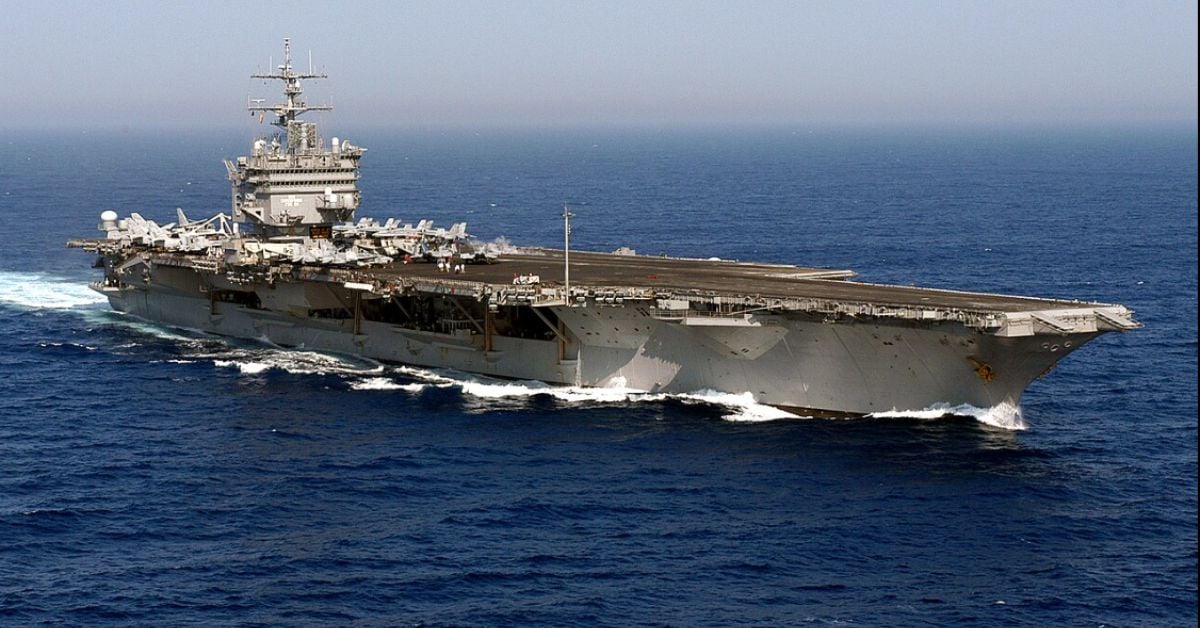
The final voyage of the USS Enterprise is not a celebration of naval power but a $1 billion lesson in lifecycle accountability. As the world's first nuclear-powered aircraft carrier is towed to Mobile, Alabama for dismantling, we are witnessing the end of an era that began in 1961 and the start of a protracted, expensive reckoning with the technology that made it legendary. This process, stretching to the end of the decade, demands our attention because it offers empirical data on the true cost of nuclear propulsion at sea, a cost that directly informs the decisions being made today about future fleets. The ship sailed over a million nautical miles, but its most critical journey is this final, slow transit, where every stage of disposal is a calibrated operation in environmental and fiscal responsibility. The Navy has stated that all components will be recycled or shipped to licensed sites, a process that validates the need for rigorous waste-management protocols from the very start of a vessel's design. This is not a story of sentiment; it is a story of integrated planning for a full life cycle, a reality that becomes sharper when we consider that Nuclear Propulsion Advances as China Targets 2027 Carrier Launch and that Naval deployments extend to 11 months, reshaping operational timelines at sea.
For researchers, policymakers, and ocean enthusiasts, the Enterprise's scrapping provides a rare, longitudinal case study in decommissioning a nuclear vessel. The cost, over $1 billion, is a measurable and sobering data point that must be factored into any future calculus for nuclear-powered ships, whether military or civilian. As China pursues its own nuclear carrier program, the financial and environmental ledger of CVN-65 becomes a peer-reviewed reference, not a political talking point. The careful removal of fuel and the planned disposal of radioactive waste are not abstract concepts; they are the real-time, validated outcomes of a 50-year asset. The fact that the carrier will share the waterfront with the SS *United States*, which is itself being towed to become an artificial reef off Florida, highlights a stark contrast in end-of-life strategies. One vessel becomes a habitat; the other becomes a multi-year dismantlement project that will generate waste requiring licensed disposal for decades. This is not an argument against nuclear propulsion, but it is an argument for honest, integrated accounting of its total environmental and financial footprint.
The practical takeaway is direct: any nation or organization pursuing nuclear-powered maritime assets must embed the full dismantlement cost, including the long-term management of radioactive components, into its initial budget and operational timeline. The Navy's deputy portfolio acquisition executive, Kevin Cormier, rightly emphasized the legacy made possible by the sailors and support personnel. But for our audience, the legacy that matters most is the one being written now in Mobile: a transparent, empirical record of what it takes to responsibly retire a nuclear reactor from the sea. NorthStar CEO Jeff Adix has stated that his team has the required expertise, and the Navy has a plan, but the open question remains whether the next Enterprise, a Ford-class carrier, will benefit from these lessons in its own design and eventual disposal. The ship's name will return, but the cost of its predecessor's end should not be forgotten.