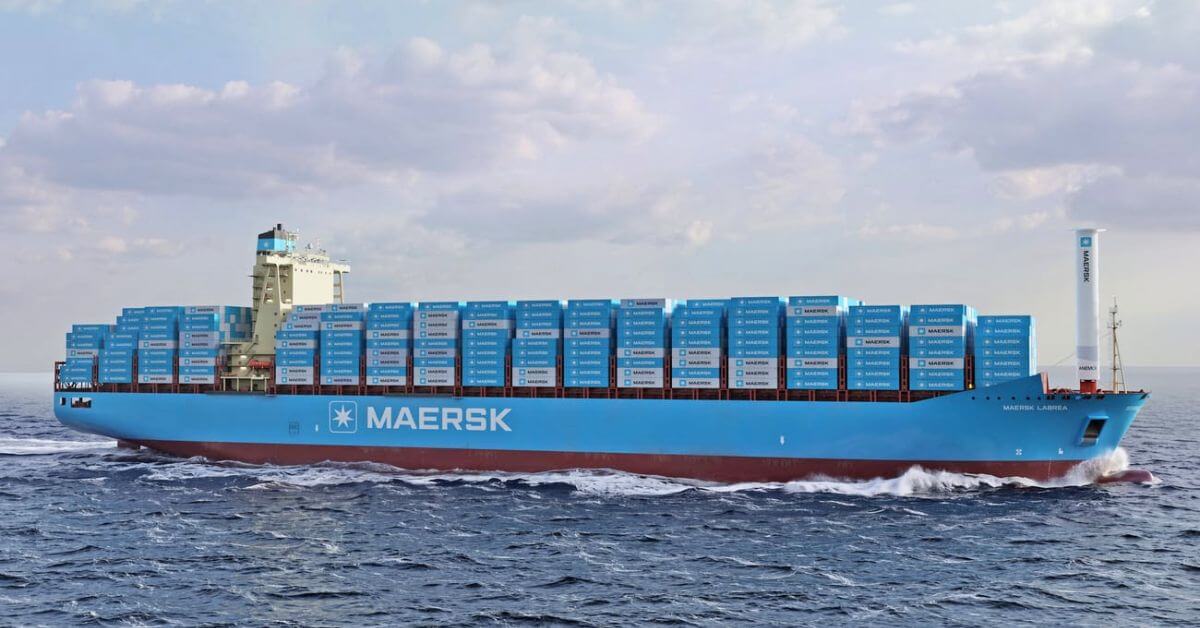
The decision by Maersk to install Anemoi's Rotor Sail technology on a container ship is not a headline about a single vessel. It is a calibrated admission that wind propulsion has moved from experimental fringe to operational mainstream. Anemoi's track record across bulk carriers provided the empirical foundation; this installation extends that validated data into the container segment, where schedule reliability and speed matter most. For our readers, the practical signal is clear: the question is no longer whether wind-assist systems work, but how quickly the integrated data ecosystem around them can prove their return on investment across diverse trade routes.
We see this move as a direct response to the industry's chronic over-reliance on slow steaming and scrubber retrofits as stopgap measures. Rotor sails are not a nostalgic nod to sail power; they are a measurable, real-time intervention that reduces fuel consumption and emissions without compromising cargo capacity. The fact that Maersk, a carrier with rigorous operational standards, chose Anemoi after their bulk carrier installations suggests the technology has passed the peer-review equivalent of commercial scrutiny. This is not about being first; it is about being right. The contrast with recent Drone Strike Impacts LPG Tanker Near Strait of Hormuz and the Conflicting Reports of Vessel Detentions Raise Tensions underscores a broader truth: geopolitical volatility tests supply chains, but fuel efficiency is the buffer that keeps them viable. While security incidents demand tactical responses, strategic resilience comes from lowering the cost per nautical mile.
What we would tell a reader who asks whether this matters for their fleet is this: watch the longitudinal data coming out of this installation, not the press release. Anemoi's prior work on bulk carriers gives us baseline numbers, but container ships face different wind shadow effects from deck-stacked boxes and tighter port turnaround times. The real intelligence will emerge from how the rotor sails perform in the integrated data ecosystem alongside weather routing and engine load optimization. If the fuel savings track within the projected range, this becomes a template, not a novelty. That is the Port Alpha Shipyard to Build Navy Landing Craft, Boosting Ocean Data Access connection worth noting: both projects rely on capturing operational data from new builds to inform future design choices. It is not about the hardware alone; it is about the feedback loop.
The open question we are holding onto is whether charterers will start demanding wind-assist retrofits as a condition for long-term contracts, much as they now require ballast water treatment systems. If Maersk's data proves compelling, the pressure will shift to the entire container fleet, not just newbuilds. Our take is straightforward: this is the kind of incremental, evidence-based innovation that actually moves the needle on decarbonization. The specific detail to watch is the reported fuel savings in the first six months of commercial service, because that number will set the benchmark for every competitor watching from the bridge.