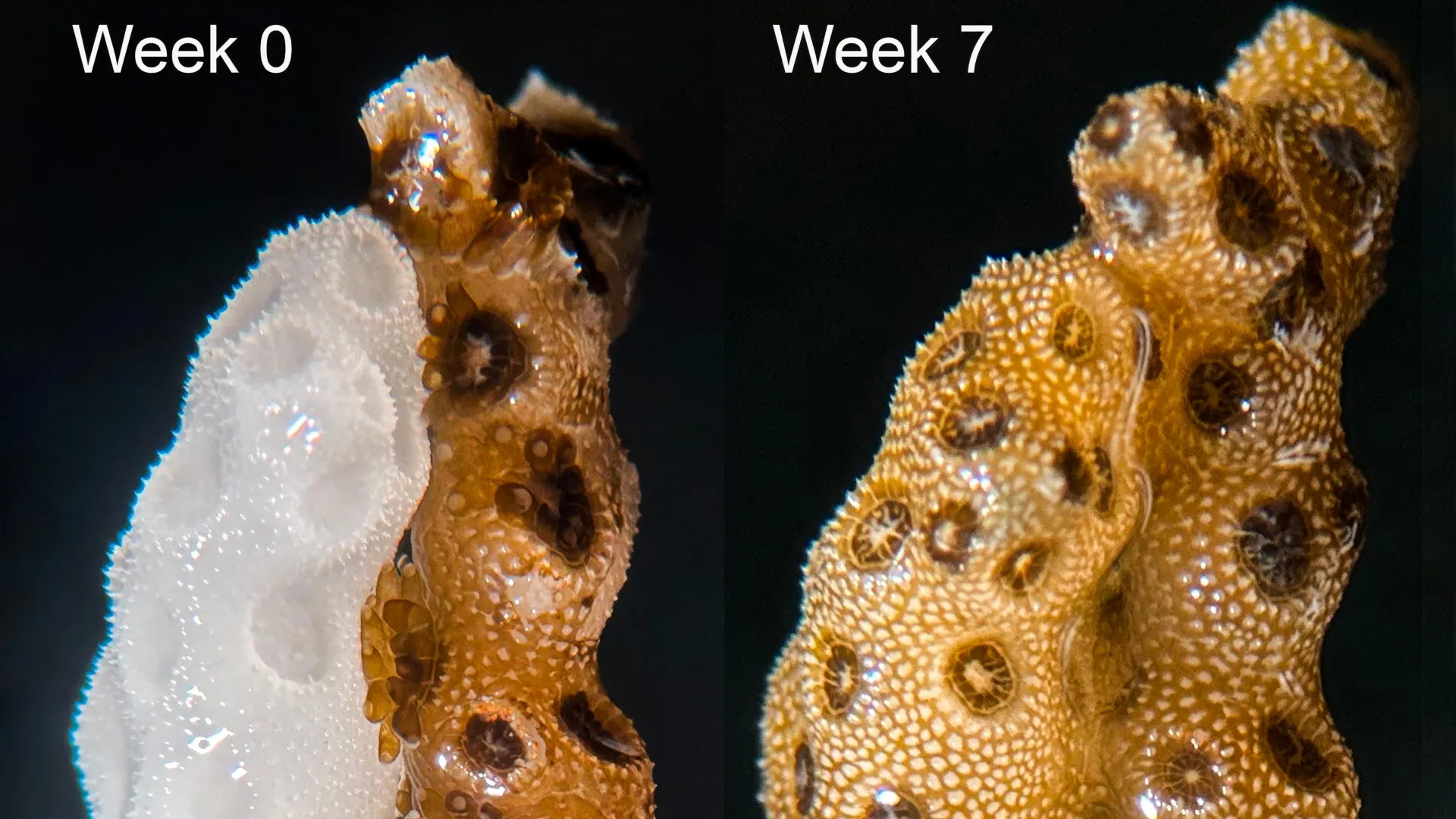
Contact between genetically identical corals is not a metaphor for resilience, it is a measurable, empirical pathway to recovery. The finding that severely bleached corals can regain their color and survive within weeks simply by touching a healthy clone is a practical breakthrough that reframes how we think about intervention in marine ecosystems. This is not a feel-good story about nature healing itself; it is a calibrated, replicable result that demands attention from researchers and policymakers alike. For an audience that tracks climate indicators and ocean intelligence, the implication is direct: recovery can be triggered, not just hoped for.
The laboratory experiments show that as little as five days of contact can initiate the healing process, with full recovery observed within seven weeks. This is a validated mechanism, not an anecdote, and it raises urgent questions about how we might deploy this knowledge at scale. Consider the parallel with autonomous drone navigation without GPS, as demonstrated by the US Navy in our related coverage, both cases involve precision and reliance on contact-based or sensor-driven systems to achieve outcomes that once seemed improbable. Similarly, the resilience of Western Atlantic corals under rising heat, documented in Western Atlantic corals face a critical test of resilience against rising heat, underscores the stakes: if contact-based recovery works in controlled settings, can it be integrated into restoration strategies for reefs facing chronic thermal stress? The answer is not yet known, but the question is now empirical.
What this means for our readers is that the standard narrative of coral bleaching as a death sentence requires revision. Bleaching is severe, but it is not always irreversible. The key variable here is genetic identity, the corals must be clones. This is not a general solution for biodiversity loss, but it is a precise tool for preserving specific genotypes that may hold heat-tolerant traits. Our piece on identifying an uncommon spiny specimen from Kachemak Bay tide pools, Help Identify an Uncommon Spiny Specimen from Kachemak Bay Tide Pools, reminds us that marine biology still depends on careful observation and classification. This coral study is no different: it emerged from controlled lab conditions, not from a wild reef. The next step is to test whether the same contact mechanism works in situ, under variable currents, predators, and water chemistry.
The takeaway is specific and actionable: restoration projects should prioritize the propagation and proximity of genetically identical coral fragments. If five days of contact can start the healing process, then the geometry of outplanting, how close we place fragments to one another, becomes a design parameter, not an afterthought. The open question is whether this contact triggers a transfer of symbionts, a chemical signal, or a metabolic rescue. Until that mechanism is peer-reviewed and replicated, the responsible approach is to treat this as a promising, calibrated lead rather than a cure-all. Watch for field trials in the next year. That is where the real test begins.