corals
6 stories filed under corals on World Data Ocean. The newest of them: “Validated genetic analysis reveals two new deep-sea siphonophore species”, “Contact between genetically identical corals enables recovery from severe bleaching”, and “Western Atlantic corals face a critical test of resilience against rising heat”. Two new deep-sea siphonophore species have been validated through integrated genetic and morphological analysis. Severely bleached corals can recover by simply touching healthy, genetically identical corals. A Global Hub for Ocean Intelligence 4 World Data Ocean is a centralized digital platform where researchers, scientists, and ocean enthusiasts converge to… The list below is every corals story on World Data Ocean, newest first.

Validated genetic analysis reveals two new deep-sea siphonophore species
Two new deep-sea siphonophore species have been validated through integrated genetic and morphological analysis. *Bargmannia marlena* and *Bargmannia pyrosa* reveal how depth-driven environmental conditions shape evolutionary divergence. These colonial organisms, close relatives of jellyfish, demonstrate that mitochondrial DNA and reproductive structures hold critical clues to speciation. Each discovery reinforces a larger truth: we have only begun to map life in the ocean's depths. For another perspective on marine restoration, see our coverage of ghost net reclamation in the Sea of Marmara.
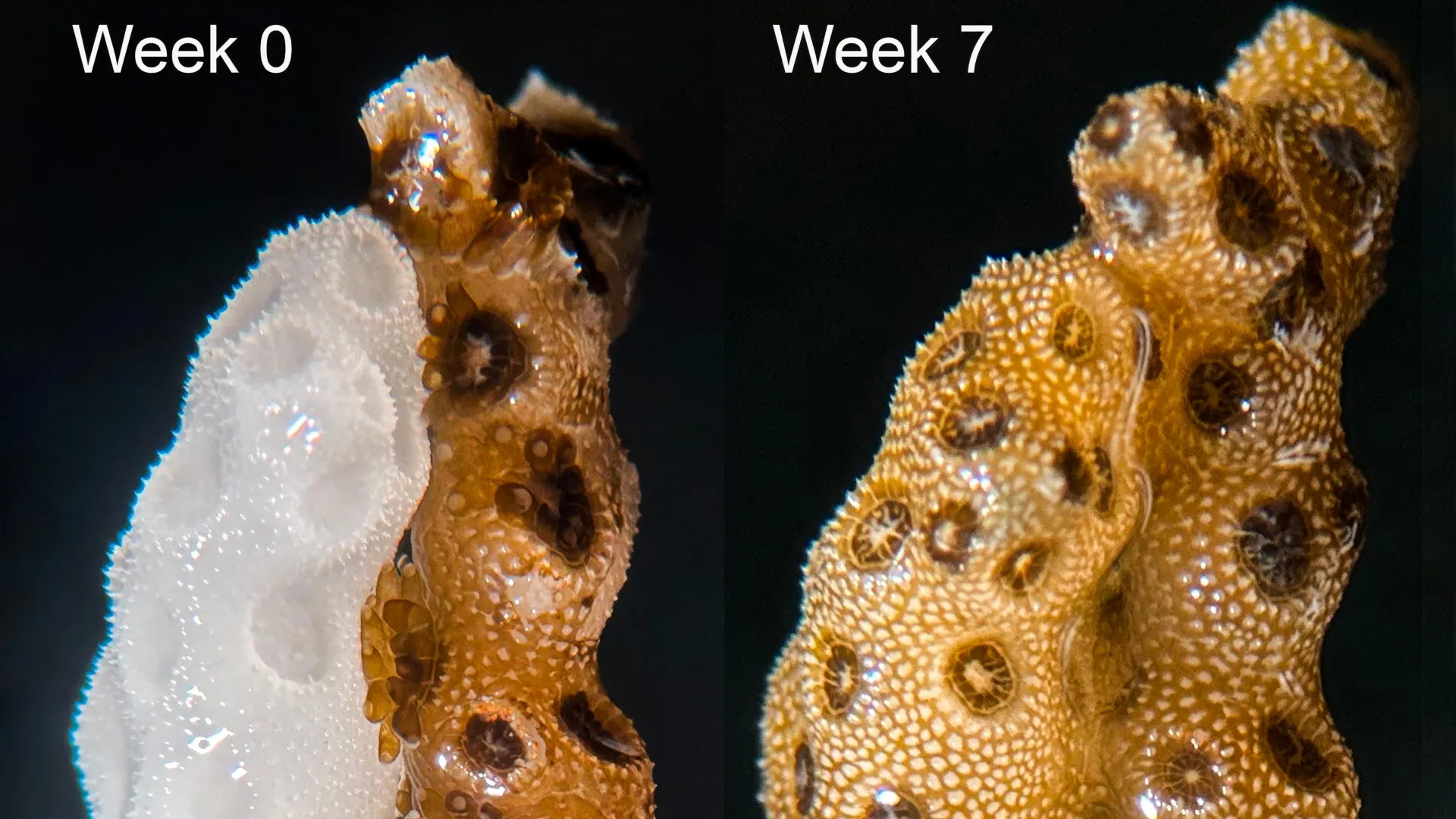
Contact between genetically identical corals enables recovery from severe bleaching
Severely bleached corals can recover by simply touching healthy, genetically identical corals. In laboratory experiments, dying colonies regained their full color within seven weeks, with as little as five days of contact triggering the healing process. This is a measurable, validated pathway to resilience, one that reframes recovery as an integrated, social process. The finding pairs well with our coverage of Western Atlantic corals facing rising heat, offering a concrete mechanism for hope amid climate stress.
Western Atlantic corals face a critical test of resilience against rising heat
Western Atlantic corals are facing a critical test of resilience. Ever more frequent heat waves and resulting bleaching threaten extinction unless these ecosystems can adapt rapidly. The region's unique geography and long history of pollution have made corals especially vulnerable. Yet evidence shows thermal resilience is increasing through symbiont shuffling and natural selection. Assisted reproduction can accelerate this progress. These promising signs will come to nothing unless overexploitation and pollution are severely reduced.

Aquabots: Engaging Young Players with Real Ocean Science and Conservation.
Aquabots turns play into purpose. Built inside Roblox, the game sends players on drone-led coral restoration missions, pairs them with a battle system, and opens an aquarium where fish, corals, and fossils are explained through verified research. A trivia quiz rewards correct answers with in-game currency, keeping learning tied to action. The goal is direct: counter the platform's brainrot with something measurable. For those tracing how species persist, the fossil record offers context, including recent findings on feathered dinosaurs. Curiosity, here, is the real currency.

Retired Vessel Creates New Habitat, Bolstering Delaware’s Artificial Reef Program
A retired vessel now rests on Delaware's seabed, its purpose renewed as an artificial reef. DNREC's $285,000 investment, drawn from federal Sport Fish Restoration funds, turned the ship into a habitat where marine life can thrive. This is practical conservation, measured in structure and opportunity. It also echoes a broader truth we track closely: aging ships do not have to end in failure.

Rare Magnipinna Squid Sighting Highlights Thriving Deep-Sea Ecosystem
A rare Magnipinna squid sighting two days ago by the crew of Nautilus Live offers a compelling glimpse into a thriving deep-sea ecosystem. The dive revealed vibrant corals teeming with life, alongside a chimera and isopods, underscoring the value of sustained ocean observation. Such moments remind us why integrated data systems matter. For further context on how connectivity supports marine research, see our piece on integrated subsea cables enhancing data transmission across the Indian Ocean.